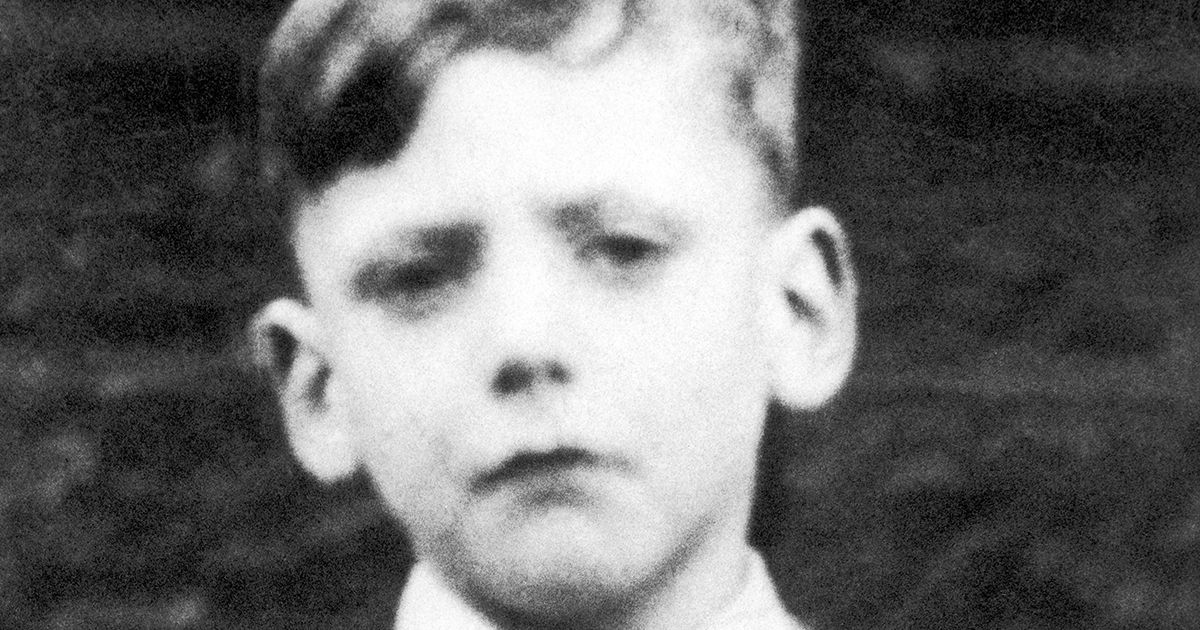
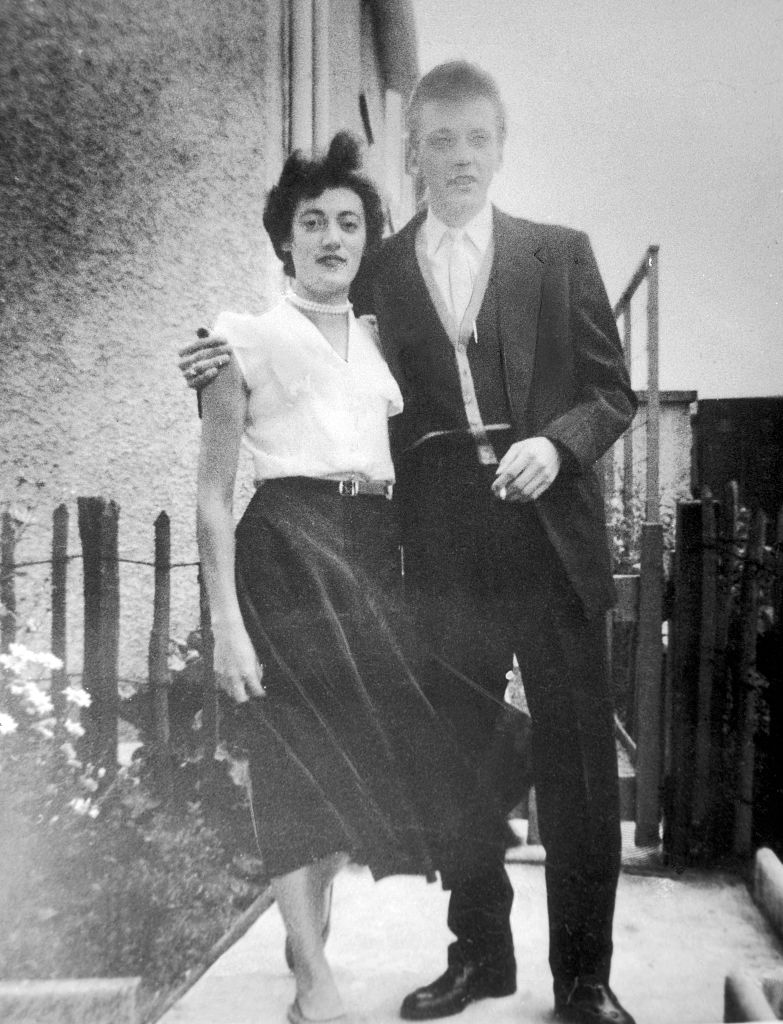
The little boy in this photograph grew up to be one of the most evil men in the world. As a child, he threw extreme temper tantrums where he would repeatedly bang his head on the floor.
But that he would one day be responsible for some of the most horrific atrocities was something few could have imagined.
Born on January 2, 1938, in Glasgow, Scotland, this boy entered the world under a cloud of instability and secrecy. His mother, Peggy Stewart, was unmarried and struggling tea room waitress.
The identity of his father remains a mystery. His mother claimed he was a journalist for a Glasgow paper who passed away three months before the child was born, leaving a shadow of unanswered questions over his early life.
What is known, however, is that just months after the boy was born, he was placed in the care of foster parents, John and Mary Sloan, in the working-class neighborhood of Gorbals. The boy took on the name Ian Sloan, but that was not the name that would later make him infamous. His mother continued to visit him throughout his childhood.
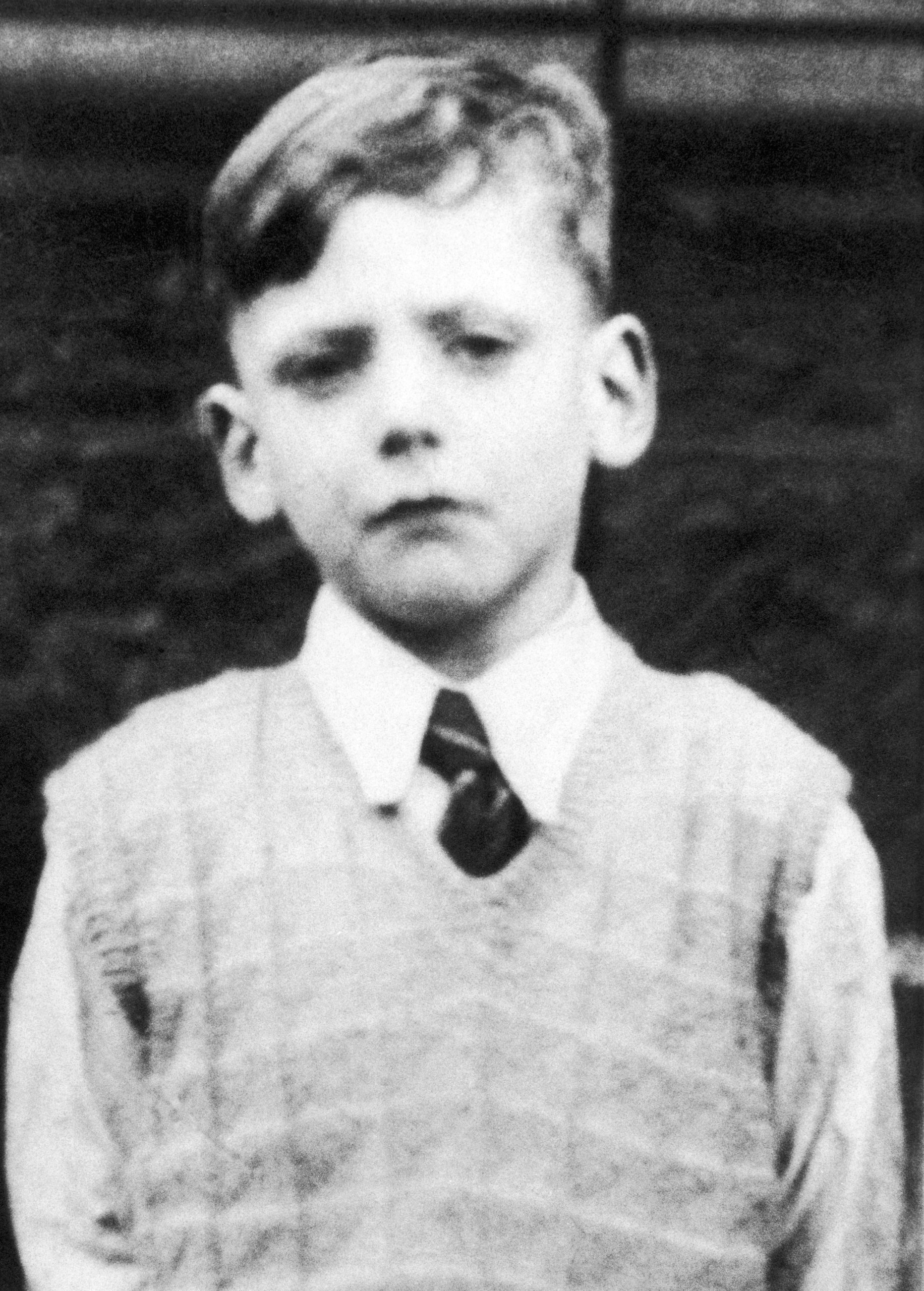
The Sloans were disciplinarians who valued obedience, routine, and appearances. According to witnesses, the boy was intelligent, well-spoken, and noticeably withdrawn — a child who watched more than he spoke.
But beneath that controlled exterior, something darker was taking shape. Long before his horrific crimes horrified the nation, the boy already had a dark aura.
As a child obsessed with horror films, neighbors in Glasgow nicknamed him “Dracula,” and years later, locals in the Hattersley Estate of Greater Manchester, spotting him slouching in a long trench coat, called him “the Undertaker.”
A mind set apart
By his early teens, the boy had begun to rebel in quiet but alarming ways. He would erupt into violent tantrums, repeatedly smashing his head against the floor, and even insulted his foster parents, calling them “maggots.”
He was frequently truant, committed petty theft, and displayed a fascination with power, violence, and domination.
It’s been reported that he bragged about killing his first cat at just ten years old, later burning another cat alive, stoning dogs, and beheading rabbits. However, he would later deny any allegations of animal abuse.
He read extensively, not just literature and philosophy, but accounts of Nazi ideology and writings that glorified cruelty and supremacy.
At 17, he was more or less a fully-fledged teenage alcoholic. He was convicted of burglary and sent to prison, where his worldview hardened. He later claimed incarceration sharpened his sense of superiority and contempt for others.
After his release, he drifted through a series of low-level jobs and petty crimes before relocating to Manchester in the early 1960s, a move that would alter British criminal history forever.
The meeting that changed everything
In 1961, he met a young woman named Myra Hindley while working at Millwards Merchandising in Gorton.
He introduced himself as Ian Brady, and what started as a seemingly ordinary workplace connection soon spiraled into something far darker.
Brady exerted an intense psychological influence over Hindley, introducing her to his extremist beliefs, obsession with control, and fascination with violence.
On their first date, they watched The Nuremberg Trials at the cinema. Brady and Hindley then fell into a chilling routine: evenings at the cinema, often catching X-rated films, followed by trips back to Hindley’s home to drink German wine.
Brady supplied Hindley with reading material, and the two would spend lunch breaks reading aloud to each other from accounts of Nazi atrocities. Hindley became obsessed with the idea of Aryan perfection, bleaching her hair platinum blonde and painting her lips with thick crimson lipstick.
Despite her fixation on him, she sometimes voiced unease about Brady’s behavior. In a letter to a childhood friend, she recalled an occasion where Brady had drugged her — but she also confessed her intense obsession with him.
Only months later, she asked the friend to destroy the letter, perhaps aware of how dark her devotion had become.
“Within months he had convinced me that there was no God at all: he could have told me that the earth was flat, the moon was made of green cheese and the sun rose in the west, I would have believed him, such was his power of persuasion,” Hindley later wrote.
Friends later recalled that Hindley changed dramatically, her appearance, mannerisms, and attitudes shifting as she fell under his influence. Together, they would form a closed, dangerous world built on secrecy, manipulation, and shared depravity.
The Moors Murders
Between 1963 and 1965, the pair carried out a series of child killings that would come to be known as the Moors Murders, named for the remote Saddleworth Moor where several victims were buried.
The five victims — Pauline Reade, John Kilbride, Keith Bennett, Lesley Ann Downey, and Edward Evans — ranged in age from 10 to 17, with at least four subjected to sexual assault.
The crimes shocked Britain not only for their brutality, but for the cold, calculated way they were carried out. Brady orchestrated the acts; Hindley assisted and enabled him. Their calm, ordinary appearance made the revelations even more horrifying.
For months, they evaded suspicion.
The cracks appear
In October 1965, Brady murdered 17-year-old Edward Evans inside his home while Hindley was present. Unbeknownst to him, her brother-in-law, David Smith, witnessed the aftermath. Smith reported the crime to police that same night.
What followed was one of the most disturbing investigations in British history.
Police searches uncovered recordings, photographs, and evidence pointing to multiple victims. Hindley initially attempted to distance herself, but the truth slowly emerged.
Last message
When Brady and Hindley appeared in court in 1966, the nation was transfixed.
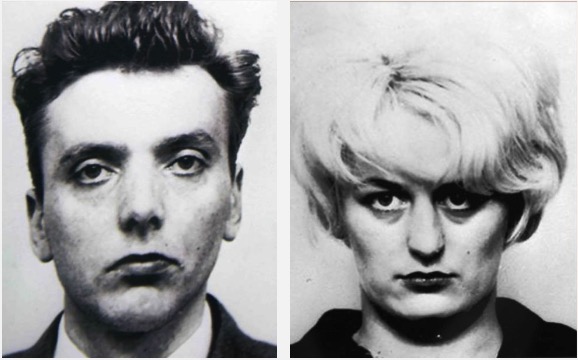
Their mugshots, particularly Hindley’s blank stare and peroxide-blonde hair — became infamous, seared into public memory as symbols of betrayal and horror.
The fourteen-day trial captured intense public attention, leaving people across Britain shocked and outraged. The courtroom was even fitted with bulletproof glass to protect Brady and Hindley, as authorities feared someone might attempt to harm them amid the widespread anger over their crimes.
Brady showed no remorse. He embraced the role of villain, later describing himself as “evil” and expressing pride in his actions.
Both were convicted of murder and sentenced to life imprisonment.
Dubbed by the press as “the most evil woman in Britain,” Hindley repeatedly appealed her life sentence, insisting she had reformed and was no longer a threat, but she was never freed. She passed away in 2002 at the age of 60, after spending thirty-six years behind bars. At her cremation, someone from the public left a banner declaring, “Burn in hell.”
Maximum-security prisons
Brady, diagnosed as a psychopath in 1985, was held at the high-security Ashworth Hospital. Because of the horrific nature of his offenses, Brady was always at risk of being attacked by fellow inmates.
To keep him safe, he spent extended stretches in solitary confinement and was repeatedly transferred between maximum-security prisons. He consistently stated that he never wanted to be released and repeatedly requested permission to die.
Brady never offered a genuine explanation for his crimes and displayed no remorse. He had no interest in being released and consistently refused to participate in any rehabilitation or treatment programs.
In 2013, he minimized his actions, calling himself a “petty criminal” compared to “global serial killers and thieves like Blair or Bush.”
Brady eventually passed in 2017 at Ashworth, aged 79, after serving fifty-one years in custody.
READ MORE
- Black teenager convicted and executed for white woman’s murder is exonerated decades later
- Toddler falls into coma hours after mom spots chilling sign