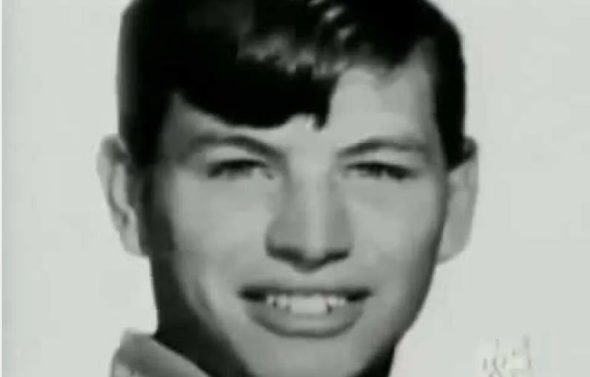
He married his high school sweetheart and cried at church services.
But beneath the surface, something far darker was hiding — a monster who would go on to become one of the most prolific serial killers in U.S. history.
”Just actually a nice guy”
We all start out as children — and that’s true even for serial killers. One of the most feared and infamous figures in this dark category was born on February 18, 1949, in Salt Lake City.
He was the second of three brothers and was often described as the favorite child in the family. On the surface, his upbringing seemed stable and even idyllic.
His father, Thomas , worked as a bus driver, while his mother, Mary, was a salesperson. The family lived in a modest home with a wide, open yard — big enough for football games and the kind of carefree childhood memories that, at first glance, seemed completely ordinary.
But relatives described Mary as a domineering woman who occasionally used corporal punishment on her sons for minor misbehavior.
The middle child in the family, who would later go on to commit some of the most horrific crimes in U.S. history, had conflicting feelings of anger and sexual attraction toward his mother, and even fantasized about killing her.
But clearly, these darker thoughts were something the young boy kept to himself.
Friends and classmates remembered him as “just actually a nice guy,” someone who was interested in sports and girls. Others described similar impressions — personable, into cars, played freshman football, and generally an average kid from a normal home.
“He didn’t really stand out,” recalled Tim Shinners, a former Tyee classmate.
”The picture I keep getting in my mind is of a somewhat smallish kid – 5 feet 7 or 5 feet 8, 145 pounds, with wispy hair. Nondescript,” said David Alfred, who taught biology and coached football at the school.
Dyslexic and low IQ
But the same time, there were subtle warning signs.
Bruce Revard, who lived next door to the family, recalled that the parents were strict, particularly with the two younger brothers. He said the mother would often scream at the boys, while the father would spank them.
“I could sit up in my treehouse and look in their yard,” Revard said. “All I’d hear were cries of ‘No, Dad, no,’ as they were getting beaten with a belt or a stick or whatever.”
In high school, the future serial killer struggled academically. He was dyslexic, held back a year, and was reportedly tested with an IQ in the “low eighties.”
One day his impulsive thoughts gave way to actual, horrifying violence. When he was aged 16, he lured a six-year-old boy into woodland and stabbed him in the ribs, narrowly missing fatal organs. The child survived the attack.
In 1969, at 20 years old and recently graduated from high school with no intention of attending college, he chose to enlist in the Navy instead of waiting to be drafted. Around the same time, he married his 19-year-old high school sweetheart, Claudia Kraig.
He was later deployed to Vietnam, where he served on a supply ship and experienced combat. During his military service, his behavior became increasingly reckless. He frequently visited sex workers and contracted gonorrhea, continuing the behavior despite his wife’s anger and without taking precautions.
The marriage with Claudia quickly deteriorated and ended within a year.
Became intensely religious
In 1973, he married his second wife, Marcia Winslow, and they later had a son together. Over time, his life began to show signs of increasing instability and troubling behavior.
Looking back, Marcia may have had early reasons for concern, starting with how they first met. Court records state that he pulled her over in what she later described as a “police-like stop.” With his short haircut and military-style demeanor, she initially believed he might actually be a police officer. He wasn’t, but he told her he had once tried to become one and was rejected.
During their early sexual encounters, he mistakenly called her “Claudia.”
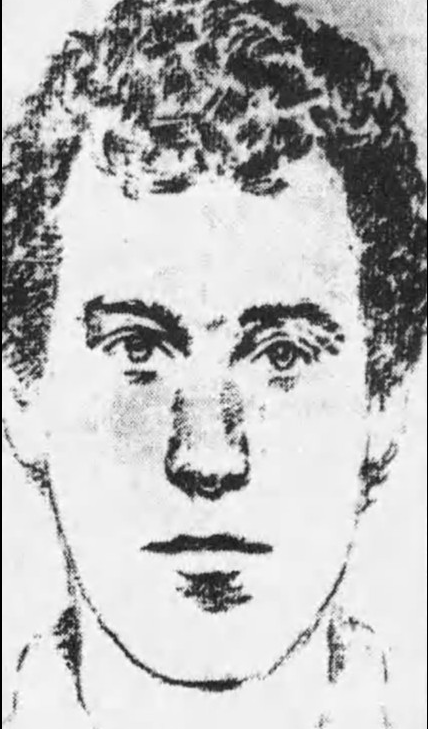
As time went on, he became intensely religious, frequently going door-to-door to proselytize, reading the Bible aloud at home and at work, and pressuring Marcia to follow strict interpretations of their pastor’s teachings. He would sometimes cry during church services and sit in front of the television with a Bible in his lap.
At the same time, however, he also demanded highly controlling and extreme sexual behavior within the marriage, while continuing to secretly pay sex workers throughout.
Marcia, who had struggled with her weight for much of her life, later underwent gastric bypass surgery in the late 1970s. After losing weight, she began to attract more attention from other men, which reportedly made him jealous and insecure, leading to frequent arguments.
Tensions also grew around his mother’s influence. Mary was deeply involved in their lives, controlling finances, making major household decisions, and even choosing his clothing. She also criticized Marcia’s parenting, leaving Marcia feeling unsupported and isolated within the marriage.
After about seven years, the relationship ended in divorce. Marcia later alleged that during one argument, he had physically restrained her in a chokehold.
First known victim
In 1985, he entered his third marriage with Judith Mawson, whom he met through a support group for single parents.
Unlike his previous relationship, Judith initially described him as gentle, stable, and dependable — a man who had maintained steady employment as a truck painter for over a decade. He even took care to improve the home before she moved in.
Judith also accepted the strong influence of his mother in their lives, initially viewing her as helpful in managing practical matters such as finances. Over time, she gradually took over many of those responsibilities herself.
Meanwhile, a darker history was already unfolding.
In the early 1980s, the first known victim was discovered in the Green River, beginning a series of killings that would terrorize the region. The victims were mostly vulnerable young women, many of them sex workers or runaways along the Highway 99 corridor near Seattle and Sea-Tac Airport.
As more bodies were discovered, investigators formed the Green River Task Force, working without modern DNA tools and relying heavily on traditional police work. Over time, clusters of remains suggested a pattern, and suspicion began to form that a single offender was responsible.
The Green River Killer
In 1983, even notorious inmate Ted Bundy offered theories to investigators about the case, suggesting the killer might know his victims and likely operated close to where the bodies were found. However, his input did not lead to any breakthrough.
As the investigation evolved, a list of suspects was created, and one man gradually became a focus. His name? Gary Ridgway.
He had prior encounters with police involving sex workers in areas linked to the killings, including an accusation of choking a woman during sex and another incident involving a missing woman last seen entering his truck.
Despite multiple interrogations and even passing a polygraph test, suspicions remained. Investigators also noted that his work schedule often aligned with the disappearance of victims, and descriptions from witnesses matched his vehicle and presence in the area.
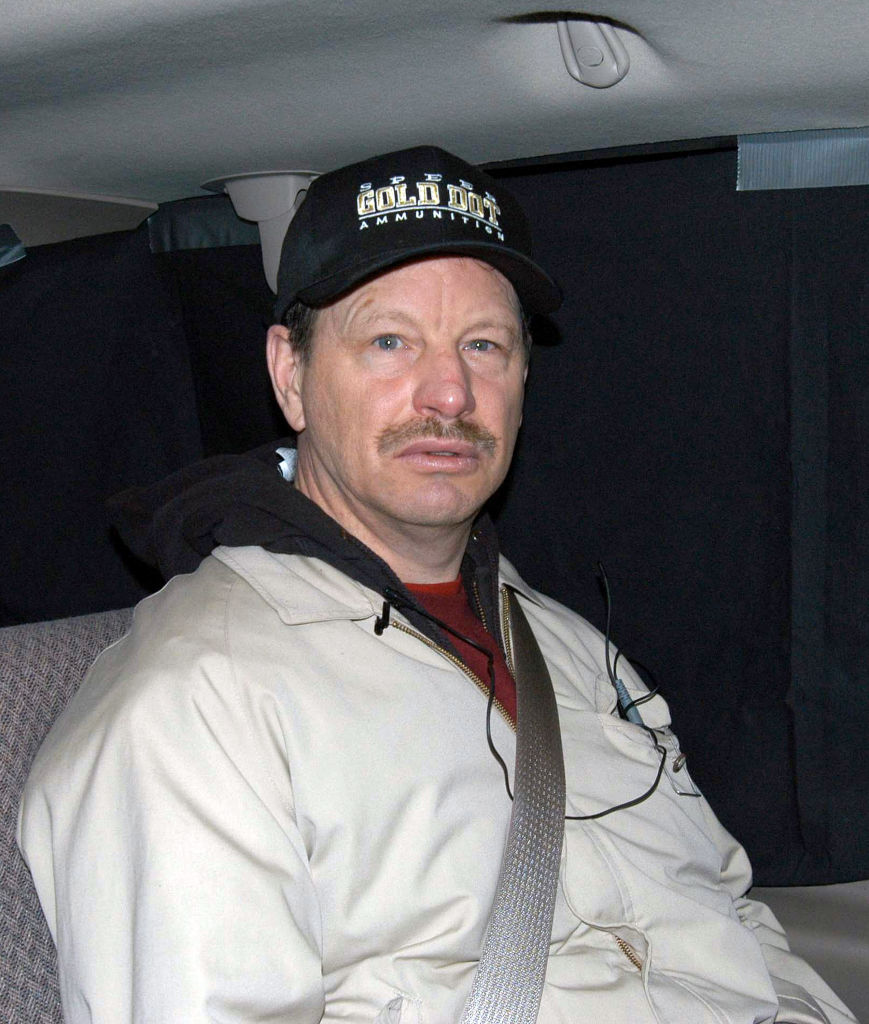
In 1987, he was placed under surveillance and moved onto the “A list” of suspects. A search of his home revealed large amounts of collected items, including objects retrieved from dumps and swap meets, some of which were linked to known victims. Still, there was not enough evidence to charge him, and he was released.
Years later, advances in DNA technology reopened the case in the hunt for the man later known as the Green River Killer, also called the Green River Strangler.
Evidence preserved from the original investigations finally provided the link investigators had been searching for.
In 2001, he was arrested in connection with multiple murders. DNA evidence tied Ridgway directly to several victims, and additional forensic links followed.
Eventually, he agreed to a plea bargain and confessed to dozens of killings, leading investigators to previously undiscovered burial sites and providing detailed accounts of how the crimes were carried out.
Admitted to killing at least 71 victims
Ridgway described using different methods of strangulation and sometimes returning to dump sites to move bodies or mislead police. He also admitted to manipulating victims by using personal items to gain trust and revealed disturbing details about his behavior during the crimes.
Before his confession, authorities had linked 49 murders to the Green River Killer. He later admitted to killing at least 71 victims. Most of his victims were believed to be sex workers or women in vulnerable situations, including underage runaways.
”I picked prostitutes as my victims because I hate most prostitutes and I did not wan to pay them for sex. I also picked prostitutes because they were easy to pick up without being noticed. I knew they would not be reported missing right away and might never be reported missing,” he said.
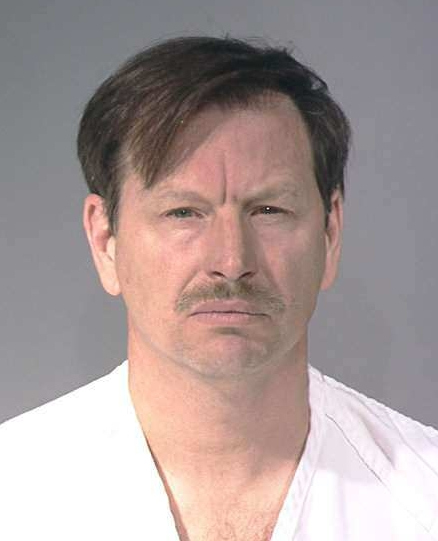
In 2003, he pleaded guilty to 48 counts of aggravated first-degree murder and was sentenced to 480 years in prison without the possibility of parole. Today, he is officially convicted in connection with 49 murders.
”I killed so many women I have a hard time keeping them straight,” he confessed in a Seattle courtroom.
As part of a plea deal, Ridgway agreed to reveal the locations of missing victims and, in return, avoided the death penalty. He was placed in solitary confinement at Washington State Penitentiary in Walla Walla, where he remains incarcerated today.
READ MORE
- Black teenager convicted and executed for white woman’s murder is exonerated decades later
- Killer grieves with family – but one slip reveals dark truth