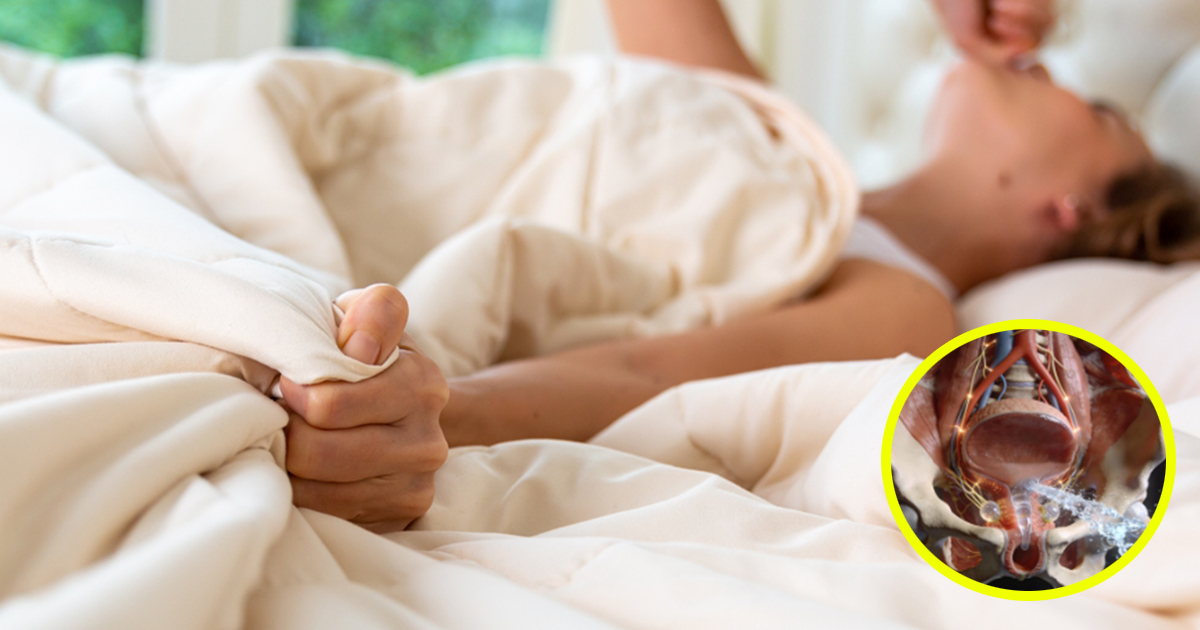
Because there are so many misconceptions about the female orgasm, a gynecologist has spoken out to challenge the belief that female ejaculation is simply urine.
Dr. Mehmet Bekir Şen, a specialist in labiaplasty and vaginoplasty based in Istanbul, shared a detailed explanation on X after a user claimed that women only release urine when they “squirt.”
“Ppl not knowing that squirt is pee is frying me,” the user wrote.
In response, Dr. Mehmet offered a clear breakdown of the biology behind female ejaculation, aiming to clear up confusion and encourage women to “explore their sexuality without shame.”
He explained: “Female ejaculation, or squirting, is a real biological phenomenon, though it’s surrounded by myths.
“It’s not entirely urine, but the expulsion of a clear fluid during intense sexual arousal.”
Where does it come from?
According to Dr. Mehmet, the release of fluid is closely tied to the activity of the paraurethral (Skene’s) glands—small ducts located on either side of the urethra. These glands help lubricate the vagina and protect against infection and are often described as the female equivalent of the prostate.
He added: “When the G-spot (a highly vascularised area in the urethro-vaginal space) is stimulated with sufficient intensity and pressure, these glands become more active.
“Skene’s glands secrete a clear fluid that accumulates in small sacs and is expelled through the urethra in a jet-like manner during orgasm due to the contraction of the pelvic floor muscles.”
The fluid released differs from urine in its chemical makeup. While it may contain substances like glucose, urea, creatinine, and PSA, they appear in very different concentrations compared to urine.
How common is it?
Research suggests that the amount of fluid released can vary widely—from as little as 0.3 ml to over 150 ml. Not all women experience this phenomenon; studies estimate that between 10% and 54% of women have experienced ejaculation.
Dr. Mehmet emphasized: “Not everyone experiences squirting. The intensity of stimulation, individual anatomy, and psychological relaxation are key factors.”
He also noted that it is a “normal and healthy sexual response” and should not be mistaken for incontinence.
READ MORE
- Women reveal the one question they hate most during sex
- Man with ‘world’s smallest manhood” answers question everyone asks