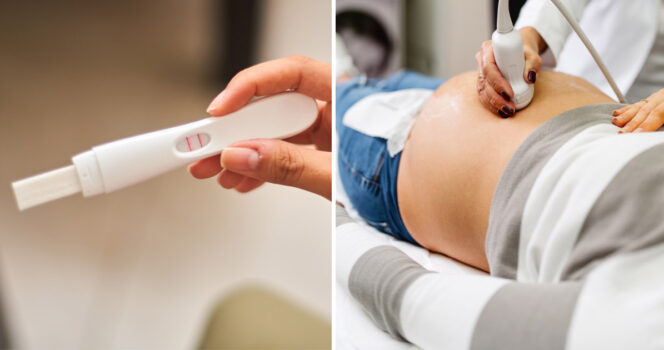
For many people, fertility is something they only start thinking seriously about when they decide they want to have children. But according to one fertility doctor, factors that affect fertility can come into play long before that.
Dr. Leah Gordon, who specializes in root-cause medicine and fertility, has raised an interesting possibility about the reproductive difficulties facing Millennials. Her theory focuses on the environment they were exposed to while developing in the womb.
Gordon is not claiming to have discovered the cause of infertility, nor is she suggesting that prenatal exposure is responsible for every fertility problem. Instead, she believes there could be a connection between conditions during early development and some of the reproductive issues people are experiencing decades later.
The World Health Organization estimates that about one in six people experience infertility at some point in their lives, according to Tyla. There can be many different reasons for this, and there is no single explanation for infertility.
Age remains an important factors, as female fertility naturally decreases with age. Different medical conditions, as well as lifestyle choices, are also known contributors.
Fertility remains a complex issue
Gordon believes there may be another part of the story that deserves more attention. Unlike sperm, which continues to be produced throughout a man’s life, a person with ovaries develops their lifetime supply of oocytes – immature egg cells – before they are even born.
At approximately 20 weeks of pregnancy, a female fetus has around six to seven million oocytes. That number then begins to decrease.
For Gordon, this raises an unusual question: Could the environment surrounding a pregnant woman also have an effect on the reproductive cells developing inside her fetus?
“This means your mother’s pregnancy was a three-generation event,” she wrote on Instagram. “Her body. Your body. And the eggs that might one day become your children.”
Because the reproductive system is developing during pregnancy, she argues that anything capable of crossing the placenta could potentially reach those developing tissues as well.
“Whatever toxins she was exposed to and whatever crossed her placenta during those months reached your ovaries while they were still being built,” she wrote.
The environment we grow up in may play a part
Gordon has specifically highlighted people born during the 1980s and early 1990s.
“Secondhand smoke [was] nearly everywhere [between 1981 and 1996]: homes, cars, restaurants, planes,” she wrote.
Other substances she mentions include leaded gasoline, pesticides, flame retardants, PFAS, formaldehyde, chemicals found in plastics and substances used in non-stick products.
There is currently no conclusive evidence showing that prenatal exposure to these substances automatically leads to infertility decades later. Gordon herself acknowledges that more research is needed.
Her argument isn’t limited to women, though. She also points to the development of the male reproductive system, which occurs during a relatively narrow period early in pregnancy.
“His reproductive system was programmed in a narrow window in early pregnancy, roughly weeks 8 to 14,” Dr. Gordon continues, specifically mentioning phthalates, chemicals used in some plastics, vinyl and personal-care products, which have been extensively studied.
“Average testosterone in men has been dropping for decades”
A 2018 review of studies in humans found that exposure to some phthalates may be linked to things like testosterone levels, sperm health and anogenital distance. However, researchers stress that this does not prove that exposure before birth causes infertility later in life.
Gordon acknowledges that limitation.
“In humans, we can’t run that specific experiment. But when researchers measure phthalates in pregnant women’s urine, the boys with the highest prenatal exposure showed physical markers of lower foetal testosterone.”
She also points to wider changes that researchers have observed in male reproductive health, pointing to research concerning testosterone levels.
“Meanwhile, average testosterone in men has been dropping for decades, beyond what our age and weight explain,” she wrote. “This directly impacts sperm production. Coincident? I don’t think so…”
That connection, however, remains Gordon’s interpretation rather than an established scientific conclusion.
More research is needed
Gordon described the environment she was exposed to before she was born.
“My mom permed her hair while pregnant with me,” she wrote. “She always had her nails done. Bless her heart. She didn’t know. “We used Febreze and Pine Sol to ‘clean’. We had horses and property, so Glyphosate was sprayed all the time. We burned our trash. We were exposed to SOO many toxins.”
Gordon said she believes her parents would have made different choices had they known more about potential exposures at the time.
She also says she and her sister have what she describes as PCOS patterns, and that nearly a decade working in fertility and root-cause medicine has made her increasingly concerned about environmental factors.
“After working in root-cause medicine and fertility for almost a decade, I just can’t ignore the glaringly obvious contributor to fertility issues: toxins,” she continues, mentioning 80s and 90s babies now.
“They are the ones who are currently trying to become parents,” she wrote.
For Gordon, that does not mean environmental exposure is the answer to every fertility problem. Rather, she believes it could represent one overlooked piece of a much larger picture.
“We have to talk about it,” she wrote. “Because sadly, many of these things are still happening today.”
READ MORE
- Trump’s savage dig at Karoline Leavitt revealed in new ‘best press secretary’ photo
- Boy, 16, has been ‘living in a pond’ for five years with mystery condition