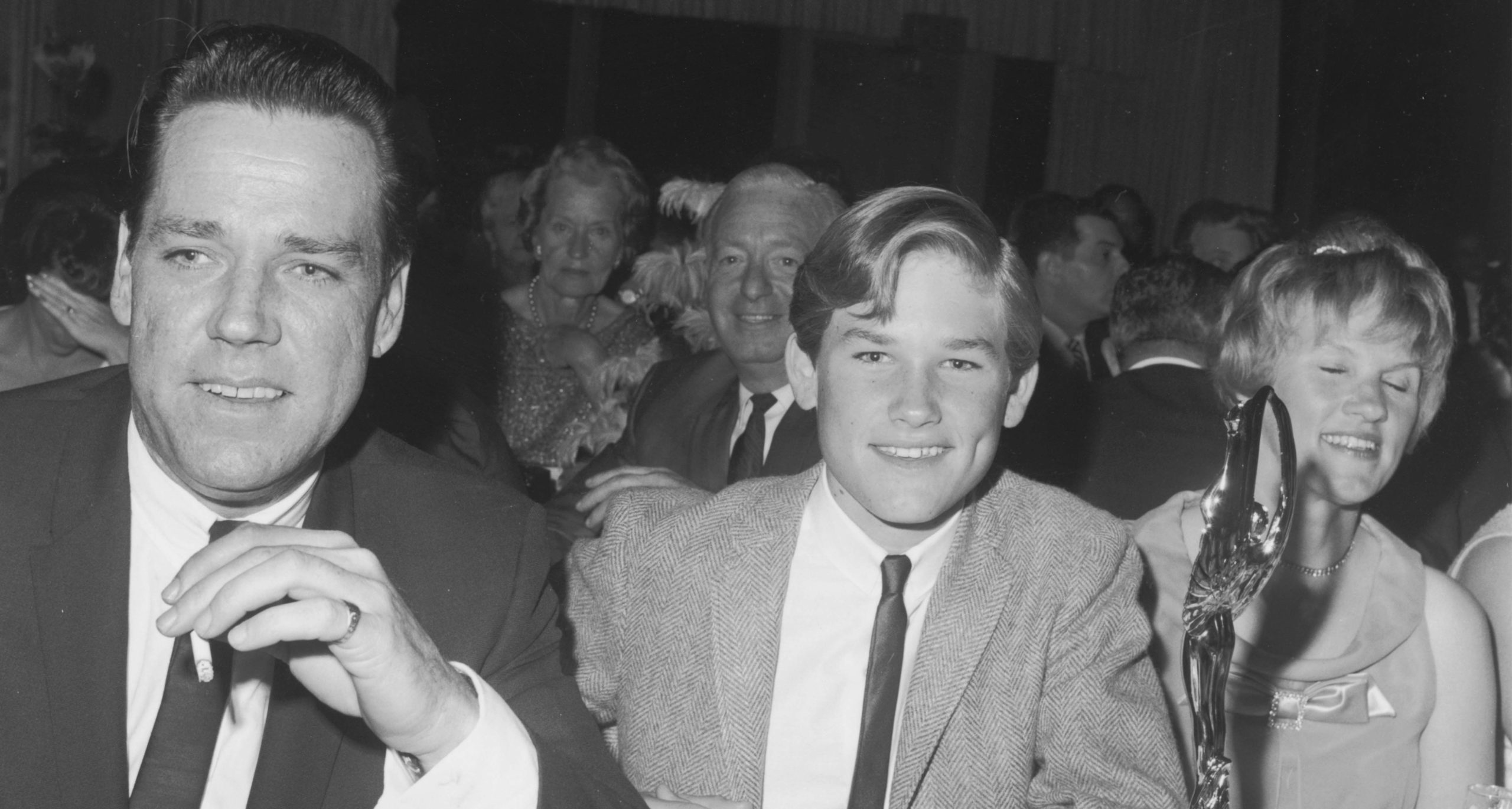
Bing Russell was a working character actor whose job, more often than not, was to get shot. You’ll know him as Deputy Clem Foster on Bonanza, if you know him at all — or as Kurt Russell’s father.
But the story worth telling isn’t either of those. It’s what he did with $500.
Updated September 2026
Who was Bing Russell?
Neil Oliver “Bing” Russell, born 5 May 1926 in Brattleboro, Vermont, and raised within walking distance of the Yankees’ spring training camp in St. Petersburg, Florida — which turns out to matter enormously.
He became the team’s unofficial mascot as a boy. He befriended Joe DiMaggio and Lefty Gomez. And by the account his family has passed down, Lou Gehrig once handed him the bat used for Gehrig’s last home run.
Then he went to Dartmouth on the Navy’s wartime V-12 programme, graduated cum laude in business administration, and spent the next three decades in Hollywood Westerns instead.
What was Bing Russell in?
Bonanza, more than fifty episodes across the 1960s and early ’70s, as Deputy Clem Foster. Around it: Rio Bravo, The Horse Soldiers, The Magnificent Seven, The Apple Dumpling Gang, and guest parts in Gunsmoke, The Twilight Zone and Little House on the Prairie.
And in the 1979 TV movie Elvis, he played Vernon Presley — opposite his own son, who played Elvis.
The figure his family always gave was that he appeared in some 800 films and television shows, and died on screen 126 times. Nobody has ever managed to verify it, and frankly it’s too good to check.
What were the Portland Mavericks?
Here’s where it gets strange.
In 1973, after the Triple-A Beavers packed up and left Portland, Russell bought the city’s abandoned baseball territory for $500 and started his own team — the only independent club in the Class A Short-Season Northwest League, attached to no major-league organisation at all.
He filled the roster by open tryout. The first call went out in June 1973 and drew around 150 hopefuls, one of whom had hitchhiked all the way from Tennessee. Players earned $300 a month. He kept 30 men instead of the usual squad, because he reckoned some of them deserved one more season.
It should have been a disaster. Instead, in 1977 the Mavericks drew 125,300 people across 33 home dates — about 3,800 a game, a short-season minor-league record. The professional Triple-A team that replaced them the following year drew 96,395 across 69 dates. That’s under 1,400 a game.
A team of castoffs out-drew the professionals nearly three to one.
How much did Bing Russell make from the Mavericks?
When the Pacific Coast League decided to come back to Portland for 1978, it offered him $26,000 to hand over the territory and go away.
He asked for $206,000.
Arbitration gave him every cent of it — the largest payout for a minor-league territory in the history of the sport, and a return of roughly 41,000 per cent on his original $500.
Did Kurt Russell play baseball?
He did, for his father. He played about a month of the Mavericks’ first season in 1973 and served as a club vice president. It was a rotator cuff injury that ended his playing career and sent him back to acting — which is the reason there’s a Kurt Russell filmography at all.
Who was baseball’s first female general manager?
Lanny Moss. She was 24, and Bing Russell promoted her in November 1974 — the first woman to hold the job in professional baseball.
That’s the kind of thing an independent owner could do, because there was nobody above him to say no.
The Mavericks also gave Jim Bouton, the Ball Four author, his comeback in 1975; he went 4-1 with a 2.20 ERA and was back in the majors with Atlanta by 1978. Their pitching coach Rob Nelson co-invented Big League Chew there. And their batboy was Todd Field, who grew up to be an Oscar-nominated director.
How did Bing Russell die?
He died on 8 April 2003 in Thousand Oaks, California, aged 76, of cancer.
The Sporting News had named him minor-league executive of the year back in 1974, and in 2020 he was inducted into the Hall of Great Westerners.
What is The Battered Bastards of Baseball?
The documentary about the Mavericks — and the reason most people go looking for his name at all these days. It premiered at Sundance on 20 January 2014 and landed on Netflix that July, where it still is. Kurt Russell, Jim Bouton and Todd Field all appear in it.
It was directed by Chapman and Maclain Way.
They’re Bing Russell’s grandsons.

Who else played for the Portland Mavericks?
The roster was the point. Jim Bouton, the pitcher who had written Ball Four and been frozen out of baseball for it, made his comeback there in 1975 — 4-1, with a 2.20 ERA across five games. He was back in the majors with Atlanta by 1978.
The pitching coach, Rob Nelson, co-invented Big League Chew while he was there. And the batboy was Todd Field, who grew up to be an Oscar-nominated director.
A team nobody wanted produced a comeback, a confectionery empire and a film-maker.
Who was Bing Russell’s family?
He married his wife Louise in 1946 and they had four children, Kurt among them.
The line kept going into both of his worlds. His grandsons include the actor Wyatt Russell and the former major-league player Matt Franco — and Chapman and Maclain Way, who made the documentary that finally told their grandfather’s story.
What else did Bing Russell do?
He coached, and he taught. Beyond the Mavericks he was known in baseball circles for teaching the fundamentals of the game, something he had picked up as a boy hanging around the Yankees’ spring camp in Florida.
The Sporting News named him minor-league executive of the year in 1974. In 2020, seventeen years after his death, he was inducted into the Hall of Great Westerners — for the acting, not the baseball.