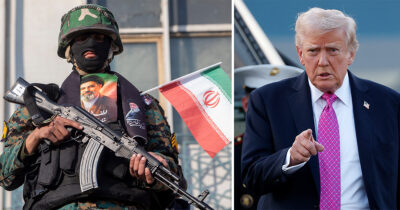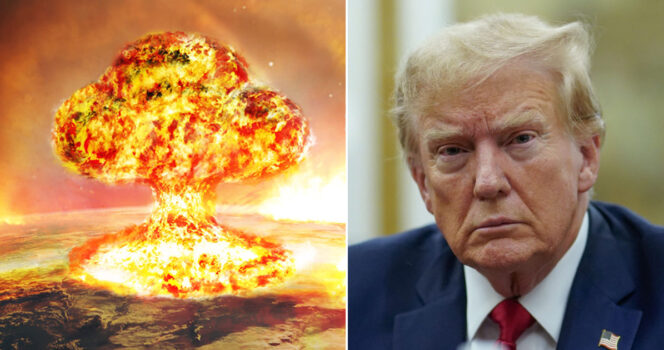
Fears of a wider global conflict intensified after Donald Trump issued a stark warning involving Iran, before a temporary ceasefire was announced. Should a nuclear attack ever occur, however, it could have devastating consequences far beyond a single country.
When a nuclear weapon detonates, everything changes in an instant. For many, there is simply no time to react, and the level of destruction is difficult to comprehend.
Within hundreds of feet, everything is vaporized. Miles beyond that, buildings collapse under extreme force. But even for those who survive the initial blast, the danger is far from over. Lethal radiation exposure follows, leading to catastrophic physical damage and death.
Donald Trump’s comments about Iran
Pakistan’s Prime Minister Shehbaz Sharif announced early Wednesday that the U.S. and Iran had agreed to a temporary ceasefire lasting two weeks, according to the BBC.
This came shortly after Donald Trump made a series of striking comments about Iran, writing on social media: “A whole civilization will die tonight, never to be brought back again. I don’t want that to happen, but it probably will. However, now that we have Complete and Total Regime Change… maybe something revolutionarily wonderful can happen, WHO KNOWS?”
The remarks were widely criticized and quickly sparked concern about what could happen next. Discussions about nuclear weapons began circulating online, while Vice President JD Vance warned that the United States has “tools” it has not yet brought into the current conflict – an apparent reference many interpret as nuclear capability.
Iran, however, responded with threats of its own, stating it would target other locations in the region if it were attacked, according to VT. While the immediate focus is on a potential strike against Iran, experts warn the consequences would not stop at its borders. In fact, up to 18 countries could be directly affected, according to VT.
Countries that could be affected
Any nuclear strike would be catastrophic for Iran itself, with widespread destruction, radiation exposure, and long-term damage to infrastructure. But neighboring countries would likely be the first to feel the impact.
Iran shares land borders with six countries: Iraq, Turkey, Armenia, Turkmenistan, Afghanistan, and Pakistan – all of which could be exposed to radioactive fallout depending on conditions such as wind direction.
Across the water, several Gulf states could also face consequences due to shared air currents and seawater. These include Kuwait, Bahrain, the United Arab Emirates, Qatar, Saudi Arabia, and Oman, according to VT.
The region is heavily dependent on desalinated water, meaning contamination of the Persian Gulf could quickly escalate into a major public health crisis.
Beyond that, additional countries could also be at risk depending on how conditions unfold. So-called secondary risk nations include Syria, Lebanon, Israel, and Jordan, all of which could be affected by shifting fallout patterns.
Exactly how events would unfold in a nuclear scenario is impossible to predict with certainty. But the overall outlook is clear: the consequences would extend far beyond a single strike, affecting multiple countries both directly and indirectly.
READ MORE
- Melania Trump reignites wild body double conspiracy as fans notice one ‘odd’ detail
- Artemis astronauts’ awkward response during Trump call after historic Moon mission