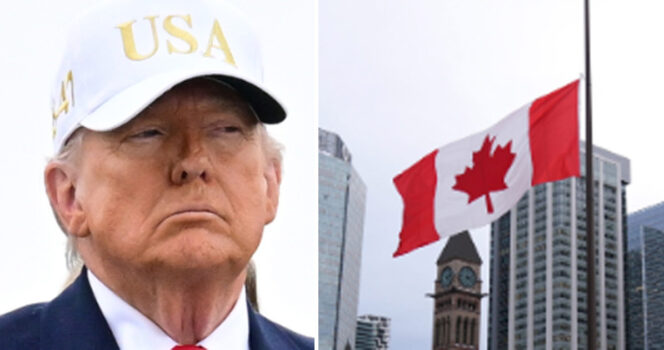
Canada has found a subtle way to push back against Donald Trump’s tariffs.
When Trump first introduced his plan to impose tariffs on imports into the United States, it was framed as a major economic shift. The idea was simple: tax goods coming in from other countries. Critics, however, were quick to point out that those costs often fall on American consumers, not foreign exporters.
Still, Trump managed to win back support in part by promising $2,000 payouts to most Americans. payments that have yet to appear.
Tariffs have since become something of a recurring strategy for Trump. He’s floated them in disputes involving Iran, Greenland, and a range of other geopolitical issues, often using them as leverage.
Canada’s “revenge”
Now, Canada appears to be responding. Not with direct retaliation, but with a calculated economic move.
The Canadian government is preparing to open its market to Chinese electric vehicle manufacturers, potentially allowing companies like BYD to sell cars in Canada at scale. These lower-cost EVs could begin appearing in dealerships as early as later this year.
To make this possible, Canada is fast-tracking a deal that would significantly ease restrictions on Chinese-made vehicles. Instead of the current 100 percent tariff, the proposal would introduce a cap of 49,000 cars alongside a much lower tariff of 6.1 percent, a shift that would dramatically change access to the Canadian market.
But this moce stretch beyond Canada. Because the US and Canada share closely aligned safety and emissions standards, vehicles sold in Canada could potentially make their way into the American market. That means a surge of more affordable Chinese EVs could end up just across the border.
“This bargain no longer works”
Ford CEO Jim Farley has already warned that this scenario could pose an “existential threat” to the US auto industry.
As it stands, the United States remains largely closed off to Chinese-made vehicles. How Trump will respond is still unclear. What is known is that he is currently pushing to renegotiate the US-Mexico-Canada Agreement, likely aiming for terms more favorable to the US. Reports also suggest he could withdraw from the deal altogether if negotiations don’t go his way, or attempt to strike separate agreements with each country.
Canada, for its part, is expected to hold firm. Speaking at the World Economic Forum in Davos, Prime Minister Mark Carney said: “American hegemony, in particular, helped provide public goods, open sea lanes, a stable financial system, collective security and support for frameworks for resolving disputes,
“This bargain no longer works,” according to VT.
Despite the shift in tone, Carney later clarified that Canada has “no plans” to pursue a full free-trade agreement with China, a move that could trigger a 100 percent tariff on Canadian exports from the US, as previously threatened by Trump.
READ MORE
- Bill Gates says only these 3 jobs are safe from AI takeover
- Brutal reason why Keith Urban’s daughter Sunday ‘snubbed’ him, months after Nicole Kidman divorce