Many people around the world have made huge amounts of money betting on the war in Iran — and now politicians and watchdogs are sounding the alarm.
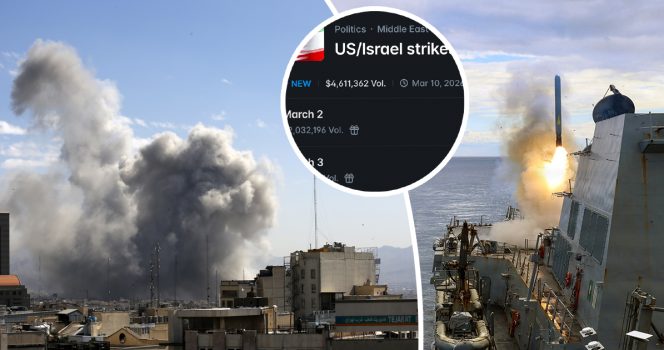
This weekend, the United States and Israel launched major military strikes against Iran that killed the country’s Supreme Leader, Ayatollah Ali Khamenei. After the announcement, gamblers rushed to prediction markets like Polymarket and Kalshi to place bets about what would happen next.
Some people are now questioning whether this kind of betting is right — or even legal.
According to Reuters, about $529 million was traded on Polymarket on bets tied to when the US and Israel would strike Iran. Another $150 million was bet on whether Khamenei would be removed from power by the end of March.
Gamblers made milions on US attack in Iran
Analytics groups said that six new accounts made roughly $1.2 million in profit by betting that the attack would happen on Feb. 28 — the actual day the strikes began. Most of these accounts were created just hours before the attack, and the timing has raised eyebrows.
And it wasn’t just about the strikes. Kalshi saw $36 million in bets about whether Iran would have a regime change. Meanwhile, Polymarket had $31 million in trading on whether Khamenei would still be in power by March 31.
A commenter on social media summed up the bizarre situation by noting how close the bets were to real events, leading many to wonder whether some bettors knew something in advance.
US Senator Chris Murphy from Connecticut didn’t hold back, writing that it’s “insane this is legal.” He said he plans to introduce new legislation to ban this type of betting altogether.
Betting company responds
Another lawmaker, Representative Mike Levin, has asked for more answers and transparency, saying in a post that “prediction markets cannot be a vehicle for profiting off advance knowledge of military action.”
These markets exist in a legal grey area. In the US, contracts tied directly to war, violence, or assassination are generally prohibited — but prediction markets operate online, often offshore, and aren’t regulated like traditional gambling.
Kalshi’s boss, Tarek Mansour, defended his company, saying they do not allow bets “directly tied to death,” and that they design their rules to prevent people from profiting from loss of life. He also said they refunded fees and adjusted payouts for markets related to Khamenei’s death.
Polymarket, meanwhile, has been quiet and has not given a comment to the media.
What do you think of this? Share your thoughts in the comment section on Facebook.
READ MORE
- Donald Trump responds to Iranian threat after strikes kill Supreme Leader
- Donald Trump speaks out after 3 American troops killed in war with Iran