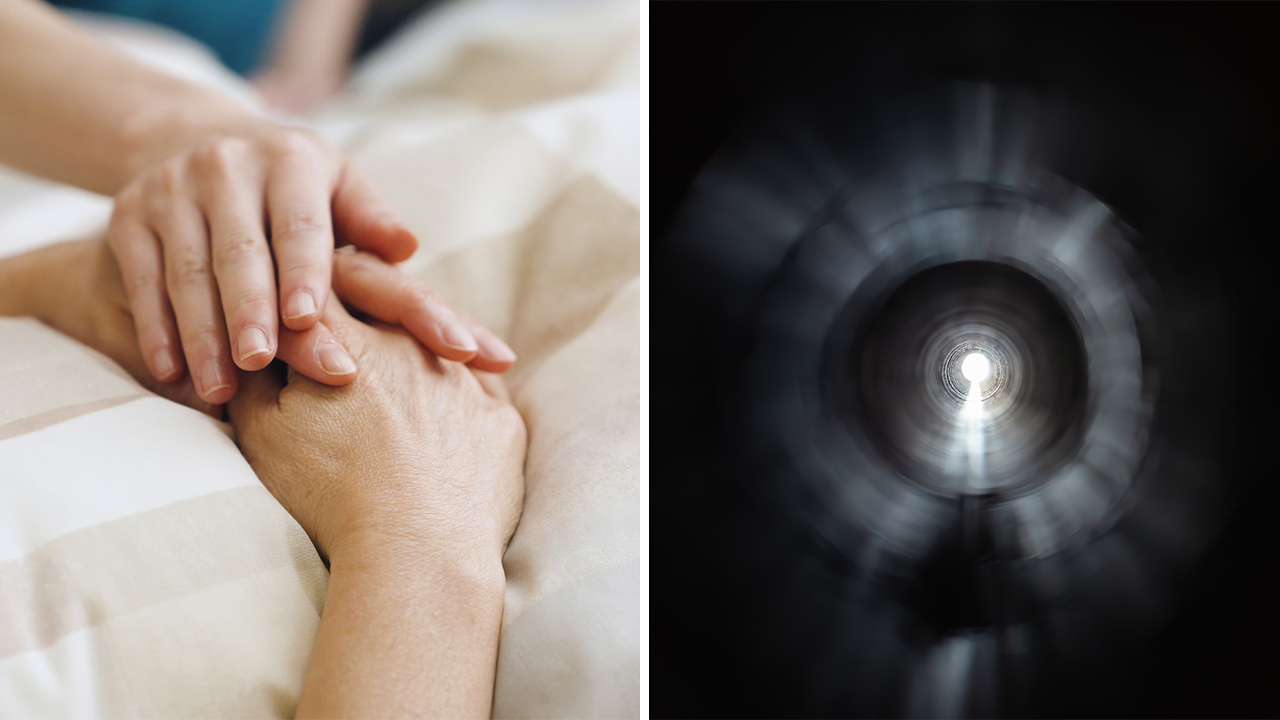
A hospice physician who has spent close on thirty years sitting at the bedsides of dying patients has revealed a number of key signs that someone may be about to pass.
As a result of his extensive work in hospice care, Dr. Chris Kerr is more qualified than most to speak on the subject of death. Or, more accurately, to speak on the details relating to people who are coming to the end of their life.
Kerr says there are certain signs that usually precede someone’s passing, including visions or “visitations” from people who have already died.
Speaking on Oprah’s podcast, he told the legendary TV host: “That’s a sign you’re very close to the end.”
He added that these visitations often coincide with prolonged periods of sleep, where an individual spends ‘more and more time within the sleep state’. In said state, they are reportedly more prone to becoming immersed in the aforesaid visions.
Kerr revealed that the visions tend to intensify as an individual draws closer to death, while the patients themselves commonly insist that what they’re seeing is no dream. Kerr himself said that he doesn’t refer to them as dreams, drawing a line between the experiences and what people might experience each night when they go to sleep.
“It’s happening in the context of sleep, so you’re sleeping more, and within the sleep state, more and more you’re immersed in these experiences,” Kerr told Oprah.
“They’re not dream-like, and there’s not symbolism, they’re not metaphor,” he added, saying that patients often refute doctors’ suggestions that they are dreams in the common sense of the term.
“Sometimes they actually get offended when you imply that it was a dream because it was a visitation for them.”
The physician went on to state that the visions are literal as opposed to symbolic. There are no hidden messages to work out, no symbols or signs that are intended to be deciphered.

“It’s based on real-life happenings, real-life people,” Kerr said.
“It’s recalled with absolute clarity. I’ve been doing it for 27 years. I’ve never had a patient ask me, ‘What do you think this means?'”
Children, Kerr claims, often don’t see a deceased relative or loved one, since in many cases, they haven’t lived long enough themselves to have lost someone. Instead, he described how sometimes an ‘animal comes back with the same meaning’, giving the child a similar comfort to that an adult might benefit from upon seeing a late relative.
“They don’t distinguish between the imaginary and the real in the same way,” he said. “They don’t have language for mortality, finality.”
Children facing terminal illness, for example, may see a late pet, or alternatively a family friend who has died.
“They often have a very clear understanding that they are at the end of their life,” he said.
Read more: