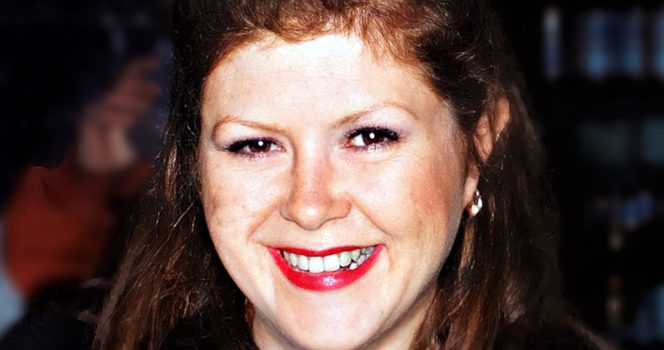
Kirsty MacColl’s death remains one of the most heartbreaking losses in modern music.
Not only because she was taken at the height of her creativity, but because her final moments were spent doing what any mother would hope to do: protecting her children.
Holiday in Mexico
On 18 December 2000, the beloved British singer-songwriter, known for her sharp wit, soaring voice and the timeless Christmas duet ‘Fairytale of New York’, was on holiday in Cozumel, Mexico with her sons Jamie and Louis and her partner, James Knight. It was meant to be a rare break after 18 months of uninterrupted work.
Instead, it became the scene of an unthinkable tragedy.
While diving with her boys in what was marked as a watercraft-restricted zone, a large powerboat sped illegally into the area. As the trio surfaced, Kirsty spotted the boat heading straight for them. In the split second she had, she pushed her son Jamie out of its path, an act that saved his life.
But Kirsty was killed instantly.
In a statement given to police hours after the accident, Jamie described the horrific condition of his mother’s body, saying there was a massive wound that looked as if she had been “almost split in two.” Sadly, his description was accurate.
Two separate autopsies — one conducted in Mexico and another by forensic pathologist Dr. Richard Shepherd at St George’s Hospital Medical School in London — confirmed the extent of the trauma. MacColl had been cut open from the base of her neck down to her waist, with her left leg and part of her torso nearly severed by the impact.
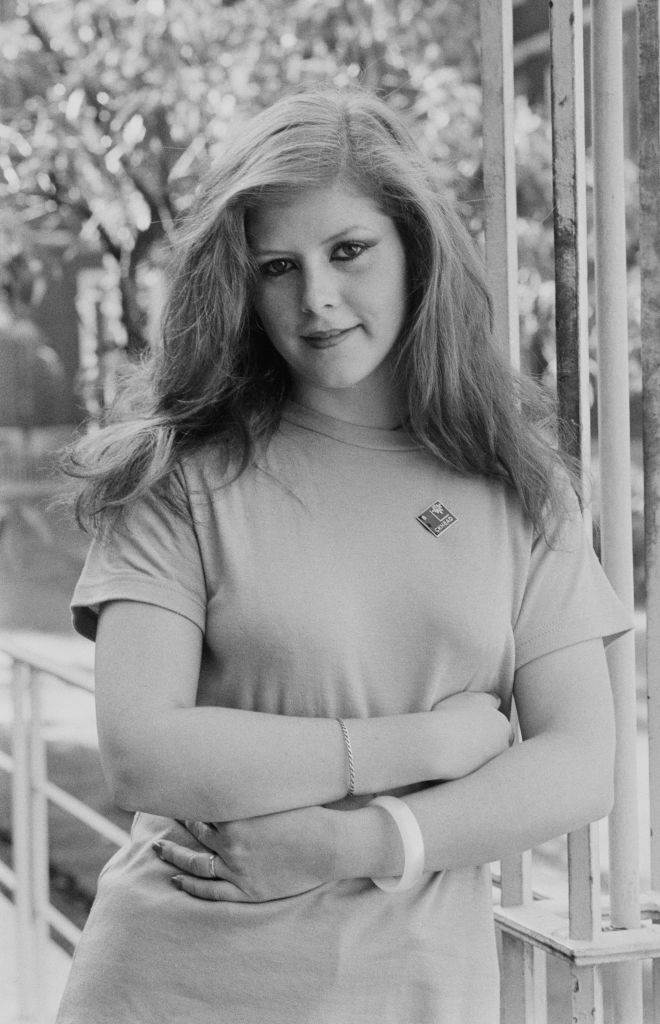
“We were going to do two dives,” MacColl’s other son, Louis recalled, in an interview with Alix Kirsta. “On the first, about 2pm, we all went down together. There were wonderful things there. I came up to the surface first, Mummy was next to me. I said, ‘Wow!’ She smiled and said, ‘Great!’ Then she suddenly screamed, ‘Look out!’ and tried to push us out of the way. The boat was already over us — I could see the propellers.”
Swimming as fast as he could away from the danger, he saw the water around him darken with red.
“I was swimming in Mummy’s blood. I heard Jamie shout, “Where’s Mummy?” I screamed that she’d been hit, and to swim the other way and not look back.”
Her mother, Jean Newlove, said only: “The full details of Kirsty’s injuries are too awful for me to describe… But two boys have to live with those last memories of their mother for the rest of their lives.”
Part of what made Kirsty MacColl’s death so devastating was how utterly avoidable it was. The sudden loss of musicians often comes with familiar, tragic narratives — addiction, risky behavior, or high-speed crashes. But none of those applied here.
Kirsty, a keen diver, was a 41-year-old mother simply enjoying a holiday with the children she adored. Sadly, she was also at the peak of her career, having just released an acclaimed new album.
A voice like no one else
Born in Croydon in 1959, Kirsty came from folk royalty — her father was the legendary Ewan MacColl — but she forged her own sound.
From punk beginnings as “Mandy Doubt” in the band Drug Addix, she moved into pop with a mixture of wit and vulnerability that made her a critical favourite.
Her early single ‘There’s a Guy Works Down the Chip Shop Swears He’s Elvis’ turned her into a distinctive voice of the 1980s, long before streaming would have given a quirky, narrative-driven songwriter the fanbase she deserved. She could move from pop to folk to alternative rock without ever sounding like anyone but herself.
Her collaborators adored her. Bono once said she belonged in the same lineage of great English songwriters as Ray Davies and Paul Weller, calling her “the Noelle Coward [sic] of her generation.” Morrissey described her as “a supreme original.” Johnny Marr said she had “the wit of Ray Davies and the harmonic invention of the Beach Boys, only cooler.”

And then, of course, there was the song that would bind her to Christmas forever — ”Fairytale of New York”. What began as guide vocals sung at home for her then-husband, producer Steve Lillywhite, became so beautiful and so biting that The Pogues kept her performance on the record.
It became a classic, and remains her defining musical legacy. In the UK, “Fairytale of New York” is the most-played Christmas song of the 21st century.
The legal fallout
As reported in an article by true-crime writer Alix Kirsta, Kirsty’s mother remembered the final time she saw her daughter. On the evening of December 10, the night before Kirsty MacColl and her family were set to leave, the mother came over for dinner. They spent the evening discussing plans for Christmas, which, as was tradition, the family would celebrate with friends at Kirsty’s home.
“We hugged goodbye. I said, ‘I love you,’ as she walked away, and without looking back she called, ‘And I love you.’”
When news reached her family that Kirsty had been killed, nothing made sense. Reports were conflicting. Witnesses contradicted one another. Mexican authorities failed to contact the family.
A boat that should never have entered a protected zone had done so at speed, yet the captain, Carlos González Nova, owner of one of Mexico’s largest supermarket empires, was not held accountable.
Instead, a deckhand, José Cen Yam, claimed he was driving. He was later convicted of culpable homicide, only to avoid prison by paying a fine of just £61 (about $90). Sources who spoke to Cen Yam after the killing said he was compensated for taking the fall.
To Kirsty’s mother, it felt like an insult.
“Is £61 really what the authorities consider my daughter’s life to be worth?” she asked.
What happened to Carlos González Nova?
The family launched the Justice For Kirsty campaign, pushing for answers and accountability. Witnesses later stated the boat was travelling “18–20 knots”, its bow high out of the water. Dive captains confirmed the area was clearly marked and well-known as a safe, shallow site for beginners. The contradictions piled up.
One dive captain summed up the imbalance of power bluntly:
“We are poor people. He is the Don — what more is there to say?”
In 2009, Carlos González Nova passed away at the age of 92 from natural causes. Later that December, the Justice for Kirsty Campaign Committee released a statement announcing the closure of the campaign, explaining that it “was successful in achieving most of its aims” and that “it is unlikely that any more could be achieved.”
The statement also noted that the campaign’s remaining funds would be donated to two charities, Casa Alianza México and Cuba Music Solidarity, a decision described as one “Kirsty would have approved.”
That final act of love
Kirsty MacColl was 41 when she died, a mother, a songwriter at the height of her powers, a woman who had found love again and was finally receiving the acclaim she had long deserved.
Her final act was instinctive, fearless, and entirely in character. She saw danger. She acted. And she saved her child.
What remains is a body of work full of intelligence and warmth, a family still seeking the justice she deserved, and the story of a mother who sacrificed everything in an instant.
Her mother once said:
“I was sickened, the boys dumbfounded.”
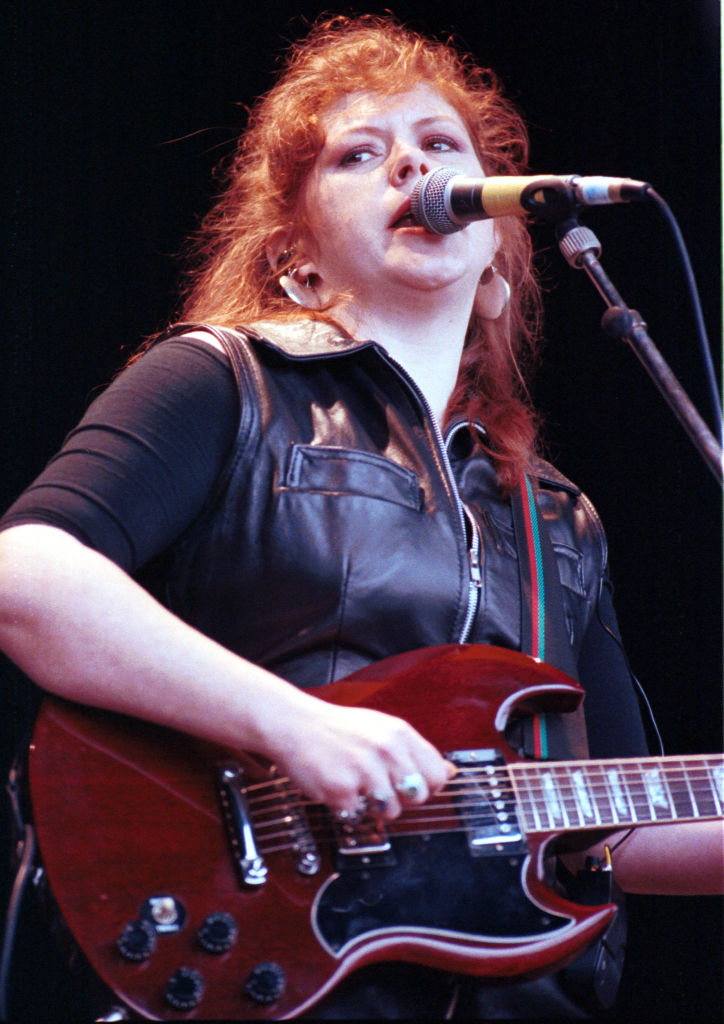
But she also knew who her daughter truly was — bold, brave, uncompromising, and fiercely loving. Kirsty MacColl’s life ended in tragedy, but it was defined by brilliance. And in her last breath, she proved the depth of her courage.
READ MORE
- 18 facts everyone should know about Farrah Fawcett
- Sharon Osbourne reveals why she did not ‘end her life’ after Ozzy