Before terms like ‘MILF’ and ‘Cougar’ even existed, The Graduate was a sensation that left an everlasting impact on everyone who watched it.
Anne Bancroft delivered a career-defining performance, effortlessly balancing sophistication, beauty, and emotional depth, while Dustin Hoffman’s awkward innocence made the film endlessly relatable and hilarious. Scenes like the iconic “Mrs. Robinson, you’re trying to seduce me, aren’t you?” have become legendary.
But even a masterpiece like this wasn’t immune to mistakes and bloopers. One especially steamy scene has a story that few people know… and once you hear it, you’ll never watch that scene the same way again…
The Graduate hit theaters at the height of Beatlemania in 1967, right as the Vietnam War was fueling protests in the streets. Hippy culture was exploding, and people were questioning authority, social norms, sex, and relationships. The movie captured all of that lightning in a bottle — a dazzling, brilliant snapshot of its time.
But even a masterpiece like this had its secrets. Nearly 60 years later, little-known mistakes and fascinating behind-the-scenes stories are finally coming to light, and they might change the way you see the film forever.
A window cleaner?
He perfected awkward, teeth‑grittingly uncomfortable moments as Benjamin Braddock, the recent college graduate entangled in a scandalous affair with the older, married Mrs. Robinson (Anne Bancroft).
Braddock’s polite manners and complete naïveté are pure comedy gold in the film.
When he auditioned for the role, Hoffman was just shy of 30. He wasn’t well-known at the time, and he wasn’t even the producers’ first choice.
When Hoffman showed up at the casting office, producer Joseph E. Levine mistook him for a window cleaner. Hoffman immediately caught on, played it cool, and actually started cleaning a window. Eventually, Levine realized who he really was —and the casting magic began
Why Robert Redford was snubbed
Before Dustin Hoffman landed the role of Benjamin Braddock, Robert Redford actually screen-tested with Candice Bergen. But director Mike Nichols wasn’t convinced Redford could pull off the underdog vibe the character needed.
When Nichols explained his doubts, Redford argued he totally understood Benjamin’s awkward, socially misfit nature.
Nichols listened – and then dropped the zinger:
”Bob, look in the mirror. Can you honestly imagine a guy like you having difficulty seducing a woman?”
Redford got the point, and the role went elsewhere, but the connection between Nichols and Redford had already been forged when Nichols cast him in his first Broadway hit, Barefoot in the Park.
Was called ‘big-nosed’
Speaking of the chaotic casting for The Graduate, here’s a gem: Hoffman was asked to perform a love scene with Anne Bancroft’s daughter, Katharine Ross, despite never having done one before.
He later admitted, ”a girl like [Ross] would never go for a guy like me in a million years.” Ross herself wasn’t exactly confident either, saying Hoffman ”looked about 3 feet tall … so unkempt. This is going to be a disaster.”
Yet, awkwardness aside — or maybe because of it — director Mike Nichols went ahead and cast him. Nichols went on to win an Oscar for best director for the film.
”As far as I’m concerned, Mike Nichols did a very courageous thing casting me in a part that I was not right for, meaning I was Jewish. In fact, many of the reviews were very negative. It was kind of veiled anti-Semitism…. I was called ‘big-nosed’ in the reviews; ‘a nasal voice’,” Hoffman later shared.
From box office hit to $55 a week
The Graduate made a whopping $104.9 million and was the biggest hit of 1967—but Dustin Hoffman barely got rich from it. He earned $20,000 for the film, and after taxes and renting a temporary place, he walked away with just $4,000. So what did he do next? He filed for New York State unemployment and collected $55 a week while living in a tiny two-room West Village apartment!
Why Doris Day said no
We’ve talked a lot about Dustin Hoffman, but Anne Bancroft absolutely stole the show as Mrs. Robinson. It’s hard to imagine anyone else bringing that role to life with such intensity and nuance. Bancroft was a phenomenal talent—arguably underrated — and even though she didn’t win an Oscar for this performance, her portrayal remains unforgettable and utterly iconic.
We’ve talked a lot about Dustin Hoffman, but Anne Bancroft absolutely stole the show as Mrs. Robinson. It’s hard to imagine anyone else bringing that role to life with such intensity and nuance.
Bancroft was a phenomenal talent — arguably underrated —and even though she didn’t win an Oscar for this performance, her portrayal remains unforgettable and utterly iconic.
Interestingly, director Mike Nichols’ first choice for Mrs. Robinson was French actress Jeanne Moreau. The reasoning? In French culture, there was a stereotype that “older” women often “trained” younger men in matters of romance and sexuality. Casting the role proved tricky — Doris Day, for example, turned down the part because the nudity required was too much for her. In the end, Anne Bancroft took on the role, delivering a performance that would become utterly unforgettable.
That famous hotel scene
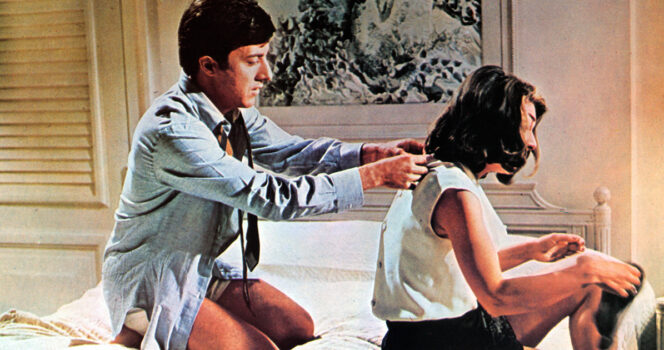
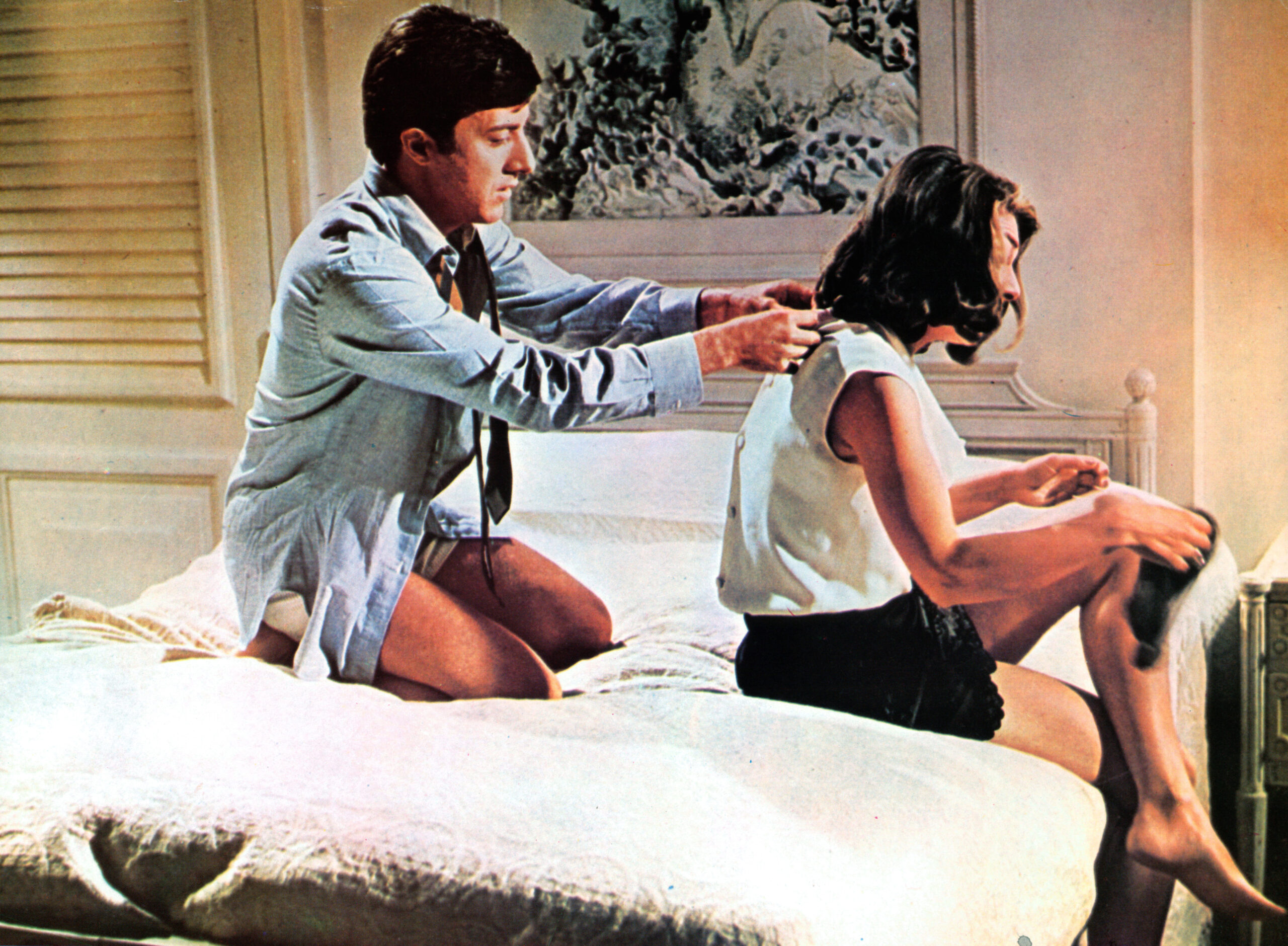
During rehearsals for the famous hotel room scene in The Graduate, Anne Bancroft had no idea what Dustin Hoffman was about to do. But all of a sudden, he grabbed her breast.
Hoffman later explained it reminded him of mischievous schoolboys who would try to sneak a grab while pretending to put on their jackets.
When it happened, director Mike Nichols erupted into laughter, and Hoffman couldn’t help himself either. Rather than stop the take, he turned to the wall and banged his head, trying to stifle his laughter. Nichols found it so hilarious that he decided to keep the moment in the final cut of the film.
So, that spontaneous burst of awkward humor you see on screen? Totally real.
Mrs. Robinson wasn’t that much older
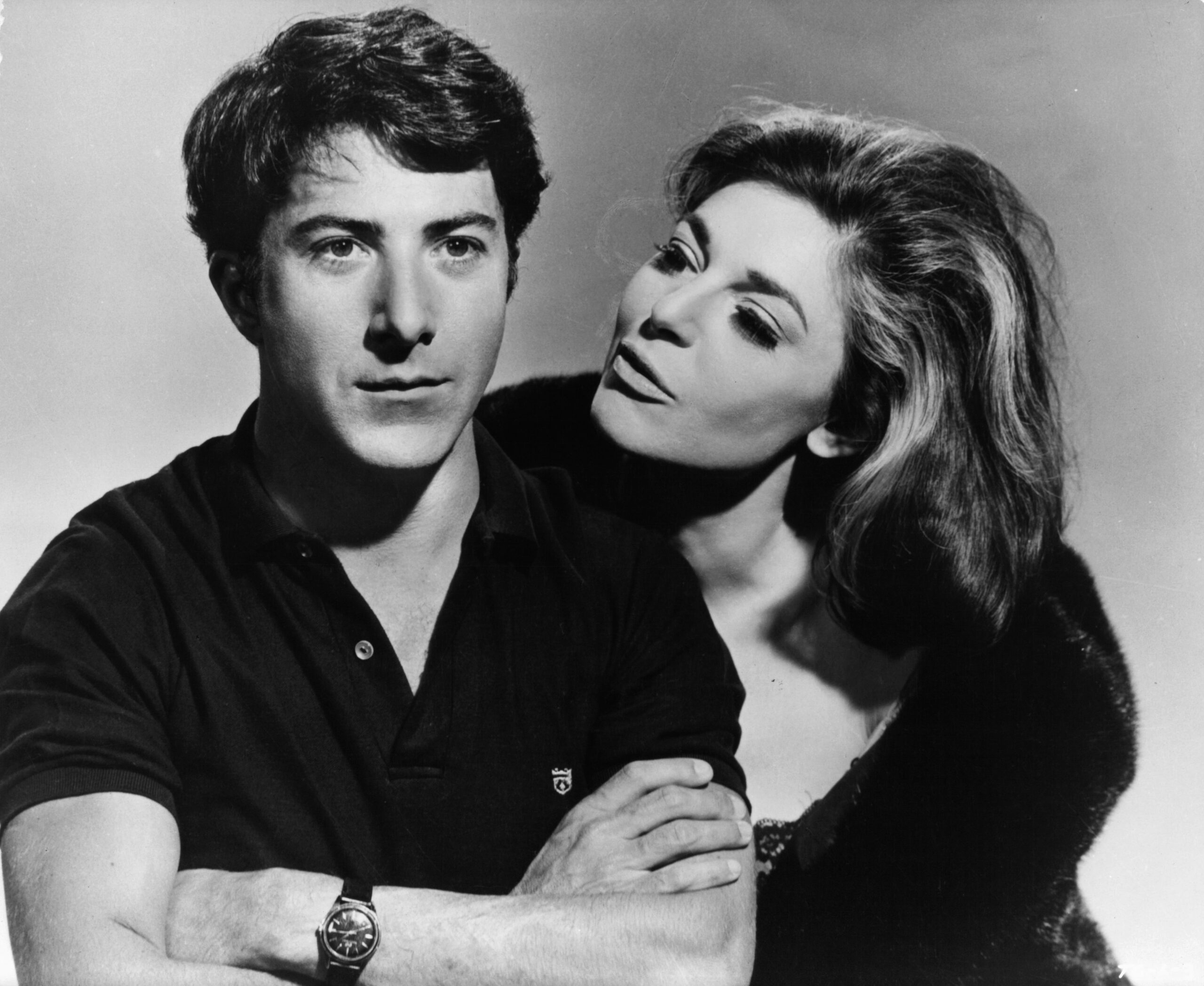
Anne Bancroft skyrocketed to fame with her role as the sultry Mrs. Robinson but despite becoming the ultimate archetype of the “older woman,” Bancroft was only 36 at the time — just eight years older than her onscreen daughter, Katharine Ross, and a mere six years older than Hoffman.
Hollywood definitely worked some age-bending magic, but that wasn’t the whole story. Hoffman naturally had a youthful, boyish look, while Bancroft, who had been a longtime smoker and drinker, appeared older than her actual age.
Elizabeth Wilson, who played Mrs. Braddock, mentioned in a 2012 interview with Connecticut Magazine that Bancroft “had a drinking problem,” which helps explain why she looked prematurely aged in the film.
The sad ending of Anne Bancroft
Anne Bancroft herself admitted she had mixed feelings about the role, saying in interviews that it “overshadowed her other work.” For years after starring in The Graduate, young men would tell her she was the first woman they ever fantasized about.
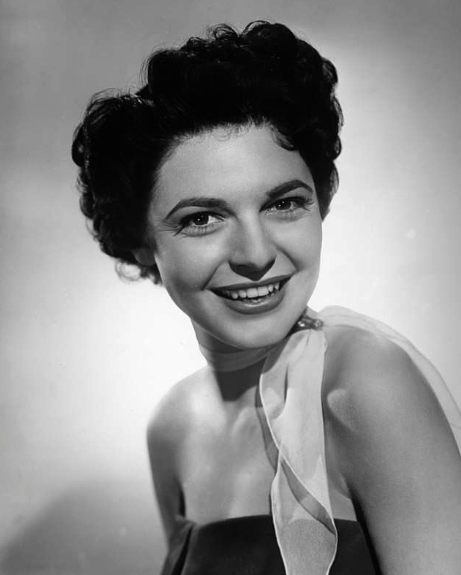
Sadly, Bancroft passed away from uterine cancer at age 73 on June 6, 2005. Her death surprised many, as the intensely private actress had kept her illness hidden. In a touching tribute at her memorial service in New York City, lights on Broadway were dimmed in her honor, and Paul Simon performed “Mrs. Robinson.”
An unusual move at that time
Did you know The Graduate catapulted folk-rock duo Simon & Garfunkel to even greater fame? Originally, director Mike Nichols and editor Sam O’Steen used their songs — like The Sound of Silence — just to help pace the editing. But Nichols soon realized swapping in original music wouldn’t have the same magic, so he kept their tracks on the soundtrack, an unusual move at the time.
Paul Simon actually wrote two songs for the movie — Punky’s Dilemma and A Hazy Shade of Winter—but Nichols rejected both. They later appeared on the Bookends album. Believe it or not, Mrs. Robinson wasn’t even written for the film. Simon was originally working on a song called Mrs. Roosevelt, about Eleanor Roosevelt, when Nichols decided to include it.
Interestingly, Simon and Art Garfunkel only sing the chorus in the movie version —none of the verses. Some of the lyrics in that chorus differ from the more familiar final version that became a chart-topping hit.
Two interesting camera techniques
The Graduate was groundbreaking in so many ways, and it arrived perfectly in its moment. Some of its visual storytelling is subtle but brilliant.
Near the end of the film, there’s a scene where Benjamin is running straight toward the camera. Thanks to a very long telephoto lens, the effect makes him look like he’s going nowhere, even as he runs full speed, a clever way to mirror his sense of stuckness in life.
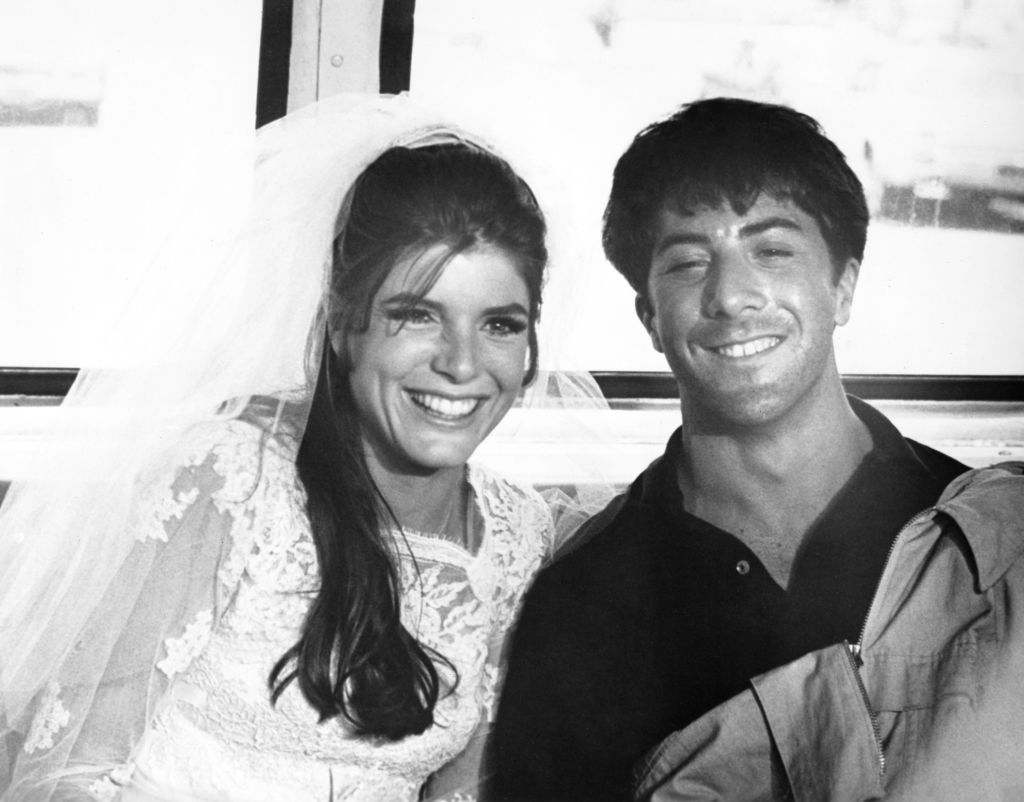
In another scene, Benjamin walks from the right side of the screen to the left, while everyone else moves left to right. In Western culture, left-to-right motion feels natural (think of reading a page), while right-to-left feels off. These camera tricks reinforce the film’s central theme: Benjamin is going the wrong way and struggling to get anywhere.
The truth behind the topless scenes
On the Graduate set, Anne Bancroft had firmly agreed no topless scenes, especially for the tricky bedroom confrontation with Benjamin.
So, the crew had to get creative.
They went hunting on Sunset Strip for a stand-in willing to do the shots. The first candidate? She wouldn’t remove her pasties. Plan B had to be called in, and finally, a second stand-in saved the day. Even classic films have their on-set adventures…
On-screen goofs in The Graduate
Even cinematic classics have their little slip-ups, and here are the three biggest goofs from this iconic film:
The disappearing lipstick: At Benjamin’s welcome-home party, a woman leaves a bright lipstick mark on his cheek, but later, it’s gone with no explanation.
Daytime at night: When Ben drives Mrs. Robinson home at night, the greenhouse scene suddenly looks like a sunny afternoon.
The mysteriously silent stereo: After Mrs. Robinson turns on the music while entertaining Benjamin, it magically stops playing when he rushes downstairs to avoid Mr. Robinson.
How Mrs. Robinson’s leg became legendary
Even decades after The Graduate premiered, it still holds a special place in film lovers’ memories and continues to be discovered by new generations of cinephiles. Its influence on popular culture has been widespread and often playful.
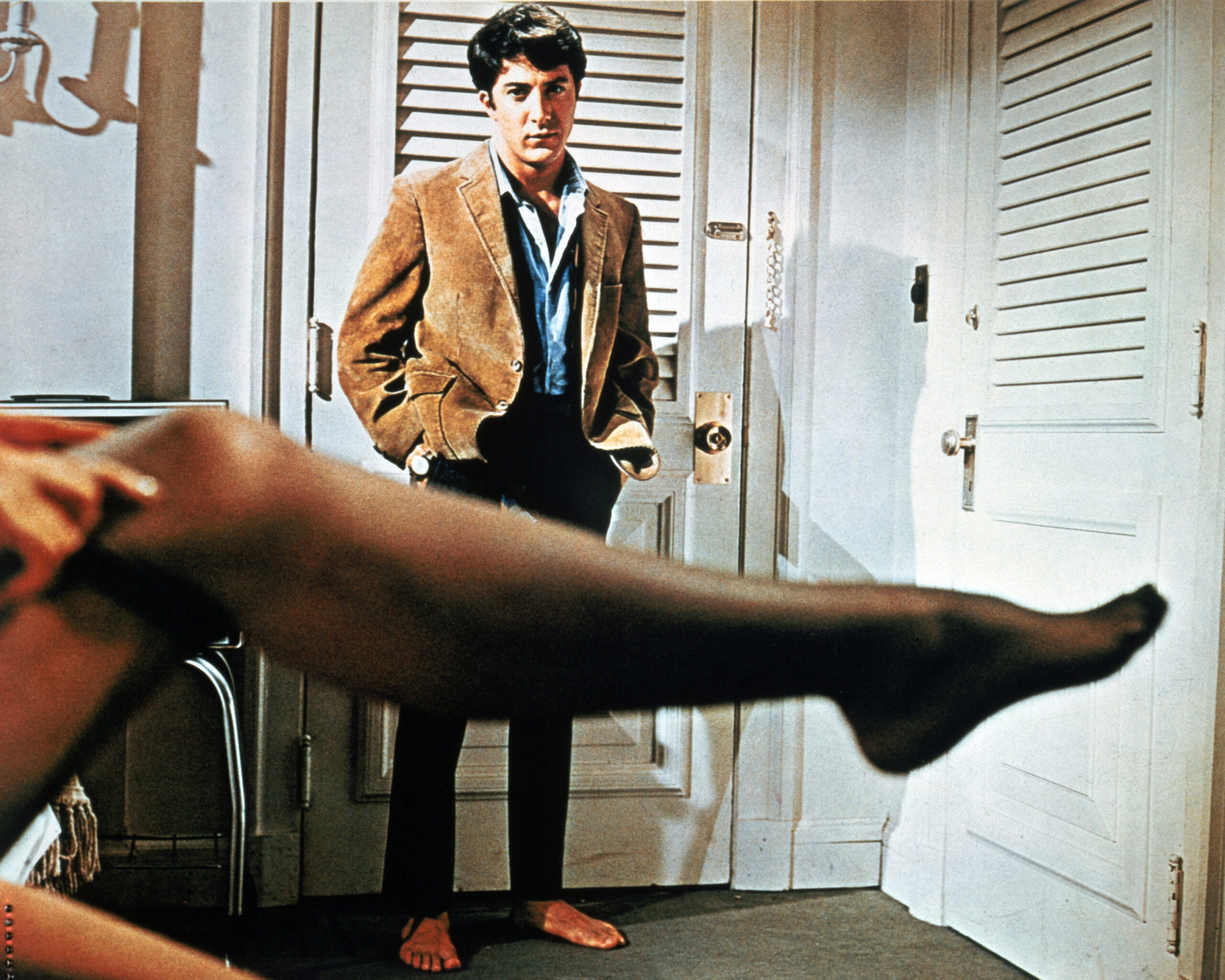
For example, the iconic leg-framing scene where Mrs. Robinson seduces Benjamin has been parodied in a Roseanne episode, “David and Goliath”, in a fantasy sequence where Jackie takes on Bancroft’s role and tries to seduce David.
The scene also appears in The Simpsons episode “Lisa’s Substitute”, with Mrs. Krabappel humorously attempting to seduce Mr. Bergstrom — voiced by none other than Dustin Hoffman.
Decades after its release, The Graduate remains a touchstone of cinema, blending sharp wit, iconic performances, and daring storytelling. Its influence stretches far beyond the screen—shaping pop culture, inspiring countless parodies, and continuing to captivate new generations of film lovers.
Whether it’s Dustin Hoffman’s awkward charm, Anne Bancroft’s unforgettable seduction, or Simon & Garfunkel’s haunting soundtrack, the film proves that true classics never lose their edge —they only grow richer with time.
READ MORE