

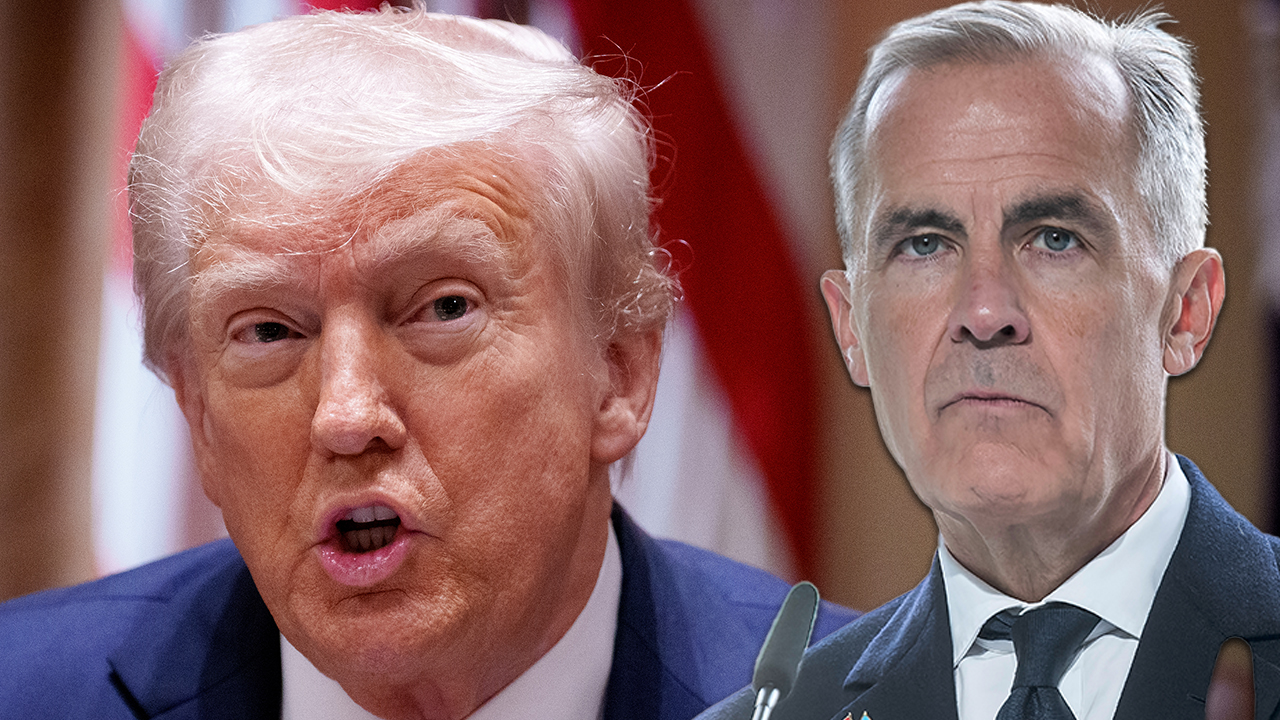
With tensions between the U.S. and Canada reaching a boiling point, Mark Carney appeared determined to get Donald Trump’s attention in China.
Now, a lip reader claims to have uncovered the five pointed words Carney used to put Trump on the spot.
On November 19, U.S. President Donald Trump, Chinese President Xi Jinping and Russian President Vladimir Putin took part in what was described as their first-ever trilateral summit in Shenzhen, China, on the sidelines of the APEC summit.
The meeting ended with a joint peace declaration, although analysts noted that it offered few concrete breakthroughs.
Canadian Prime Minister Mark Carney was also in China for the summit, facing a delicate diplomatic balancing act involving all three major powers.
His relationship with Beijing has long been complicated. During a leaders’ debate last year, Carney described China as Canada’s ”biggest security threat.” His government has also introduced a foreign influence registry aimed at tackling interference by China and other countries.
But relations with the U.S. are hardly at their best either. President Donald Trump’s sweeping tariffs have put growing pressure on Canadian industries and strained ties between the two neighbors. Against that backdrop, Carney has been pursuing what he calls a more ”pragmatic” and ”constructive” approach to China, while maintaining safeguards against becoming too closely tied to Beijing.
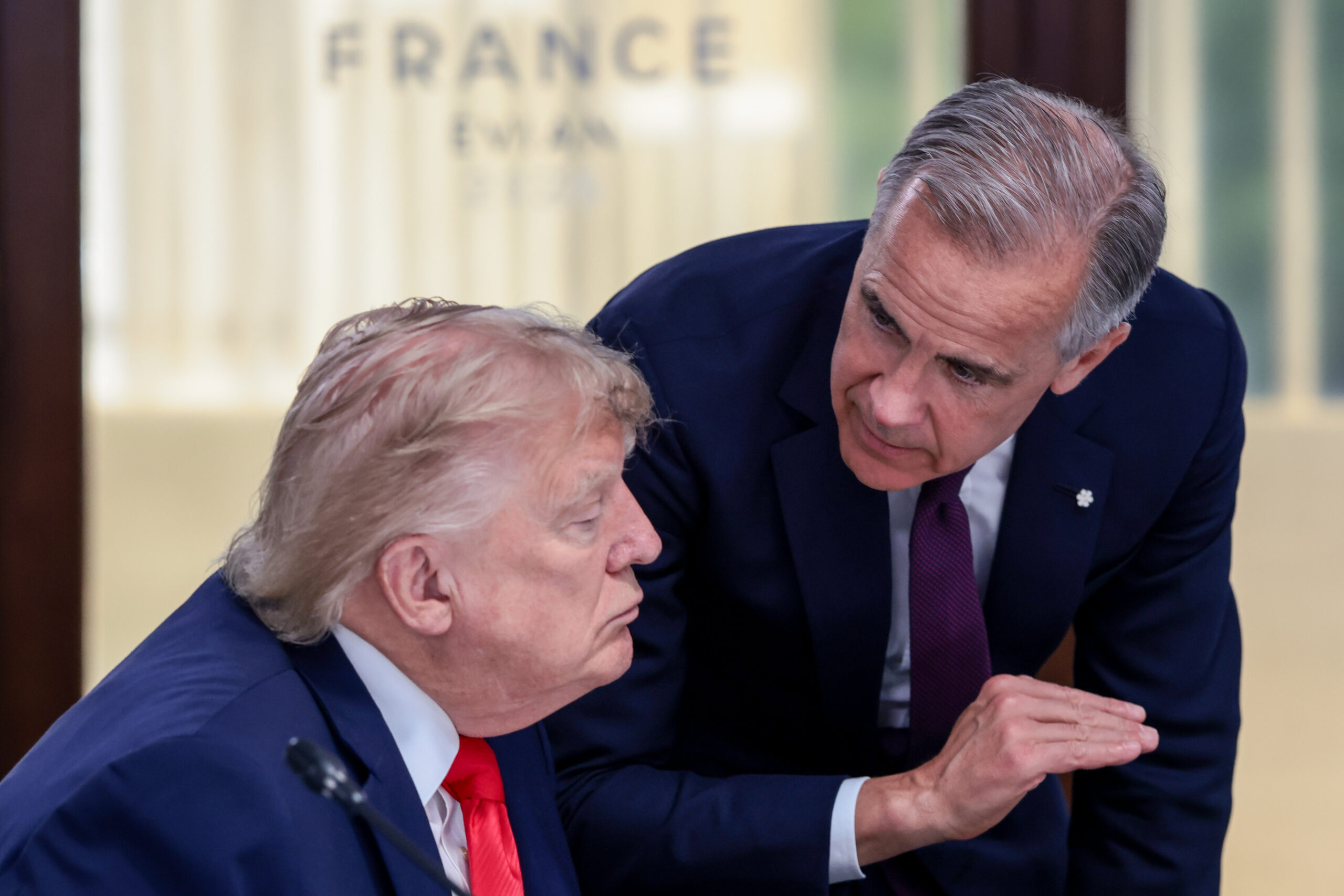
And during the APEC summit, Carney appeared to seize an opportunity to address the strained relationship with Trump.
The two leaders crossed paths on Thursday after posing for official photographs.
Carney approached the U.S. president and, according to professional lip reader Nicola Hickling, appeared to open with a pointed question.
”Excuse me, do we have an issue?” Carney allegedly asked, as reported by the Daily Express.
Carney then added: ”We’ve barely talked,” before following up with: ”Can we agree to meet?”
Trump’s response appeared brief.
He allegedly replied, ”We’ll talk,” before turning away.
Hickling also interpreted a circular hand gesture from Trump as a possible indication that he was suggesting a meeting at a later date.
Canada is particularly keen to see the U.S. reduce or remove tariffs on automobiles, steel, aluminum, softwood lumber and other products. Some of the measures were introduced under Section 232, which allows the U.S. president to impose tariffs on imports on national security grounds.

The dispute has created uncertainty for businesses on both sides of the border, with concerns over job losses and factory closures adding to the pressure on one of the world’s most important trading relationships.
Carney has also been pushing for the renewal of the United States-Mexico-Canada Agreement, which underpins trade across North America. However, Washington declined to extend the agreement for another 16-year term during its review in July, leaving businesses uncertain about what comes next.
Despite the tensions, Carney has not ruled out reaching an agreement with Trump. He has made clear that Canada remains open to a deal that benefits both countries, but will not accept one that fails to serve its own interests.
”The United States fundamentally changed its trade objectives, and we are focused on getting the right deal for Canadians,” Carney said.
”We will do what’s necessary in order to achieve that deal, but only that deal that is in the interests of Canadians.”
Meanwhile, Carney struck a more positive tone when discussing his talks with Chinese President Xi Jinping, describing them as having gone ”exceptionally well” and calling them ”very rational.”
His encounter with Trump, by contrast, was described as ”reasonably direct” – but it failed to deliver the breakthrough Canada has been hoping for.
READ MORE
- Trump has blunt message for American’s amid ‘dooms day’ fears
- Trump’s 4-word remark to Putin sparks WW3 fears


