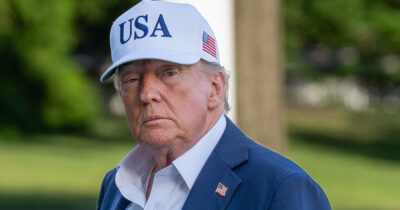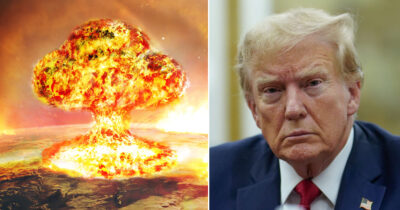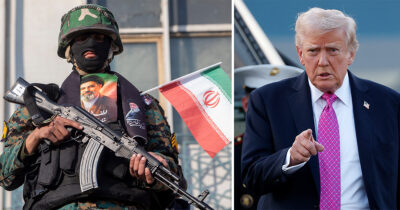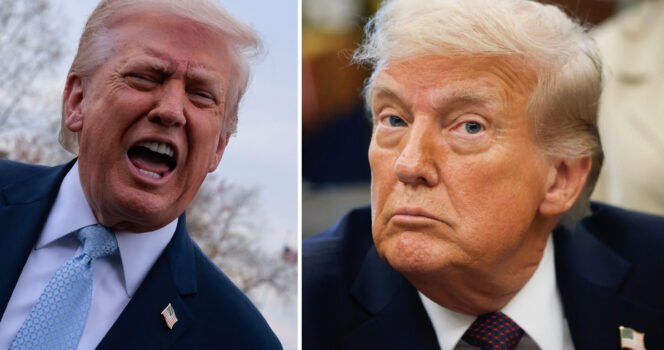
A clinical psychologist has suggested that Donald Trump’s escalating rhetoric toward Iran may be doing more than issuing direct threats.
The US president sparked concern after posting on social media that: “A whole civilization will die tonight, never to be brought back again. I don’t want that to happen, but it probably will.”
“However, now that we have Complete and Total Regime Change, where different, smarter, and less radicalized minds prevail, maybe something revolutionarily wonderful can happen, WHO KNOWS?
“We will find out tonight, one of the most important moments in the long and complex history of the World. 47 years of extortion, corruption, and death, will finally end. God Bless the Great People of Iran!”
The post followed a speech delivered at the White House, where Trump warned that Iran “could be taken out in one night, and that night could be tomorrow night.” He also demanded that Iran open the Strait of Hormuz, and set a deadline of 20:00 Washington DC time on Tuesday (April 7) for what he described as an “acceptable” deal, and if not threatened to push Iran back to the “Stone Ages.”
“They’re going to have no bridges,” he said. “They’re going to have no power plants.”
“Puts him back at the centre of events”
According to clinical psychologist Dr Tracy King, the language used in both the speech and social media post appears highly deliberate.
She said Trump’s messaging is filled with “military drama, triumph, punishment, and command,” according to VT, arguing that the use of extreme phrasing serves a psychological function.
“That matters because repeated extreme language changes how people take things in. It reduces the room for proportion. It narrows the space for critical thought. It pushes people towards awe, fear, excitement or alarm before they have had time to weigh anything calmly,” she said, per The Mirror.
How Donald Trump wants to be perceived
Dr King also pointed out that Trump consistently shifts the focus back to himself.
“Even though the speech is about the rescue and the bravery of others, it keeps coming back towards him. What he watched. What impressed him. What he thought. What he valued. What he will do. So the speech is not just about military success, but it also puts him back at the centre of events,” she said, according to The Mirror.
She suggested this could be tied to how the president wants to be perceived.
“It works as a restoration of status. If he feared rumours had briefly made him look weak, absent or physically vulnerable, the speech answers that by placing him in the middle of power, action and command.
“To the American public, the message seems to be: do not see me as weak, absent or diminished. See me as the man at the centre of force, rescue, retaliation and control.”
Ceasefire between the U.S. and Iran
At the same time, she believes the tone may be aimed at keeping opponents uncertain.
“To those he is at war with, the message is harsher. It says uncertainty is part of the strategy. He can hold back, create confusion, and then hit hard,” she said.
“He appears to want to be felt as unpredictable, forceful and willing to escalate. That is psychologically useful in war because it keeps opponents guessing and makes them worry not only about military power, but about his threshold for using it.”
Early on Wednesday Pakistan’s Prime Minister Shehbaz Sharif announced that the U.S. and Iran had agreed to a temporary ceasefire lasting two weeks, according to the BBC.
READ MORE
- Melania Trump reignites wild body double conspiracy as fans notice one ‘odd’ detail
- Artemis astronauts’ awkward response during Trump call after historic Moon mission