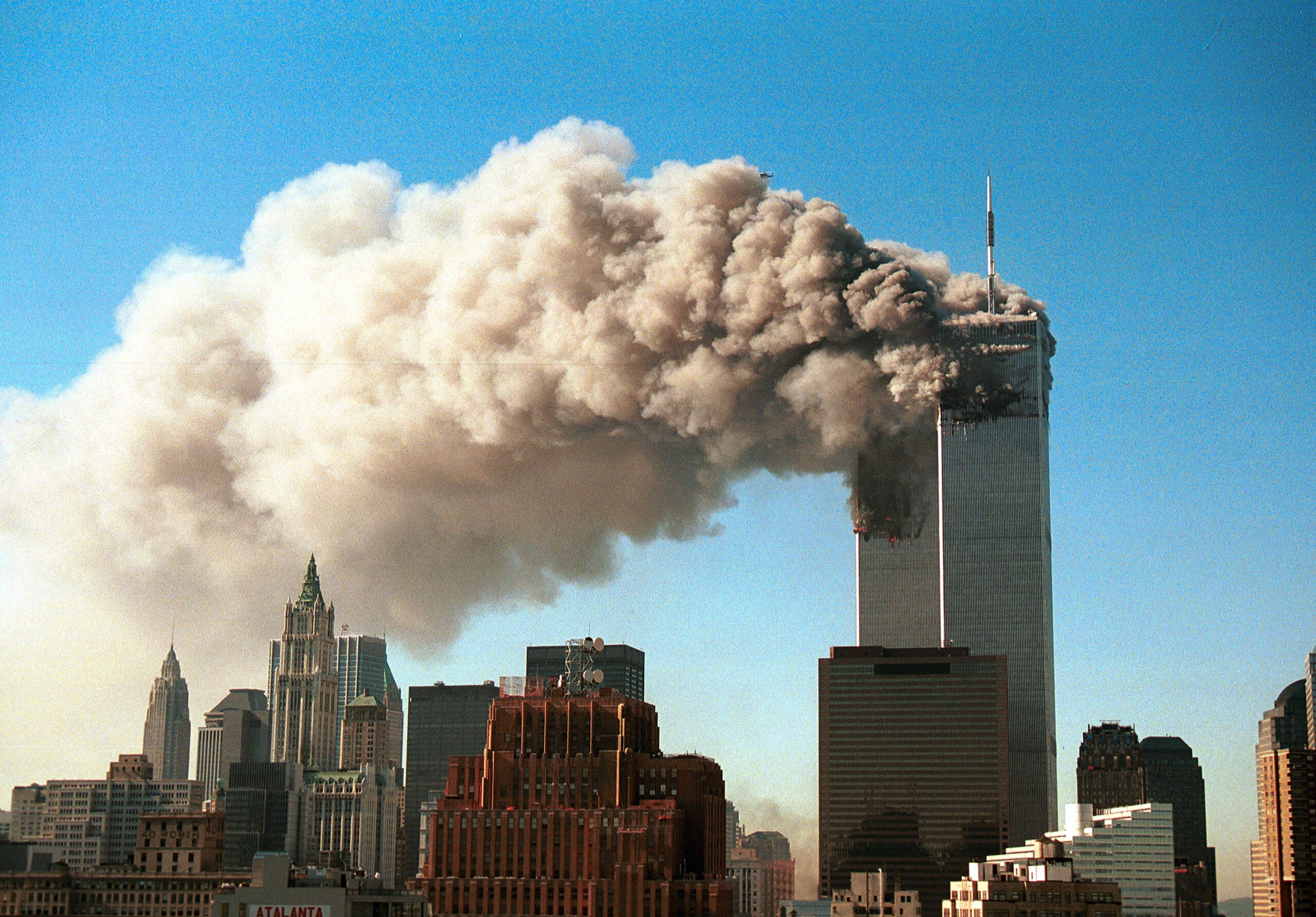
For 25 years, one haunting photograph from September 11 has stayed frozen in time — an image that captured a single human life in its final moments.
Now, a family member of the man believed to be pictured is speaking about the grief that never truly went away, and the faith that helped her carry it.
Please note: This article contains sensitive content related to suicide that some readers may find difficult to read.
This year marks 25 years since 9/11, and as the anniversary approaches, newly uncovered videos and long-forgotten stories are once again coming to light — giving us a closer look at moments and lives that were almost lost to history.
On the morning of September 11, 2001, Associated Press photographer Richard Drew was documenting the unimaginable unfolding around the World Trade Center when his camera captured a photograph that would become known around the world as “The Falling Man.”
The image shows a man falling from one of the towers, his body appearing almost impossibly still against the enormous tragedy surrounding him.
For many people, the photograph was too painful to look at. When it appeared in newspapers around the world on September 12, 2001, it sparked fierce criticism. Many readers found the image deeply disturbing and questioned whether such a painful moment should have been published at all.
But over the years, public perception of the photograph has changed. What was once condemned has increasingly been recognized as a powerful and haunting piece of photojournalism.
British music legend Elton John, who eventually acquired the photograph for his private collection, described it as “the most beautiful image of something so tragic.”
Fast-forward 25 years, and one thing is clear: the photograph has endured. What was once met with outrage has become one of the most haunting reminders of the nearly 3,000 lives lost on that terrible day.
And for one family, the photograph has carried an especially painful question for decades: Could that man have been their loved one?
The search for his identity
Over the years, several theories emerged about who the man might have been.
A Time magazine retrospective noted that he was believed to have been an employee at Windows on the World, the restaurant located at the top of the World Trade Center’s North Tower.
One early identification pointed to Norberto Hernandez, a pastry chef who worked at the famous restaurant. His family rejected the possibility, saying they did not believe Hernandez would have made such a choice.
Years later, journalist Tom Junod examined a sequence of photographs taken by Drew rather than focusing on a single frame. Details visible in later images led him to identify Jonathan Briley, a 43-year-old sound engineer who worked at Windows on the World, as the most likely person pictured.
There has never been definitive proof.
Briley’s clothing could not be independently confirmed because his widow had already packed away his belongings after his death. The uncertainty has left the identity officially unresolved.
‘It feels like yesterday’
Now, 25 years after the attacks, Briley’s sister, Gwen Briley-Strand, continues to live with the weight of that morning.
She remembers her brother as a deeply religious man who had been ordained a deacon just months earlier. He grew up playing gospel piano and had even joined Gwen and her husband on a last-minute trip to Florida shortly before September 11 — making it the final time she would ever see him.
For her, the anniversary brings back a familiar wave of emotions.
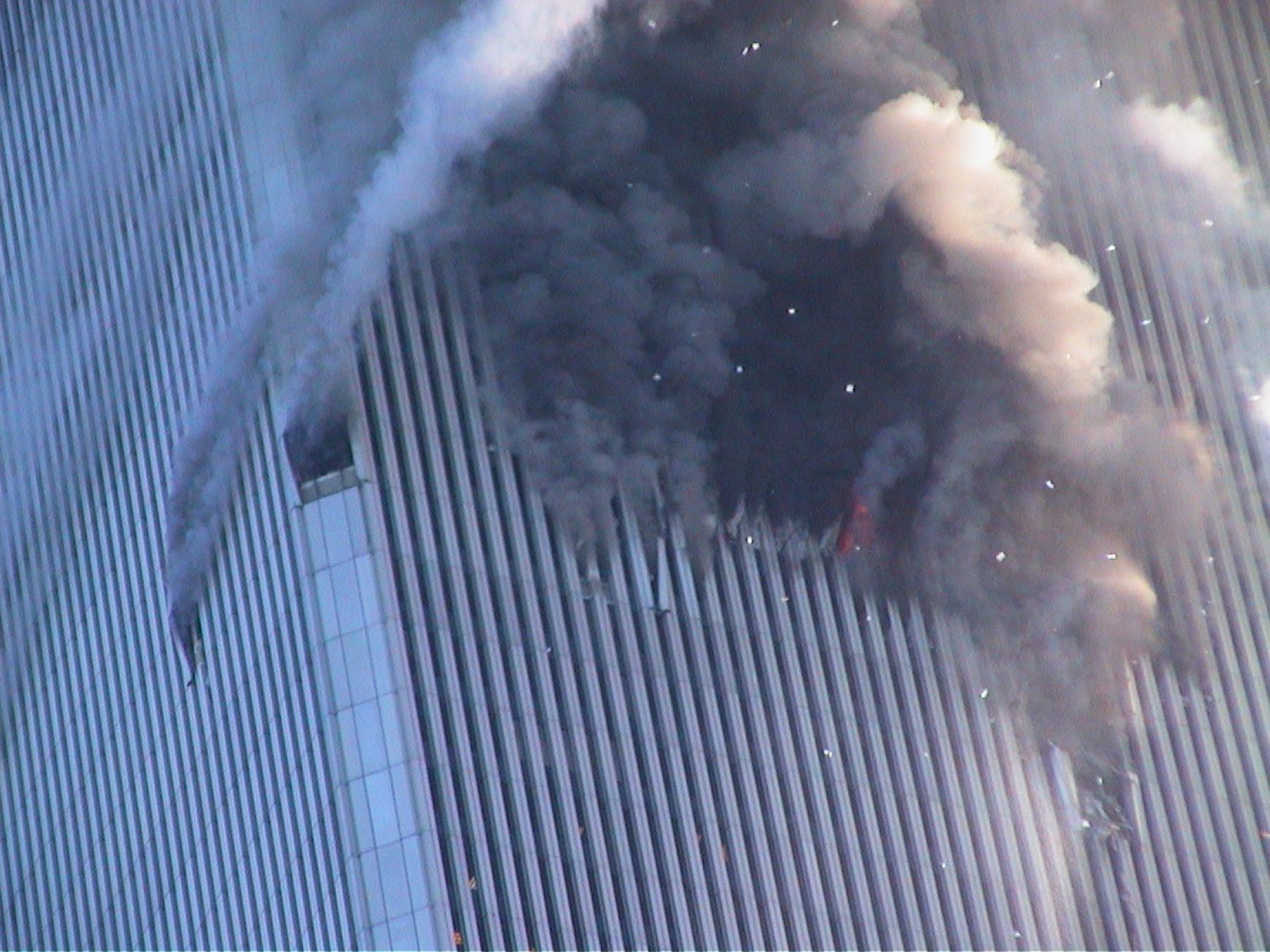
“There are times when it feels like 25 years but, then again, there are times when it feels like yesterday. It’s a wave of grief. Some years are better than others,” she told the Daily Mail.
She also rejects the idea that those who fell from the towers should be judged for what happened to them. Instead, she holds onto her faith and believes they were victims of an unimaginable situation.
“I believe that all those individuals that jumped were caught. Their spirits were caught,” she said.
And in her eyes, her brother has come to represent not only himself, but the thousands of people whose lives were taken that day.
Still raises difficult questions
Drew has spoken openly about the photograph and the controversy surrounding it.
He explained that he wasn’t consciously searching for a single image. His camera captured a sequence as he followed people falling from the building, and he didn’t realize he had captured the now-famous frame until later.
For Drew, the photograph was not about death itself.
It was about the final moments of a human life.
That distinction has remained important to him, particularly because of how quiet the image appears compared with the horror of the day.
Twenty-five years later, “The Falling Man” remains one of the most difficult images associated with September 11.
But behind the photograph is something even more powerful: a brother, a son, a family, and a life that existed long before the world ever saw that single frame.
And for those who loved Jonathan Briley, the photograph is not simply an image from history.
If you’ve been affected by the contents of this article you can find more information and support at the VOICES Center for Resilience via their website.
If you or someone you know is struggling or in a mental health crisis, help is available through Mental Health America. Call or text 988 or chat 988lifeline.org. You can also reach the Crisis Text Line by texting MHA to 741741.
If you or someone you know needs mental health assistance right now, call National Suicide Prevention Helpline on 1-800-273-TALK (8255). The Helpline is a free, confidential crisis hotline that is available to everyone 24 hours a day, seven days a week.
READ MORE
- White House responds to claim Trump refuses to attend 9/11 memorial after being denied permission to speak
- Rare unearthed 9/11 footage shows second plane hitting tower