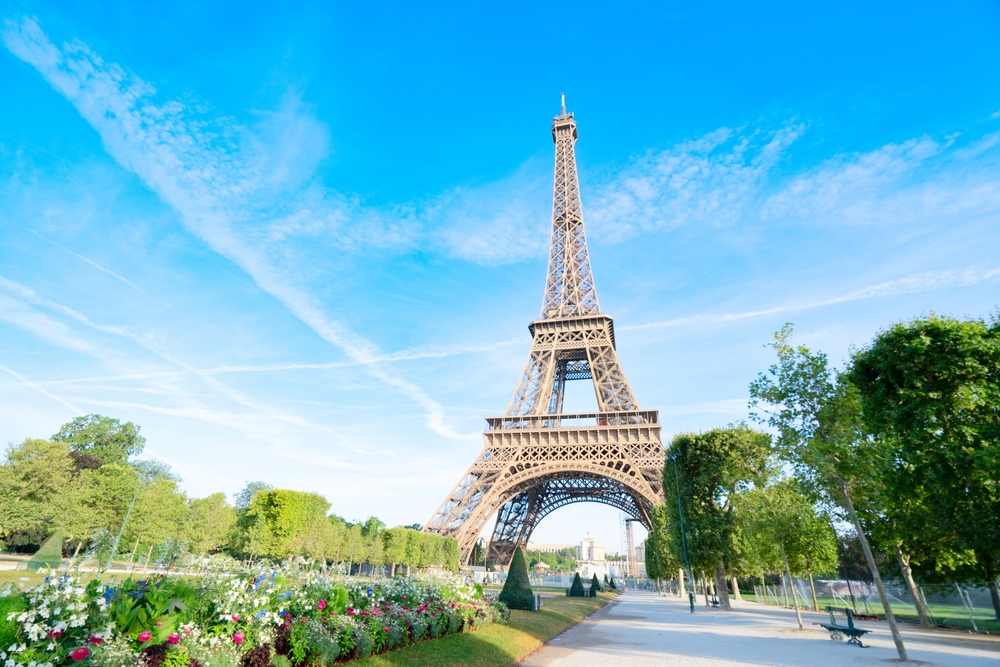
The Eiffel Tower became the unlikely center of a heated controversy this week after a private religious visit reportedly led to female employees being moved away from certain workstations.
Keep reading to know more.
What began as an unusual arrangement for a delegation of around 100 people quickly escalated into accusations of humiliation and gender discrimination, a staff protest, political outrage, and an investigation into how the situation was allowed to happen.
The company operating the landmark has since apologized and admitted the arrangement “should not have been accepted.”
Female Eiffel Tower Workers Were Reportedly Asked To Step Aside
The incident took place on Saturday, September 5, when a delegation connected to BAPS, the Bochasanwasi Akshar Purushottam Swaminarayan Sanstha, visited the Eiffel Tower during a private early-morning tour.
The visit coincided with celebrations surrounding the opening and consecration of BAPS’s first major Hindu temple in France, located in Bussy-Saint-Georges, east of Paris.
According to the Eiffel Tower’s operating company, SETE, the delegation had requested arrangements intended to limit “interactions with women.”
Management reportedly accommodated that request by changing where some female employees worked while the group was present.
In some areas, male colleagues allegedly replaced female workers or employees were instructed to stay away from particular locations.
That decision immediately caused outrage among staff.
Female Employees Said They Felt “Sidelined” And “Made Invisible”
Union representative Diane Davoine described the situation as “humiliating,” saying women had been asked to leave their workplaces so men could take their positions.
An employee statement reportedly described the workers as being, “Sidelined, replaced and made invisible because of their sex.”
The criticism wasn’t necessarily aimed at the visiting delegation alone. Much of the anger was directed at SETE for agreeing to the arrangement in the first place. One person wrote, “Unbelievable. And their excuse is they don’t have an excuse but let it happen anyway.”
While another added, “This shouldn’t have been allowed in the first place. Its a tourist place and an auditorium to run random religious event. The French govt shouldn’t have given permission for this, be it any religion.”
For employees, however, the issue was more serious than an unusual visitor request. They argued that their workplace should not be reorganized according to a customer’s religious restrictions based on gender.
The Dispute Eventually Shut Down The Eiffel Tower
As staff demanded answers and assurances that similar treatment wouldn’t happen again, tensions continued to grow.
The dispute ultimately resulted in a strike on Monday, September 7, forcing the Eiffel Tower to close to visitors.
Davoine said workers wanted management to engage in dialogue and guarantee that female employees would “never be treated this way” again.
The closure transformed a workplace dispute into a national political controversy.
SETE Admitted The Arrangement “Should Not Have Been Accepted”
Under mounting pressure, SETE acknowledged that the conditions surrounding the visit had gone too far.
The company confirmed that the delegation had requested arrangements to limit “interactions with women,” but said, “These conditions should not have been accepted.”
SETE also said the arrangement was inconsistent with its values and with the principle of equality between women and men. SETE president Ariel Weil called the practice “unacceptable” and reaffirmed the Eiffel Tower’s commitment to gender equality.
Paris Mayor Emmanuel Grégoire also condemned the decision, saying it was unacceptable for such conditions to be tolerated at one of the city’s most recognizable landmarks.
He emphasized, “Equality between women and men will never end at the foot of our historic monuments, nor anywhere else in this city.”
Former Prime Minister Gabriel Attal similarly argued that “no culture, no belief, no worship” should dictate where women belong in France.
BAPS Apologized But Said No One Was Denied Access
BAPS later apologized for the controversy and said it understood why people had raised concerns.
The organization explained that, because of the size of the delegation, the visit had been coordinated with Eiffel Tower staff and scheduled around the beginning of normal opening hours to minimize disruption.
BAPS also insisted that no one had been denied access to the monument.
In its statement, the organization said, “At no time was access to the Eiffel Tower denied to anyone.”
It nevertheless offered its “sincere apologies” to anyone who felt hurt or inconvenienced and said it believed in “the universal values of mutual respect and service.”
The organization has maintained that the visit was arranged in coordination with Eiffel Tower teams.
Share this with others who like to keep up with the latest news from around the world.
Read more: