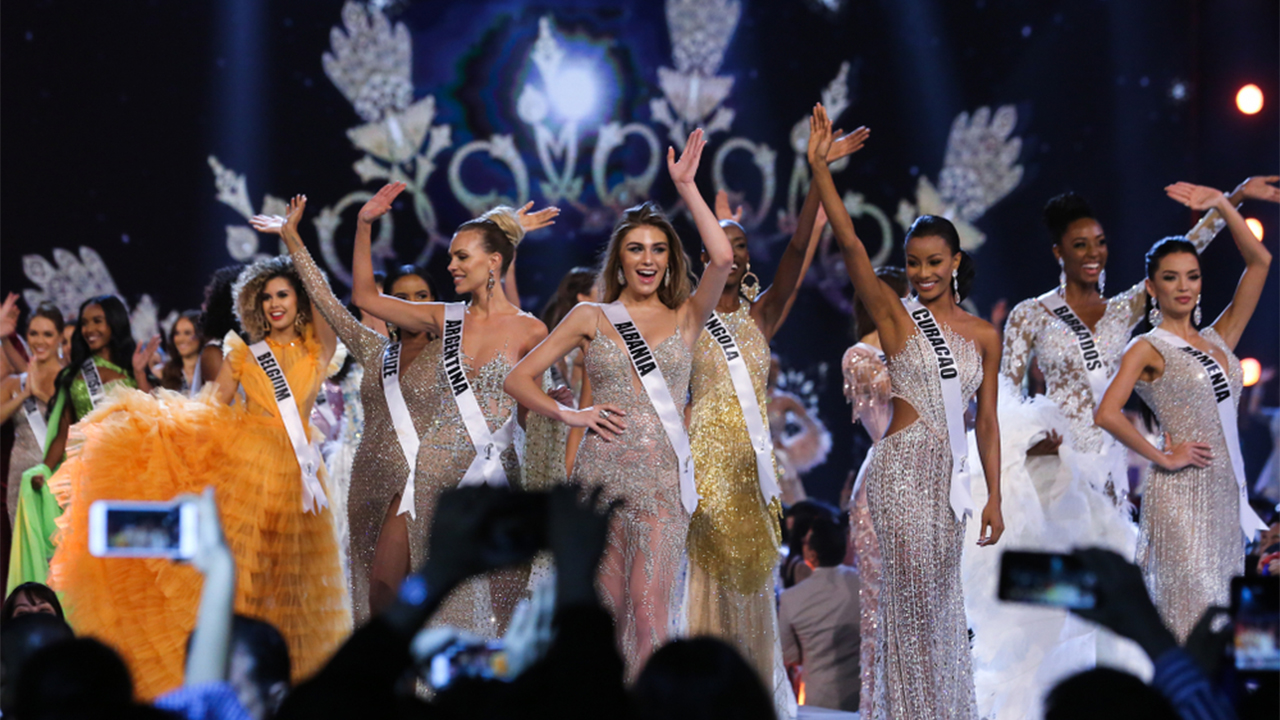
British beauty queen Rebecca Afolabi, the reigning Universal Woman Great Britain, has become the target of a wave of online abuse after her selection for the international Universal Woman Pageant was announced.
Keep reading to learn more.
As part of her title, Rebecca Afolabi earned the opportunity to represent Great Britain at the international competition, which is scheduled to take place in Cambodia in October 2026.
But instead of celebrating her achievement, some social-media users began attacking her appearance and suitability to represent the country.
One person wrote, “I have nothing nice to say” while another added, “How did she make it to that stage?”
Other users complained about her nationality, claiming she was not ‘British.’ One person wrote, “She’s Nigerian not British 🤷♀️Mad isn’t it.” While another added, “So pageants are DEI now.”
Beauty Pageant Participants Blast Online Critics Over “Racist” Abuse
Holly Pirrie, a pageant coordinator, talent manager and Miss Great Britain 2026 finalist, described the attacks against Afolabi as “disgusting racial abuse and trolling.”
She said the posts being circulated were “abhorrent” and criticized social-media platforms for allegedly failing to remove them.
“It’s incredibly frustrating and worrying that I know how much these are being reported, but Meta is refusing to remove them.”
Pirrie also praised Afolabi for how she had handled the backlash, highlighting her “strength, determination, and matter-of-factness” in the face of the criticism.
Afolabi shared Pirrie’s message on Instagram Stories, adding, “Couldn’t have said it better! Love you.”
Other pageant contestants also came forward.Mrs. Lancashire Galaxy 2026/27 Eden Ronson called the online attacks “abhorrent” and said the racial abuse directed at Afolabi needed to be confronted.
While Miss Northampton 2026 Charlotte Levy pointed out that the issues facing Black contestants can extend beyond social media. She recalled seeing situations in which Black women were blamed for not having the correct foundation shade.
“I’ve sat in rooms that blame black girls for not having the right foundation shade. Levy also highlighted the difficulties Black contestants can face when it comes to hair and makeup preparation.
Meanwhile, Miss Manchester 2024 and Miss England finalist Vanessa Naddamba encouraged Afolabi to ignore the criticism. She said, “You earned your place, fairly, rightfully, and undeniably.”
She added that Afolabi should walk onto the international stage knowing that she belongs there and take pride in representing women and girls who identify with her.
Beauty Pageants Have A Long History Of Debates Over Race And Beauty Standards
The controversy also comes amid a broader history of race and beauty standards in pageantry.
In the United States, the Miss America organization historically excluded Black women and other women of color. Its early rules explicitly restricted contestants according to race.
Although those barriers were eventually removed, critics have continued to argue that beauty competitions have sometimes favored Eurocentric features and standards of beauty.
At the same time, pageants have increasingly become spaces where those standards are challenged, with women of color winning major titles and gaining greater representation.
The issue resurfaced recently when Miss North Carolina USA 2026 Brittany Boltinhouse was stripped of her title following what the Miss USA organization described as a review of her past social-media activity.
The organization said the review allegedly uncovered a racial slur and discriminatory statements.
“The Miss USA organization does not tolerate racism, homophobia, transphobia, nor language that strips any person of their dignity,” Miss USA president Thom Brodeur said in August 2026.
Boltinhouse subsequently took legal action against the organizers after losing her title shortly before the national competition.
Her lawsuit did not challenge the organization’s authority to remove her title. Instead, it reportedly focused on what she alleged was a public campaign portraying her as “a racist, homophobe, transphobe, and intolerable bigot.”
With the Universal Woman Pageant only weeks away, the controversy surrounding Afolabi has turned what should have been a celebration of her title into another debate about race, representation and beauty standards.
Share this with others who like to keep themselves up to date with the latest news stories from around the world.
Read more: