The death of former child actor William Chapman after he entered a tiger enclosure at a UK wildlife park has left his family devastated. But his death has also sparked a disturbing debate.
Keep reading to know more.
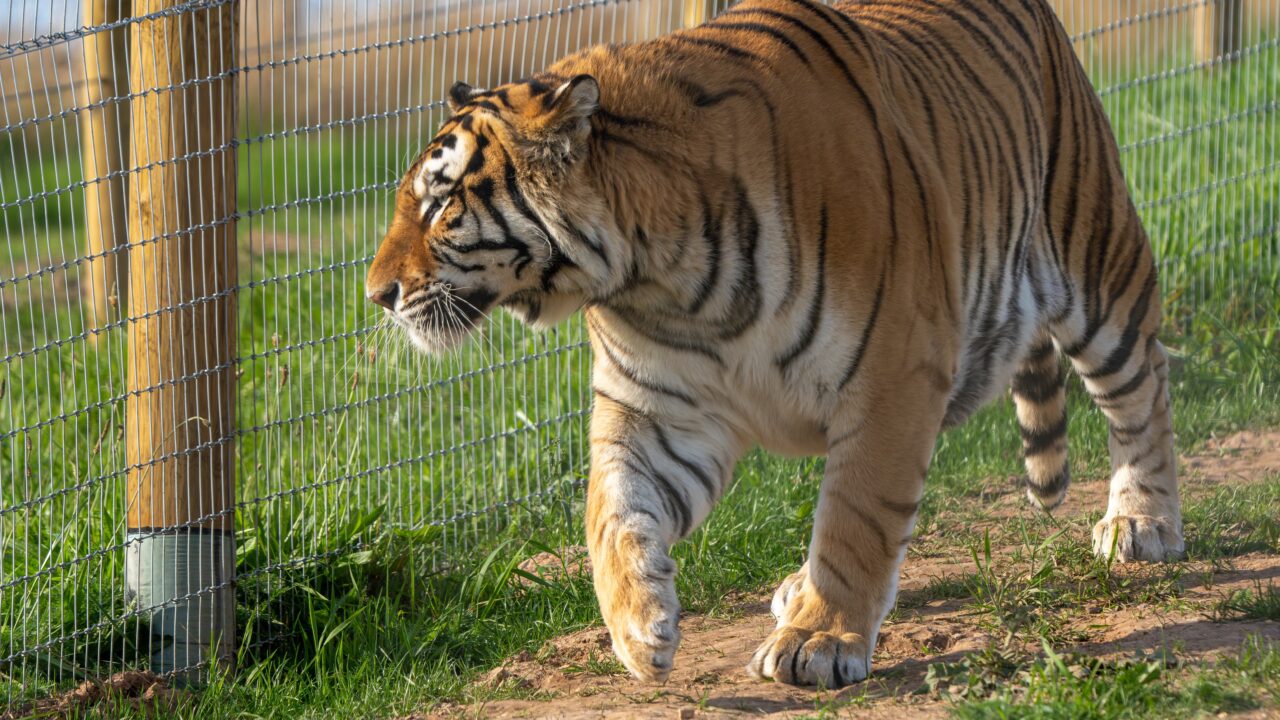
William Chapman, who was in his 20s, died on October 10 after entering the Land of the Tigers attraction at Yorkshire Wildlife Park in Doncaster, England. Inside the enclosure was Altai, a Siberian tiger who had reportedly been resting beneath a tree before approaching the man.
The fatal encounter has raised questions about visitor safety, the unpredictable nature of wild animals, and the difficult balance between protecting people and protecting the animals in their care.
But as details of the tragedy emerged, attention also turned to Chapman’s family, particularly after old posts attributed to his mother began circulating online.
Those posts prompted speculation about his mental health and an earlier encounter with a wild cat. Yet amid the growing discussion, his family has made one request clear: they want people to stop sharing distressing material about his death and allow them space to grieve.
William Chapman’s Final Moments At Yorkshire Wildlife Park
According to reports, Chapman entered the enclosure at Yorkshire Wildlife Park on October 10, placing himself inside the territory of a powerful predator.
Eyewitness accounts described him taking selfies before the tiger approached him. Other reports claimed that he later got down on all fours as the situation escalated.
The encounter ended in a fatal attack.
Chapman was reportedly known for his early work as an actor. He appeared in the ITV production May Contain Nuts and played Edward Jenner in the BBC production True Stories.
For those who knew him, however, his life was about far more than his brief time in the entertainment industry.
His family later described him as a “bright, warm, and engaging young man,” expressing their devastation over his sudden death.
The circumstances surrounding the incident have also prompted questions about how someone was able to enter the enclosure and what might have been done to prevent the tragedy. The precise circumstances remain a matter for the relevant authorities to establish.
Old Posts Attributed To Chapman’s Mother Sparked Online Speculation
In the days following the incident, social media users began sharing older posts that they attributed to Chapman’s mother.
Some online users attempted to identify her through historical blogs and social media content, although the family had not publicly identified its members in the material provided.
One widely shared post reportedly showed Chapman with his two sisters. Another screenshot appeared to show his mother recommending a holistic product to someone online, saying it had been useful for her son, whom she described as experiencing schizophrenia and suicidal thoughts.
The posts quickly became part of the online discussion surrounding Chapman’s death.
Another photograph reportedly showed Chapman as a child touching a cheetah through or near a fence during what appeared to be a trip to Uganda in 2017. A second image showed the animal close up.
The resurfaced material has raised concerns about the privacy of a grieving family, particularly when personal information about someone’s mental health is being circulated without the full context.
His Family Spoke About Years Of Mental Health Struggles
A day after Chapman’s death, his family released a statement describing their loss and acknowledging that he had experienced significant mental health difficulties.
“Sadly, William suffered from significant mental illness over a number of years and was consequently prescribed strong medication,” the statement said.
The family added that it would leave it to the coroner to determine what role, if any, the medication played in his death.
They also emphasized how difficult it had been to process what happened.
“The family is utterly devastated by their loss and are struggling to come to terms with what has happened,” the statement continued.
The family then addressed the circulation of disturbing content related to the incident, saying that deeply offensive material was causing them severe distress at an exceptionally vulnerable time.
They asked people to stop sharing it.
Their appeal came as footage of the fatal encounter circulated online and attracted widespread attention, including after U.S. President Donald Trump shared video of the incident with the caption, “Don’t ever mess with nature!” He also posted a controversial AI-generated video depicting himself grappling with a tiger.
The online attention has meant that, alongside their grief, Chapman’s relatives have had to contend with public commentary about deeply personal matters.
Mental health struggles are complex, and they should not be used as a basis for mocking someone or drawing conclusions about why a tragedy occurred. The family’s statement acknowledged years of difficulties but did not establish a definitive explanation for the incident.
Why Would A Tiger Attack Someone Who Entered Its Enclosure?
The tragedy has also renewed discussion about the behavior of large predators and the dangers of entering their habitats.
Reece Oliver, a private animal conservationist and licensed zookeeper, offered his perspective in an interview with Sky News on October 12.
He suggested that the tiger may have responded through its natural predatory instincts, particularly because an unfamiliar person entering the enclosure would be an unusual situation for the animal.
“The only thing that goes into that enclosure normally would be sort of enrichment toys or food, so I think he was probably just playing, using his predatory instinct, seeing what it was, and unfortunately it ended up being a fatal attack,” Oliver said.
He also cautioned that it was difficult to draw firm conclusions without seeing the evidence.
“It’s hard to say without seeing the evidence what actually happened, but tigers are solitary animals and apex predators,” he explained.
“The guy had gone into the tiger’s world, and tigers don’t live by our rules because at the end of the day they’re a tiger.”
Yorkshire Wildlife Park Says Altai Will Not Be Euthanized
Following the incident, Yorkshire Wildlife Park said Altai was “safe and well” and would not be euthanized because of the encounter.
Carole Baskin, the animal activist and CEO of Big Cat Rescue who became widely known through Tiger King, voiced support for the tiger in a statement to The Post.
“The tiger was not doing anything wrong by being a tiger. I am relieved to hear that the animal was not harmed,” she said.
His Mother’s Old Posts Spark Debate
As Chapman’s death continued to attract attention, the discussion around his mother’s old posts became another source of controversy.
The distinction is important. A photograph from years earlier does not explain the events that led to a person’s death, and it cannot establish what precautions were taken or what the family knew about his circumstances at the time.
Meanwhile, Chapman’s family has asked the public to stop circulating offensive material and respect their privacy.
Their request comes as the tragedy continues to generate headlines, speculation, and debate across social media.
Ultimately, several questions remain about the circumstances of Chapman’s death, and the relevant authorities will need to establish the facts.
But behind the headlines is a family mourning a son and brother. A young man they described as bright, warm, and engaging, whose life was far more than the tragic circumstances in which it ended.
Share this with others who are also keeping up with the story of William Chapman’s unfortunate death.
Read more: