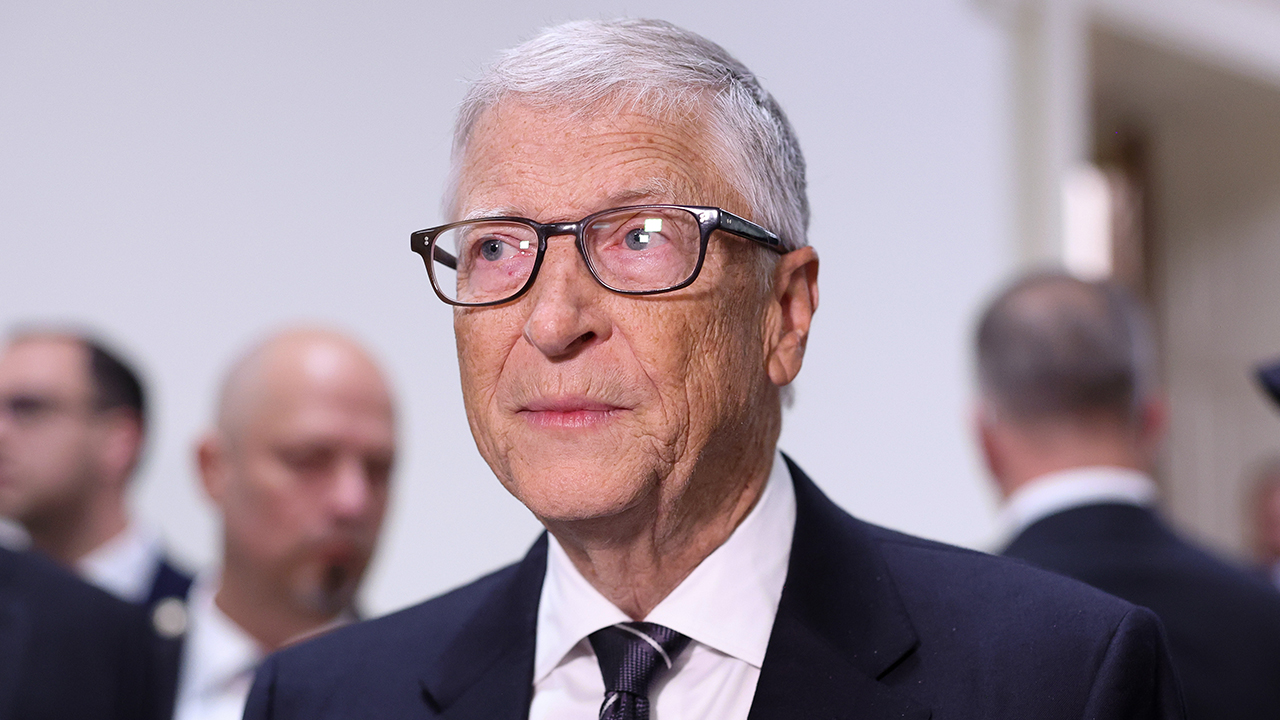
Only four jobs will make it through the AI revolution, and Bill Gates has an idea which ones those will be.
Bill Gates thinks the next 20 years could be some of the roughest in human history. And he says AI is the reason.
The Microsoft co-founder made the prediction on The Verge’s Decoder podcast. He believes AI will eventually bring “true abundance,” but warned that getting there will be “as tumultuous a period as there’s been in human history.”
“My big concern is this 20-year transition period, where they’ll have winners and losers and a lot of disruption,” he said.
Office jobs will go first
Gates expects white-collar workers to feel it before anyone else. A lot of desk work, he says, can already be done by AI far cheaper and faster, and often more accurately. He doesn’t think it stops there.
“If we don’t choose to massively slow down or stop, then we will have robots that can build houses, grow food, and do surgery,” he said. “And none of the things that human labor provides to the economy will be necessary for most goods and services.”
When he was asked whether the world will still need humans, his answer was pretty bleak. “Not for most things – we’ll decide.” He thinks people will keep some things for themselves, but making things, moving things and growing food will, over time, become “basically solved problems.”
The jobs that AI won’t replace
The list of jobs Gates thinks are safe is a very short list: coders, biologists, energy workers and professional athletes. The last one is the easiest to explain. “You know, like baseball. We won’t want to watch computers play baseball,” he has said.
A ranking that’s been shared alongside his comments puts interpreters and translators at the top of the jobs most exposed to AI, at 98 percent. Historians, mathematicians and proofreaders come next at 91 percent. Writers and authors sit at 85 percent, and journalists close out the top 10 at 81 percent.
- Interpreters and translators — 98%
- Historians — 91%
- Mathematicians — 91%
- Proofreaders — 91%
- Automatic machine coders — 90%
- Writers and authors — 85%
- Statistical assistants — 85%
- Sales representatives — 84%
- Technical writers — 83%
- Journalists — 81%
There’s a small comfort in the fine print. Those numbers show how much of each job’s tasks AI can handle, not whether it can do the whole job on its own.
Gates isn’t the only tech boss sounding the alarm. Elon Musk, however, has predicted the shift from human workers to AI will be “bumpy.” OpenAI CEO Sam Altman has said AI could eventually wipe out white-collar jobs, though so far it hasn’t replaced as many as people expected.
Anthropic CEO Dario Amodei believes AI will “raise the quality of life for everyone,” but warned that the short-term shock will be unprecedented in size.
Read more: