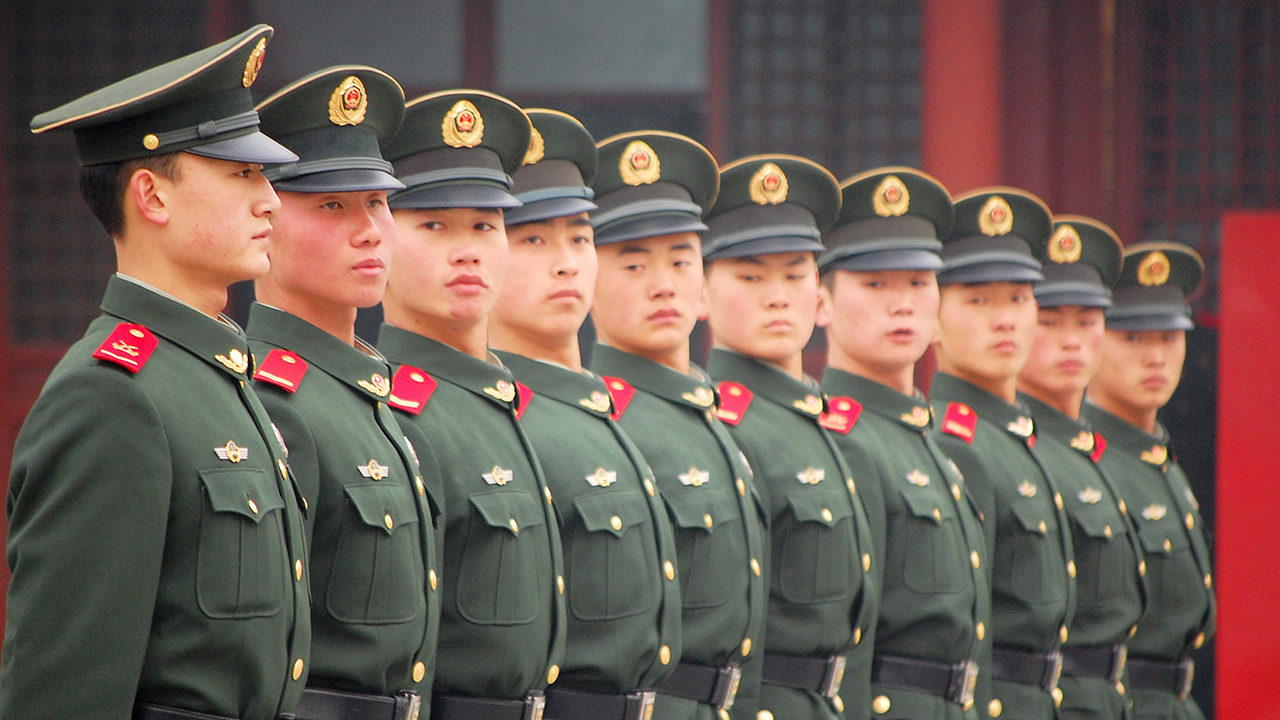
A conflict between the United States and China could begin thousands of miles from American shores.
But that does not mean the consequences would stay there.
The world is an increasingly uncertain place, with multiple flashpoints and conflicts affecting millions of people. In our interconnected world, no conflict exists in a vacuum.
When armed clashes erupt, the consequences can reach far beyond the countries directly involved, drawing in allies, disrupting trade and threatening global stability. We have seen this in the war involving Iran and the United States, Russia’s invasion of Ukraine, and rising tensions in the South China Sea.
If we turn to Asia, there is one contentious issue that remains unresolved – at least if you ask China. That issue is Taiwan, the self-governing island that Beijing considers part of its territory, despite having never ruled it.

If tensions over Taiwan ever erupt into a full-scale war, the United States could face attacks on military installations, disruptions to critical infrastructure, cyberattacks and a potentially devastating economic shock, according to several experts.
The possibility is no longer something discussed only in distant military scenarios.
In its 2026 assessment of global conflict risks, the Council on Foreign Relations identified a serious crisis in the Taiwan Strait as a moderately likely event with potentially high consequences for US interests.
But why is Taiwan such a dangerous flashpoint – and which parts of America could feel the consequences most acutely?
Why could America and China go to war?
As mentioned, Taiwan is at the center of the dispute.
The island of Taiwan has never been governed by the People’s Republic of China.
Beijing has not ruled out using force to achieve unification, while the United States has long supported Taiwan’s ability to defend itself.
The situation is complicated by America’s policy of strategic ambiguity. Washington has not made an unconditional promise to enter a war over Taiwan, but it has maintained close security ties with the island and supplied it with weapons.
In 2023, then-CIA Director William Burns said Chinese President Xi Jinping had instructed the Chinese military to be ready to conduct a successful invasion by 2027.
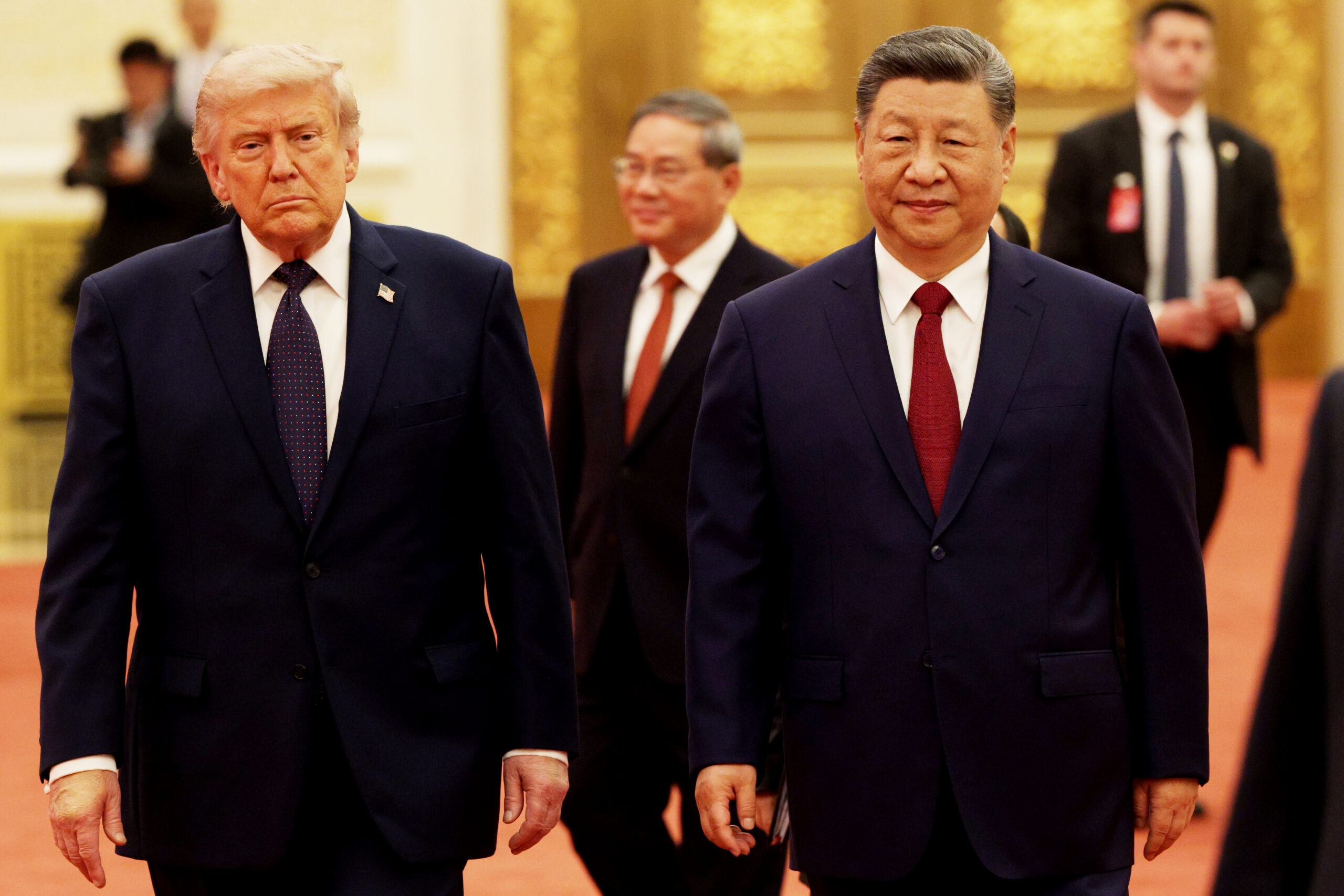
Burns was careful to point out that this was a military capability goal, not necessarily a decision to launch an attack.
And there are signs that Beijing may prefer to achieve its objectives without a full-scale invasion. China has increasingly used military exercises, patrols, cyber operations and political pressure to intimidate Taiwan and weaken its position.
But the danger is that a confrontation could spiral out of control.
A naval or air incident, an attempted blockade, or a move by Beijing that Washington considers an unacceptable escalation could force both sides into a crisis neither initially intended to create.
What would happen if the US entered the war?
A conflict would not necessarily begin with Chinese missiles striking American cities.
In fact, US military facilities in the Indo-Pacific – including bases in Japan, the Philippines and Guam – would be far closer to the likely fighting. A May 2026 analysis by the Center for Strategic and International Studies warned that these installations could be highly vulnerable to Chinese missile and drone attacks.
But the United States also has important military facilities on its own territory. If a conflict widened, those facilities could become strategically important, while cyberattacks and disruption to trade could affect Americans far from any battlefield.
CSIS analyst Seth G. Jones has warned that the U.S. military could struggle to sustain a prolonged war with China due to shortages of long-range missiles, air-defense systems and other critical weapons.

In other words, even the world’s most powerful military could face serious challenges in a drawn-out confrontation.
But the risks would extend far beyond the battlefield. In written testimony to Congress in September 2026,
Jones described war-game scenarios in which China retaliates against U.S. military bases and critical infrastructure in Hawaii, California and Washington.
The scenarios also included missile and drone strikes, as well as cyberattacks targeting electricity grids and water supplies.
Jones, an American political scientist and national security expert who previously served as a senior official in the U.S. Department of Defense, highlights how a conflict over Taiwan could have consequences across the United States.
Here are eight states whose strategic importance could put them in the spotlight.
1. Washington
Washington state is home to Naval Base Kitsap, including the Bangor installation, as well as Joint Base Lewis-McChord and Naval Air Station Whidbey Island.
The Bangor facility is particularly significant because it is home to part of America’s strategic submarine force. The state’s military infrastructure makes it an important part of US defense planning in the Pacific.
In a major conflict, facilities connected to naval operations, logistics and military readiness could become strategically important. That does not mean an attack on Washington is expected, but it explains why the state belongs in any discussion of America’s military exposure.
2. Hawaii
Hawaii’s location makes it one of the most strategically important states in the Pacific.
Joint Base Pearl Harbor-Hickam is a major military installation, and the headquarters of US Indo-Pacific Command is located at Camp H.M. Smith. The command is responsible for overseeing American military operations across a vast region that includes the Taiwan Strait.
If a conflict erupted, Hawaii could play a central role in coordinating US forces, moving personnel and supporting operations across the Pacific.
That strategic importance could also make its military facilities a concern in a wider conflict.
3. California
California is home to a large concentration of military installations, including Naval Base San Diego, Naval Base Coronado, Travis Air Force Base and Vandenberg Space Force Base.
The state’s Pacific coastline and extensive naval and aerospace infrastructure give it an important role in America’s military presence.
Vandenberg is particularly significant because of its national security space mission. In a modern conflict, satellites and space-based systems are essential for communications, navigation, surveillance and military operations.
Any attempt to disrupt those capabilities could have consequences far beyond California itself.
4. Alaska
Alaska’s position near Russia and across the northern Pacific gives it a unique strategic role.
The state hosts Joint Base Elmendorf-Richardson, Eielson Air Force Base and several important radar and space-related installations. Its geography makes it important for monitoring activity in the Arctic and the northern Pacific.
A conflict involving China would not automatically make Alaska a frontline battlefield. But in a wider confrontation involving other major powers, its military facilities and strategic location could become increasingly important.
5. Virginia
Virginia is home to some of the most important military and defense institutions in the country.
Naval Station Norfolk, the world’s largest naval station, is located in the state, along with Joint Base Langley-Eustis, Marine Corps Base Quantico and other major installations.
The Pentagon is in neighboring Virginia’s Arlington County, and the state’s concentration of military leadership, naval infrastructure and defense operations makes it strategically significant.
A major conflict would place enormous demands on the people and institutions responsible for coordinating America’s military response.
6. Colorado
Colorado may not be the first state people think of when considering a potential war with China, but it plays an important role in America’s military command and space operations.
The state is home to Cheyenne Mountain Space Force Station, Peterson Space Force Base and Schriever Space Force Base.
These installations are connected to the country’s space and missile-warning infrastructure, which is essential for detecting and responding to potential threats.
In a conflict involving advanced missiles, satellites and cyber capabilities, protecting these systems would be a major priority.
7. Georgia
Georgia may not be the first state that comes to mind in a potential conflict with China, but it hosts several strategically important military installations and logistics hubs that could become increasingly important during a prolonged confrontation.
Georgia is home to Naval Submarine Base Kings Bay, one of the US Navy’s most important strategic submarine installations.
The base supports the Navy’s ballistic missile submarine force, which plays a central role in America’s nuclear deterrence.
That makes Kings Bay a particularly sensitive part of the country’s military infrastructure. In a major-power conflict, strategic nuclear forces and the systems supporting them would carry enormous importance.
It is worth stressing that the presence of such a facility does not mean Georgia would be attacked. But it does help explain why the state has strategic significance beyond its regional military role.
8. Florida
Florida’s military importance extends well beyond its coastline.
MacDill Air Force Base in Tampa is home to US Central Command and US Special Operations Command. The state also hosts several other major military and naval installations.
Although these commands are not focused specifically on China, their presence illustrates how a major international conflict could put pressure on military resources and command structures across the country.
A war in the Pacific could require the United States to shift personnel, equipment and resources between different regions, potentially affecting operations far from the original flashpoint.
Could a war actually reach the American mainland?
This is where the distinction between strategic importance and direct danger becomes crucial.
A Taiwan conflict would most likely center on the western Pacific. American forces stationed closer to China would face a more immediate military threat than communities thousands of miles away on the mainland.
But that does not mean the rest of the United States would be untouched.
US officials told Reuters in October 2026 that a Chinese invasion of Taiwan before 2028 was increasingly unlikely, despite Chinese President Xi Jinping’s reported instruction that his military should be ready for such an operation by 2027.
That is one reason experts have repeatedly stressed the importance of preventing a confrontation before it begins.
And there is another uncomfortable reality: even if neither side wants a full-scale war, a crisis involving two nuclear-armed powers could become difficult to control once military forces are engaged.
For now, there is no certainty that China will invade Taiwan or that the United States would enter a direct war. But the stakes are enormous – and the consequences of a conflict could reach much further than the Pacific.
READ MORE
- 8 most dangerous US States to be in if WW3 breaks out
- Doomsday video shows what could happen in nuclear attack