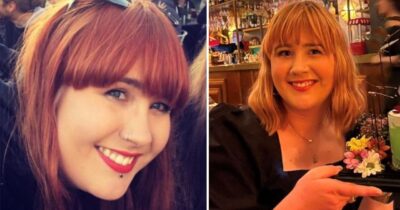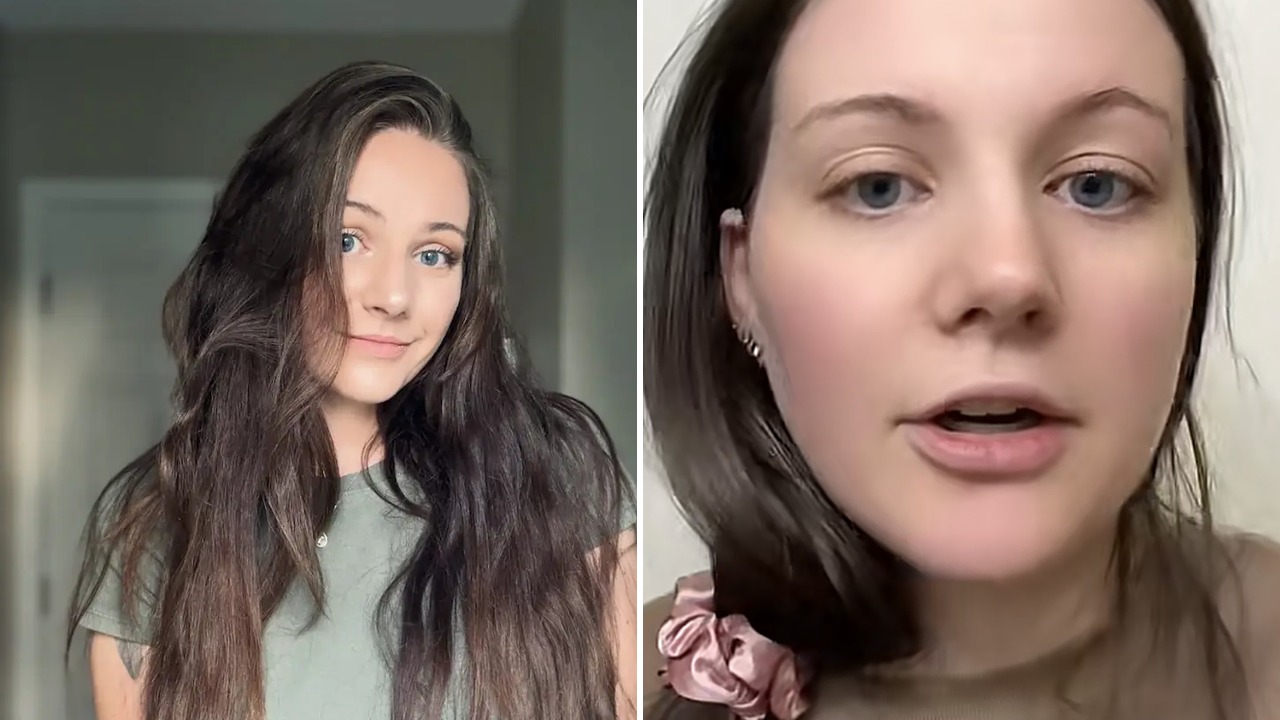
Doctors discovered that a Michigan mom had Down syndrome after three of her pregnancies tested positive for it.
Ashley Zambelli from Michigan was diagnosed with a rare form of Down syndrome called mosaic Down syndrome, when she was 23. Contrary to one might expect, her reaction was pure happiness.
Most people with Down syndrome are diagnosed before birth or soon after. In the mosaic form though, only a few of the body’s cells carry the extra copy of chromosome 21. It makes up about 1 to 2 percent of cases, Johns Hopkins genetics professor Dr. Sonja Rasmussen told Yahoo Life, and symptoms depend on which tissues carry the extra chromosome. Some people show very few signs.
Three positive tests in a row
In Zambelli’s case, she finally found out after her pregnancies. She had a miscarriage in 2019 at nine weeks and the tests afterward showed the baby had trisomy 21, which is the medical name for Down syndrome.
Her daughter Lillian then tested positive 10 weeks into the pregnancy. Her next daughter, Evelyn again didn’t. When another pregnancy came back positive, her OB-GYN started to worry. “This does not seem normal,” the doctor told her, per Yahoo Life.
Her own first genetic tests came back “completely normal.” A geneticist still wasn’t convinced, though, and ordered a mouth swab. That’s when they found the extra chromosome in 3 percent of the cells tested.
“I was so happy”
Zambelli just so happened to be at the hospital with Lillian when the call came, she told Metro. “I got off the phone just as a nurse was coming in, and I was so happy,” she said. “I’ve never seen so much concern on somebody’s face.”
For her, it was finally an answer. Her kneecaps had been dislocating since she was 12, and school had always been a struggle. Doctors had even suspected lupus, which her father has. The diagnosis also helps her understand her kids. “It takes me longer to process things too, so I can just relate with them a little better,” she told Metro.
Not what people expect
The hardest part about finally receiving the diagnosis is convincing others. Zambelli told SWNS that people tell her “you don’t look like you have it.”
“Even I was in a lot of disbelief,” she admitted.
Her only visible trait, she says, is smaller, lower-set ears that hardly anyone notices. She hopes to build a community for others with the mosaic form, and wants people to see genetic testing as a way to prepare rather than something to fear.
Read more: