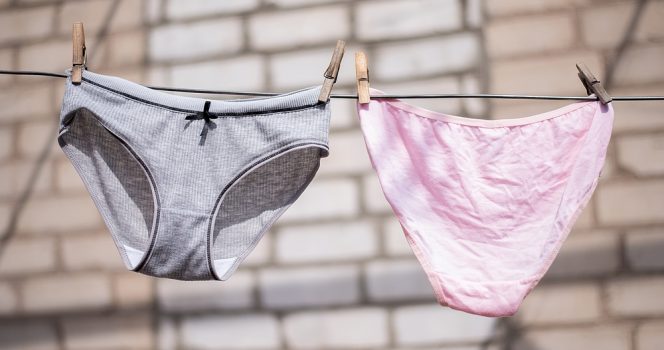
It may sound like the most basic hygiene rule, but changing underwear every day is one habit many people are quietly skipping. Now, experts warn that dirty drawers aren’t just gross – what lingers behind can carry real health risks, making daily changes a non-negotiable practice.
As unsettling as it sounds, a 2021 study found that a typical pair of underwear contains roughly 0.1 grams of fecal residue. With that in mind, going more than a day without swapping for a clean pair isn’t just unpleasant – it could carry real health consequences, according to medical experts.
Dirty drawers
Yet despite clear hygiene guidelines, a large portion of young adults aren’t sticking to daily underwear changes. A 2023 Newsweek poll revealed that 36% of Gen Z respondents – those aged 18 to 24 – admit to wearing the same pair of underwear for over 24 hours, and an additional 14% say they do this regularly. That means half of Gen Z reported going at least one full day or more in the same undergarments.
But the behavior isn’t limited to the youngest age group. The survey also found that 24% of millennials – those aged 25 to 34 – regularly wear the same pair of underwear more than once.
In contrast, older adults reported significantly cleaner habits. Among people aged 55 to 64, 67% said they never wear underwear for more than one day, and only 3% admitted to repeating pairs.
Skin irritation or infection
Doctors say this growing trend of stretching wear-time poses more than a cosmetic concern. Bacteria, yeast, and moisture build up in tight-fitting clothing, creating an ideal environment for skin irritation and potential infections – especially in areas with limited airflow.
“Men and women risk skin irritation, rashes, or the worsening of pre-existing conditions such as eczema or psoriasis when they re-wear underwear too often without washing it; this is due to friction and trapped moisture,” Sarah Roberts, a licensed skincare specialist, told the Daily Mail.
‘Harbor moisture and bacteria’
Roberts warned that wearing underwear too long can lead to infections like yeast overgrowth and bacterial vaginosis.
Yeast infections cause itching, burning, and thick white discharge when candida fungus multiplies. Bacterial vaginosis, often mistaken for yeast, usually includes a fishy odor and gray or yellow discharge caused by bacterial imbalance.
“The vulva contains folds and crevices that harbor moisture and bacteria more readily than male genitalia,” Dr. Archit Aggarwal, a dermatologist with ClinicSpots, told the publication.
Jock itch
It’s not just women who face hygiene-related health risks – men are just as vulnerable, especially when it comes to jock itch, a fungal skin infection marked by an itchy, red rash in the groin, buttocks, and upper thighs.
While some assume looser garments like boxers offer more protection, experts warn that skipping daily changes still poses serious risks.
“Men’s boxers, although touching the skin less frequently than women’s underwear, do not escape these hazards – particularly when worn repeatedly without change,” Robert said.
Change at least once a day
Though some may stretch a pair of briefs for a second day in a pinch, doctors strongly recommend changing underwear at least once every 24 hours to reduce the risk of skin irritation and infection. That advice becomes even more important in high-sweat situations.
“For those engaged in intense physical activities or who sweat heavily, it’s advisable to change underwear more frequently,” said Dr. Hannah Kopelman, a dermatologist at Kopelman Aesthetic in New Jersey. “In hot and humid climates, changing underwear even more than once a day might be necessary to maintain good hygiene.”
Dr. Aggarwal echoed that advice and emphasized the importance of paying attention to early warning signs. “If you experience any discomfort, itching, or unusual discharge, change your underwear immediately and consult a healthcare professional, if necessary,” he told the Daily Mail.
How often do you change your underwear? Please let us know your hygiene habits and them share this story so we can hear from others!
READ MORE
- 10 strange habits intelligent people have that confuse others
- High blood pressure and cholesterol: 3 morning habits you should avoid