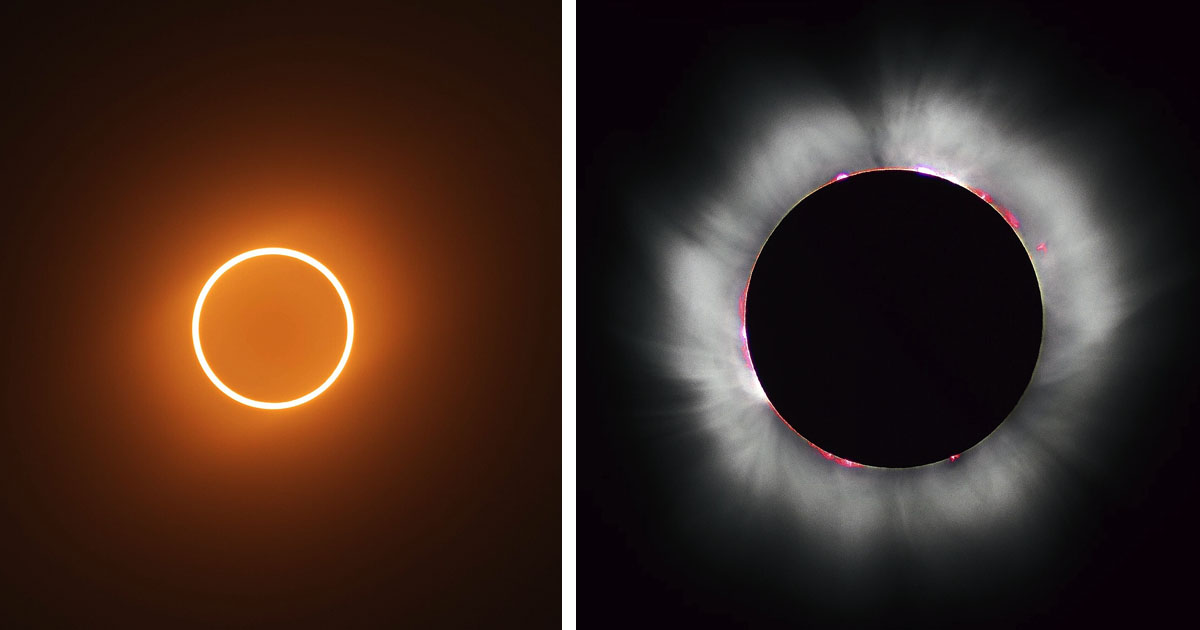
While a solar eclipse is a breathtaking sight, but experts say one mistake while watching it could cause serious and irreversible damage to your eyes.
A solar eclipse can turn an ordinary day into an unforgettable spectacle as the Moon passes between Earth and the Sun. But experts have an important warning: you should never stare directly at the Sun without proper eye protection.
And despite what some may think, reaching for a pair of ordinary sunglasses isn’t enough.
A darker sky doesn’t mean the Sun is safe to look at
During an eclipse, the Moon blocks part or all of the Sun, causing the sky to become darker. This can make people mistakenly believe it is safe to look directly at the Sun.
However, as long as any part of the Sun remains visible, its powerful light can still damage your eyes and experts warn that looking directly at the Sun without specially designed protection can cause severe injury to the retina, the light-sensitive layer at the back of the eye.
The same danger applies to using cameras, binoculars or telescopes without approved solar filters.
The damage can happen without you realizing
One of the most concerning things about solar-related eye damage is that it can occur without causing pain because the retina itself cannot feel pain. A person could look at the Sun and initially believe everything is fine, only to notice problems with their vision later.
This type of damage is known as solar retinopathy.
Possible symptoms include blurred vision, blind spots and changes to eyesight. In serious cases, the damage can lead to permanent vision loss.
Why ordinary sunglasses won’t protect you
Experts stress that regular sunglasses are not suitable for watching a solar eclipse. Even wearing several pairs at once does not make them safe for direct solar viewing.
Other makeshift options, including darkened glass, photographic materials and X-ray film, should also not be used.
To look directly at an eclipse, viewers need eclipse glasses or a solar viewer specifically designed for that purpose. Experts recommend using products that meet the international ISO 12312-2 safety standard.
If using optical equipment such as binoculars, a telescope or a camera, it needs an approved solar filter fitted correctly over the front.
There are safer ways to watch
If you can’t get your hands on proper eclipse glasses, watching a livestream is a good option, another is to view the eclipse indirectly using a pinhole projector.
A pinhole projector works by allowing sunlight through a tiny opening and projecting an image of the Sun onto another surface.
The important part is to look at the projection, rather than through the hole or directly at the Sun.
A simple version can be made using two pieces of white card, aluminum foil, tape and a pin.
Cut an opening in one piece of card and cover it with foil, then carefully make a tiny hole in the foil. With the Sun behind you, hold the card above the second piece of white card and observe the projected image below.
Whatever method you choose, experts have one simple message: don’t take chances with your eyesight.
READ MORE:
- Brad Pitt reveals why he is no longer sober after seven years of not drinking
- They were apart for 2 weeks – watch this dog’s response when he sees his owner