

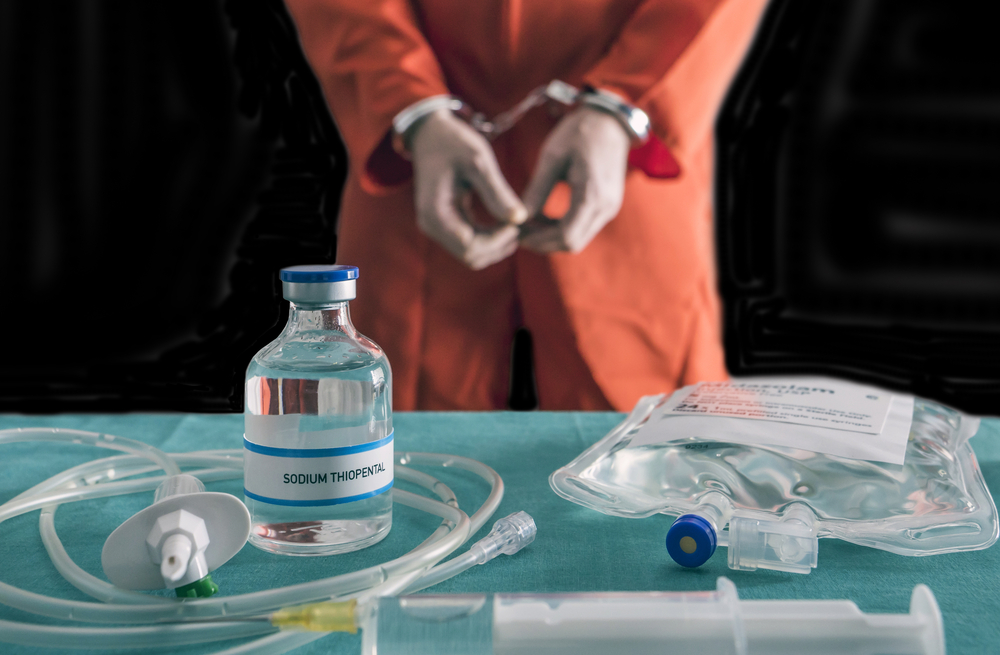
Oklahoma death row inmate Clayton Lockett died in one of the most infamous botched lethal injections in modern US history, after prison officials struggled for nearly an hour to find a vein.
Lockett, 38, was executed at Oklahoma State Penitentiary on April 29, 2014. He died of a heart attack 43 minutes after the execution began, CBS News reports. His case drew national attention and renewed debate over lethal injection.
Why was Lockett on death row?
Lockett was on death row as he was convicted of murder, rape, and kidnapping. His crimes date to 1999, when he and two accomplices were burglarizing a home. Stephanie Neiman, 19, and a friend arrived unexpectedly. Lockett shot Neiman, and his accomplices then buried her alive, according to NPR.
What went wrong?
According to Oklahoma’s Department of Corrections, it took 51 minutes for a medical technician to find a vein, NPR reported. Staff couldn’t find a suitable one in his arms, legs, neck, or feet, so they eventually placed an IV line in his groin. Documents later revealed that dozens of needle marks had been left across his body.
The execution began at 6:23 PM, using a drug combination that included the sedative midazolam, which Oklahoma had never used before in an execution. Around 10 minutes later, a doctor declared Lockett unconscious. But he soon began to writhe, convulse, and mumble, witnesses said. Prison officials lowered the blinds so those watching could no longer see what was happening about 16 minutes after the procedure began.
The state prisons director halted the execution at 6:56 PM. Lockett was declared dead at 7:06 PM, after a heart attack.
What did witnesses say?
A paramedic who was present described the chaos to the Guardian. He said he warned another staff member, “You’ve hit the artery,” and recalled that there was blood everywhere. The paramedic said the person carrying out the procedure hadn’t initially realized what had happened, and that the situation left staff anxious.
Local reporter Courtney Francisco told the BBC that Lockett appeared to be mumbling “as if he was trying to talk.”
Lockett’s lawyer, David Autry, called it “a horrible thing to witness.” “This was totally botched,” he said.
What happened afterward?
Governor Mary Fallin ordered an independent investigation into the execution and delayed other scheduled executions, including that of Charles Warner, which had been planned for the same night. A state review later found that the IV access point was “the single greatest factor” in the difficulty of administering the drugs. It also said the IV line hadn’t been properly monitored and recommended more training for prison staff and medical personnel.
Lockett’s execution became one of the best-known examples of lethal injection going wrong. It raised questions about whether the method can guarantee a quick and painless death. The failed attempt to execute Christa Pike in September 2026 has renewed those questions
Share this with others who like to keep themselves in the know about important stories.
Read more:


