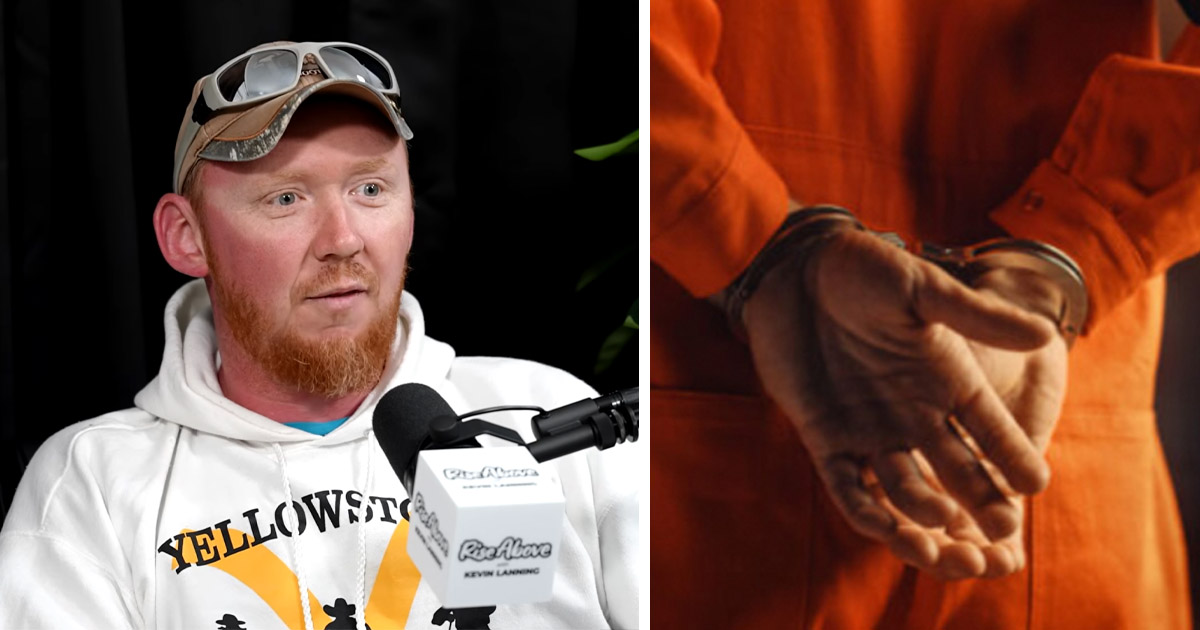
A former Death Row correctional officer says his time inside a Tennessee prison changed the way he viewed people – and that some of what he witnessed still stays with him decades later.
David Beechy spent 14 months working as a correctional officer at a Tennessee prison that housed Death Row inmates. At first, he viewed the job as just that: a job. But the environment quickly proved to be unlike anything he had experienced before.
Speaking to Rise Above with Kevin Lanning, Beechy described working around Death Row inmates as “a crazy adrenaline rush that never happened because you’re always on guard, you’re always watching,” according to VT.
Worked as a death row guard
Beechy said many of the inmates generally behaved themselves.
“A lot of guys had been there 15, 20, 30 years – that’s a lot of time to get that young vinegar out of your system and realize you’re there for the long haul,” he said.
Since inmates’ attorneys could potentially challenge their treatment in court, officers were held to a high standard.
“You had to behave well as a CO because their lawyers were looking for a reason to sue you. You were held at a very high standard,” Beechy explained.
“I’ve thought a lot more about death row people since I’ve not worked there”
According to Beechy, the prison captain also tried to make sure the officers assigned to the unit were not the type to deliberately provoke inmates.
“He would try to choose guys who he knew weren’t coming in to pick a fight every other day,” he said.
But spending time around the prisoners eventually changed Beechy’s own perspective.
“I’ve thought a lot more about death row people since I’ve not worked there,” he said.
One inmate in particular made him think about how little separated the men from each other in terms of age.
“Man, there’s not that much difference between you and me,” he recalled thinking.
Witnessed an execution
That realization also led Beechy to consider how much a person can change.
“Some of those guys that have been on Death Row for 20 years are not the same person,” he said.
“They’re no longer that kid chopped up on drugs going around killing people for 60 bucks to get their next hit.”
One of the most difficult parts of Beechy’s time at the prison came when he witnessed an execution.
“They executed one inmate during my time there and the whole unit changed. In the few weeks leading up to it and about a week afterward everything was just quiet, just eerily quiet.”
Beechy said some prisoners even stopped going to recreation during that period, describing the situation as an “extremely high stress situation.”
“You don’t think about it that much”
He also remembered performing a strip search on an inmate after the prisoner learned that his execution date had been set and his appeals were exhausted.
“It was like he had just left. His body was there but he had just checked out,” Beechy recalled.
The inmate began giving away his belongings the next day, knowing he would no longer need them.
“For me now it’s so crazy to see someone you know is completely healthy see that date come along,” Beechy said.
Beechy recalled another inmate experiencing a psychotic episode and seriously injuring himself.
“One of the inmates tried to cut his own penis off. That was probably the craziest and grossest things,” he said.
“This guy was cutting at an angle and cutting back in towards his stomach and cutting several inches deep. He was having a psychotic episode.”
The inmate was eventually treated and placed on medication.
Realized it wasn’t for him
Even after leaving the prison, Beechy says the job continued to influence the way he interacts with the world around him. He still prefers to sit with his back against a wall and instinctively pays close attention to people’s body language and behavior.
“Now looking back and realizing what I was in the middle of – it’s just you doing your job and you don’t think about it that much,” he said.
“I would say it affects me more now more than it ever has, maybe it’s because I have kids.
“I just realized it wasn’t for me,” he said. “At that point I kind of knew law enforcement wasn’t for me.”
Grew up Amish
His upbringing also had a role in how he processed what he had experienced. After growing up Amish and then entering such a high-stress environment, Beechy said he did not want the job to permanently change the way he viewed other people.
“Growing up Amish and moving into such a high stress environment I just realized I don’t want to see people the way that makes you see people.”
Beechy said some of his former colleagues were able to keep their jobs separate from their personal lives. Others, however, got consumed by the lifestyle.
“They go through four marriages and their kids don’t talk to them because they live this crazy not normal life,” he said.
For Beechy, the biggest lasting effect may have been the way the job changed his perception of humanity.
“The way you see humans is not the same.”
READ MORE
- Alarming photos show food aboard USS Abraham Lincoln after 9 months at sea as several ‘tried to jump overboard’
- What the ‘world’s hottest felon’ is doing 12 years after his viral mugshot as his life takes a very different direction