Nine people lost their lives when the private jet crashed in Greenacres, Florida. The reason why the plane crashed is still being investigated, and not much is known about what has been recovered from the wreckage. Now, an expert shares the reason why very few, or none at all, human remains will be found after the crash.
The investigation into the tragic November 1 Florida Learjet crash is still ongoing. According to the Associated Press, the National Transportation Safety Board (NTSB) announced on Monday that it recovered the cockpit voice recording from the wreckage, which could help explain what went wrong.
A total of nine people were on the plane that crashed in Greenacres, Florida. And while there has been a challenge for investigators to find key evidence in the wreckage, finding human remains could potentially be even harder.
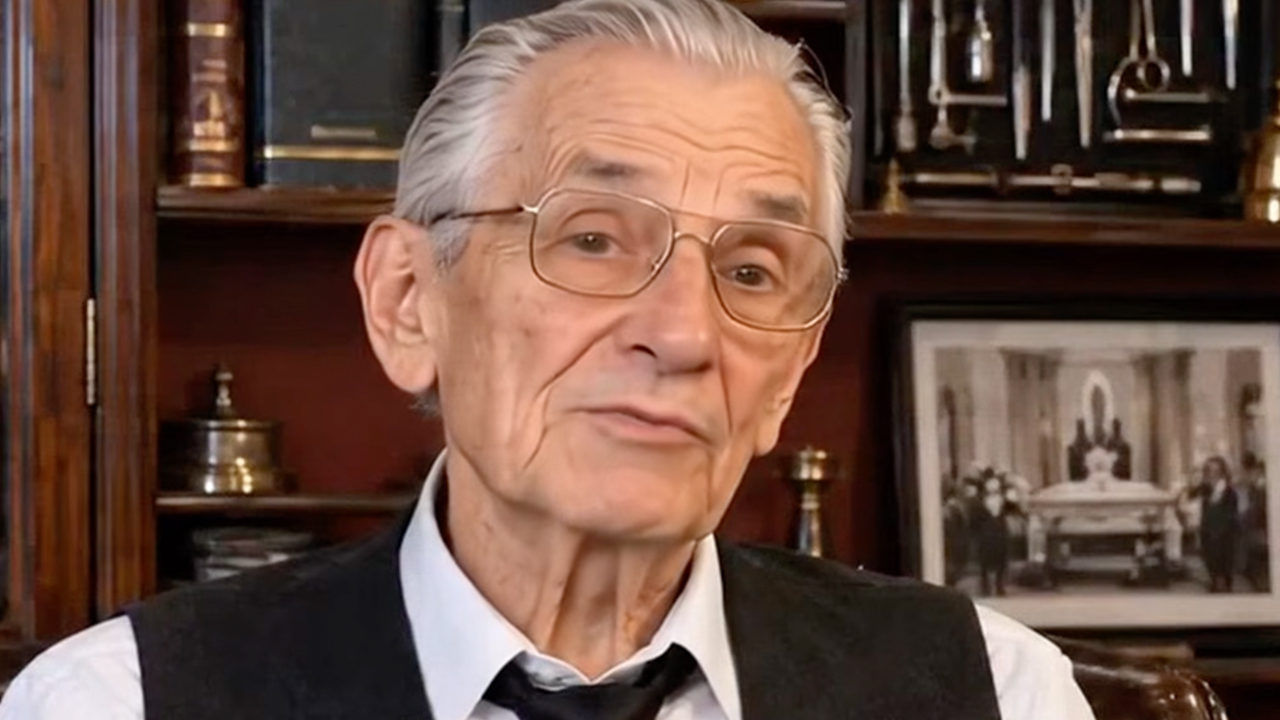
Now, in a YouTube video, funeral director Raymond Whitaker has explained that it could become extremely difficult for investigators to recover or even identify remains of the nine people who were on board the plane. Passengers include a family of four, including two toddlers.
Raymond Whitaker has more than 40 years of experience in the funeral industry. Based on his work preparing bodies, he believes he understands how difficult the recovery of the nine victims could be.
“When a plane hits at that speed, in that fireball, what the science says about the bodies, why identification takes months, and what families actually face when they ask the most painful question, is there anything to bring home?” the expert said.
Air traffic control recordings captured the terrifying final moments as the plane dropped from 35,250 feet to just 8,750 feet in little more than a minute. That meant the aircraft lost more than 26,000 feet of altitude in roughly 60 seconds.
Why very few human remains may be found after Florida Learjet plane crash
Co-pilot Nathalia Filgueiras reportedly declared a Mayday after warning about ice and turbulence. Moments later, she was heard saying, “We’re going to hit the ground.”
Whitaker explained that the plane’s speed during the rapid fall would have made the impact extremely powerful. Investigators have not yet revealed how fast it was traveling when it hit the ground. However, he explained that the human body can only withstand so much force before suffering deadly injuries.
“When an airplane traveling at several hundred mph stops in zero distance, that is when it hits the ground and goes nowhere, the G forces reach into the hundreds,” he explained.
“At that level of force, and I say this with absolute respect for the nine people on board, the human body no longer retains its shape. Bone, internal organs, soft tissue, all experience the same force in the same instant.”
Sadly, other factors also make finding human remains very challenging in the Florida Learjet accident.
Factors that could be ‘impossible’ to identify all remains
Raymond Whitaker explained that the most commonly used aircraft fuel, Jet A, can burn at extreme temperatures. In some cases, fires can reach more than 1,000 degrees Celsius, or 1,832 degrees Fahrenheit.
The funeral director said heat at those temperatures can destroy human remains. Also, because of the powerful impact and the fire that followed in the plane crash in Florida, identifying the victims could take weeks or even months. In some cases, it may be impossible to identify all the remains.
Further, the area’s recent rain could make it even harder to find human remains.
“Water does not just make access difficult. Water dissolves biological evidence; water carries bacteria that accelerate decomposition. Every hour of rain is another hour that the chance of recovering usable DNA decreases,” funeral director Robert Withaker said in a YouTube video.
Our deepest condolences go out to all the families affected by this tragedy.
Read more: