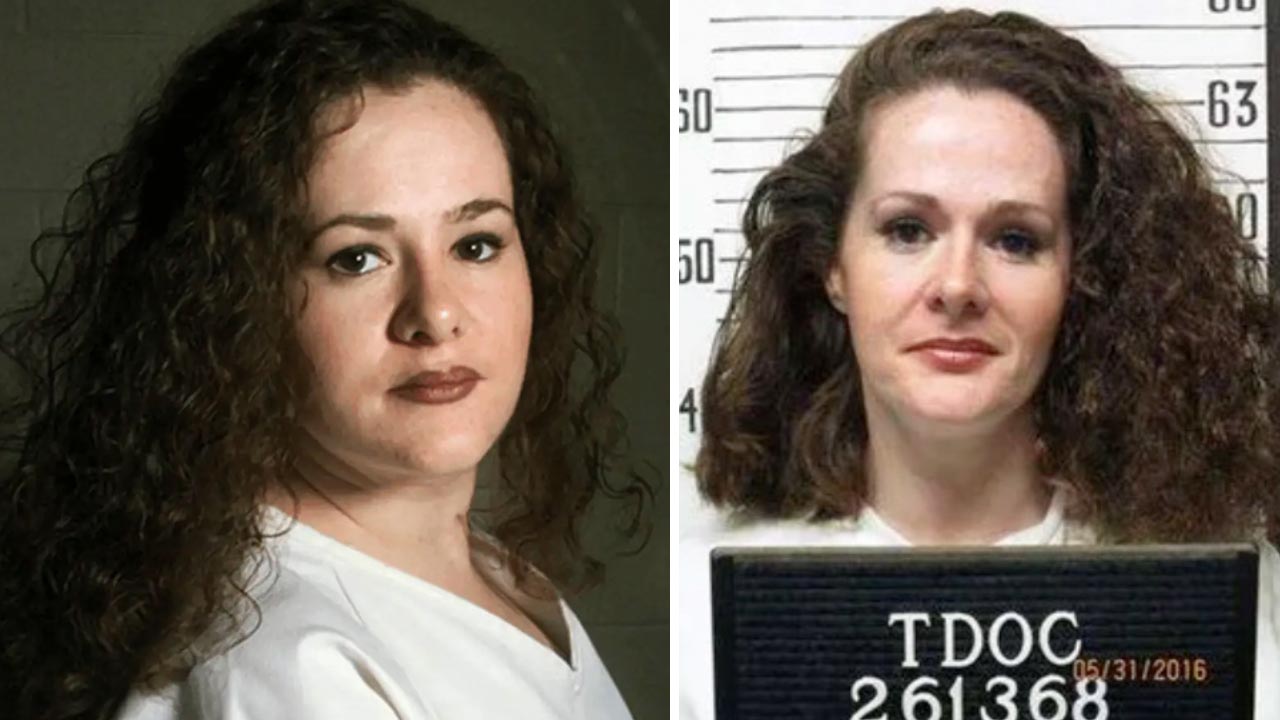
A doctor has explained how a specific medical condition could be the reason Christa Gail Pike survived two execution attempts by lethal injection on September 30.
Christa Pike was convicted of the brutal torture and killing of Colleen Slemmer in 1996. She was sentenced to death, and after spending nearly three decades on death row, her execution was scheduled for September 30. But things didn’t go as planned.
Pike was given two doses of pentobarbital during the execution attempt. But according to a court filing from her legal team, problems with the IV lines meant the pentobarbital entered her body without properly reaching her bloodstream.
She was taken to an off-site medical facility. Now, doctors are still dealing with the consequences as she remains unconscious in a heavily guarded hospital room.
Christa Pike execution
Pike’s attorney, assistant federal defender Stephen Ferrell, gave an update on her condition on CNN’s State of the Union.
”It remains the same. She’s still in the hospital on a ventilator, critically ill,” he said.
”We don’t really know the prognosis yet, and may not know for several days.”
Dr. Joel Zivot, who worked closely with Pike’s defense team, has shared his thoughts on the matter and explained what might have gone wrong. Her team had issued warnings ahead of the execution, one of which concerned Pike’s thrombocytosis, a blood-clotting disorder.
He suggested that clotting may have occurred soon after the needles were inserted, preventing the lethal drugs from properly reaching the veins.
According to the doctor, the pressure caused by the clotting may have caused the targeted veins to rupture.
“She very likely has a significant burn on one or both arms from the pentobarbital that I expect went into the tissues,” he said, appearing on TMZ’s YouTube series, In The Know.
What went wrong?
In an interview with The Sun, Dr. Zivot said the outcome was ‘predictable’.
“These things were predictable. I knew that they would happen. I called that they would happen and they happened,” he said.
“I can tell you that all the things that I warn about – that I’ve written in the past – have all come to fruition in the case of Christa Pike.”
For a lethal injection to be administered, the execution team must first gain access to the inmate’s bloodstream through an IV line.
Placing the IV requires a certain level of medical skill, yet healthcare workers generally avoid taking part in executions because of professional ethical standards. As a result, the responsibility can fall to personnel without formal medical backgrounds, making what is already a delicate procedure even more challenging.
“Placing an intravenous catheter is a specific technical skill that is practised by people in healthcare. It’s not something that translates into the execution chamber,” Dr. Zivot said.
“So if Christa Pike’s health should be such a thing that it can never be restored to some degree… then she may not face [execution] again.
“If the death penalty goes wrong, which it has done in this case, it becomes the duty of the state to restore the prisoner to health. So they’re bound to do it.”
Read more: