At the time of his death, he was regarded as one of the greatest artists ever to walk the earth. A rock superhero with an estimated fortune of $50 million.
But the money was never what defined him — it was the journey from trauma to touching millions of people through his voice.
Feelings of being sent away
Many superstars often share one thing in common — they come from modest backgrounds and have experienced some form of childhood trauma, which they later turned into strength, power, and determination.
The megastar we’re talking about today came from a family that was stable, but they were never wealthy by Western standards. And within just a few years, the family would be thrown into a far more harrowing whirlwind as world political events turned their entire lives upside down. Amid it all stood an extremely insecure little boy who was thrown to the wolves and forced to fend for himself.
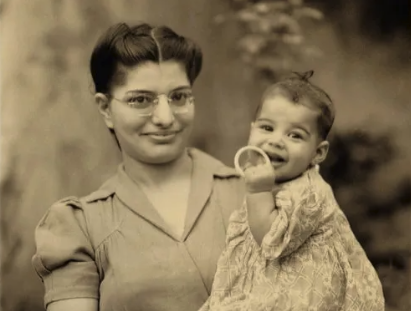
Born in Africa in 1946, this boy would go on to achieve global fame in the 1970s.
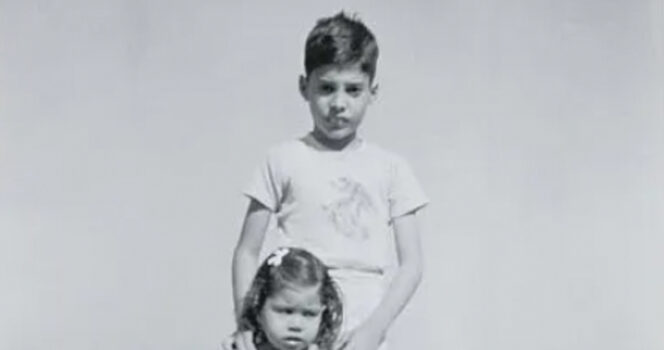
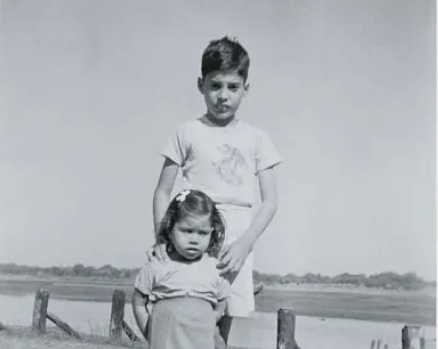
He was born with four extra incisors, something he later believed contributed to his remarkable vocal range. His father worked for the British Colonial Office, but much of his childhood was spent in India after he was sent away at just eight years old to a British-style boarding school for boys in Bombay.
At the time, what may have seemed like structure from the outside felt very different from the inside.
“Of course there were feelings of being sent away from my parents and my sister who I missed very much – feelings of loneliness, feelings of being rejected – but you had to do what you were told so the sensible thing was to make the most of it,” he later said in an interview.
Life at a strict boarding school in the 1950s was no easy experience.
“All the things they say about boarding schools are more or less true, about the bullying… One thing board school teaches you is how to be independent and not rely on anyone else.”
“I was put into an environment where I had to fend for myself, so I got a good grasp of how to be responsible at an early age and I think that’s what made me such a fiend.”
Blood streaming down his face
His schoolmates later described the future rock star as something of a loner during his school years. Happiest when he was playing the piano or spending time in art class, he also showed a competitive edge in sports — hockey, athletics, and boxing.
”I loathed cricket and long-distance running; I was completely useless at both. But I could sprint, I was good at hockey, and I was just brilliant in the boxing ring,” the singer once said.
His classmate, Bruce Murray, recalled a moment that stayed with him from a boxing match, where the future singer was taking repeated punishment in the ring while others urged him to stop the fight.
However, he refused to give in and kept fighting until the end, blood streaming down his face.
”He could be very tenacious,” Murray said.
The star’s early life at boarding school came under renewed scrutiny in 2025, following the release of a controversial new book by author Lesley-Ann Jones.
In the book, Jones claims she was given access to the artist’s personal diaries and notebooks by a woman known only as “B,” shortly before his death.
Abuse in school
According to her account, the writings allegedly describe the traumatic experiences he endured as a schoolboy and suggest he was the victim of sexual abuse while at boarding school.
By all accounts, the star excelled academically in the school until around the age of 14, when a sudden shift in his performance and behavior is said to have occurred. The book claims this change is reflected in the diaries, which allegedly detail abuse at the hands of one of the schoolmasters.
According to Lesley-Ann Jones, one of the schoolmasters started taking 14-year-old into his quarters to sexually abuse him after having caught him during a collective self-pleasuring session with a group of other boys.
In 1963, the boy moved back to Africa, but only stayed for a year before a violent revolution forced the family to relocate to England. They eventually settled in London, where he wasted no time throwing himself into the Swinging Sixties scene.
He studied graphic art and design at Ealing Art College, graduating with a diploma in 1969. By then, it was already clear he had a natural talent for singing and piano—skills he had begun developing at just seven years old.
While trying to break into the music industry, he sold second-hand Edwardian clothes and also worked as a baggage handler at Heathrow Airport. Friends described him as a shy, quiet young man with a deep passion for music, with pictures of his hero, Jimi Hendrix, covering his room.
”My parents were outraged”
His parents, however, were reportedly far from supportive at first of his decision to pursue a career in music.
“My parents were outraged when I told them what I was up to,” he later said.
“I used to go home periodically and turn up in these outrageous clothes and with my fingernails painted black and at that time my mother used to freak out. They used to say, ‘My God! Don’t let the neighbours see you. Come in here quick. Use the back door.’”
The young man sang with several local bands, but had his eyes set on a trio called Smile, featuring guitarist Brian May and drummer Roger Taylor. With trademark enthusiasm, he offered them constant unsolicited suggestions — even shouting, “If I was your singer, I’d show you how it was done!” during their performances.
When their vocalist ultimately quit in 1970, he finally got his chance to step forward. With the addition of bassist John Deacon the following year, the group adopted a new name: Queen. The bold choice — playing with ideas of class, identity, and sexuality — was his idea. As he later explained, “The whole point was to be pompous and provocative, to prompt speculation and controversy,” telling PEOPLE in 1977.
Embracing that same theatrical spirit, he also chose a new surname for himself.
From that moment on, he would be known as Freddie Mercury.

Even though he was very shy and had a somewhat turbulent upbringing, Mercury was also a born show-off — someone whose entire personality transformed the moment he stepped on stage.
His career with Queen speaks for itself. He wrote numerous iconic hits, including “Killer Queen,” “Bohemian Rhapsody,” “Somebody to Love,” “We Are the Champions,” “Don’t Stop Me Now,” and “Crazy Little Thing Called Love.”
His charismatic stage presence often saw him engaging directly with audiences, most famously at the 1985 Live Aid concert, in front of 70,000 people.
Beyond his work with Queen, he also pursued a solo career and worked as a producer and guest musician for other artists.
Sadly, Mercury was diagnosed with AIDS in 1987. He continued working with Queen and remained creatively active until the very end. After his death, he was also featured posthumously on the band’s final studio album, Made in Heaven.
In 1991, just one day after publicly confirming his diagnosis, he died from complications related to the illness at the age of 45.
A year later, in 1992, a major tribute concert was held at Wembley Stadium in his honor, raising awareness and support for AIDS research.
At the time of his death, he had an estimated net worth of around $30–50 million. His estate — reportedly including a London home, valuable artwork, and ongoing Queen royalties — was largely left to his close friend and former fiancée, Mary Austin, with the remainder going to his family.
READ MORE