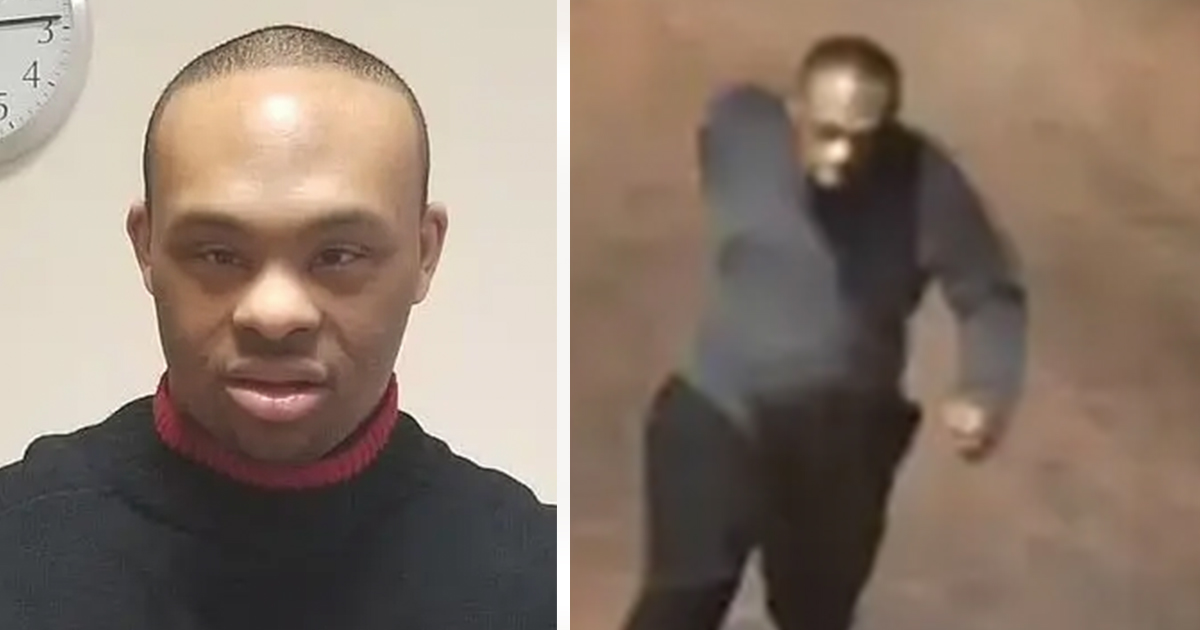
A nonverbal man with Down syndrome was allegedly left trapped and terrified inside a dark Metro station for six days after workers failed to help him – only for the transit authority to later accuse him of trespassing.
On Oct. 20, 2023, 31-year-old Rashawn Williams disappeared in Montgomery County, Maryland, after walking away from a caregiver at a hotel where he was staying through WeAchieve, a nonprofit agency responsible for his day care.
According to a lawsuit later filed by his family, Williams had indicated around 6:20 p.m. that he needed to use the bathroom, but while his caregiver went to get a key, he walked through the hotel lobby and headed toward the Glenmont Metro Station, operated by Washington Metropolitan Area Transportation Authority (WMATA).
The man wasn’t seen again for almost one week.
‘I just want my son’
“Non-verbal, he can’t defend himself, no food, no water,” Hall said, adding, “I just want my son, that’s all,” Williams’s father, Jimmy Hall, told ABC 7 as the frantic search continued.
With Williams nonverbal and requiring round-the-clock supervision, every hour he remained missing added to his family’s fears.
As the days passed without any sign of his son, Hall’s search took an increasingly heartbreaking turn.
By day five, the family was looking through dumpsters and wooded areas as he confronted the possibility that Williams might no longer be alive.
“I was searching for my son’s body,” Hall later told The Washington Post.
Then, on the sixth day, police finally found him.
Williams was alive inside the station – but the circumstances of how he had allegedly spent nearly a week there would later become the center of his family’s lawsuit that names the WMATA and WeAchieve.
Trapped in an ‘area of refuge’
On the night he disappeared, the lawsuit explained that Williams had been on a WMATA train for about six hours before the train pulled into Glenmont shortly after midnight and went out of service.
A Metro employee allegedly instructed the passenger – with a “visible disability and obvious confusion” – to leave the train but did not ensure he safely made his way out of the station.
Williams later approached a station kiosk and appeared to be looking for help, but according to the lawsuit, the employee inside had spent 30 minutes on a personal phone call and did not assist him.
“While Rashawn stood awaiting assistance, [station manager] looked directly at Rashawn and did not address him, instead continuing his personal call,” the lawsuit reads. “After waiting for assistance and being ignored, Rashawn threw his hands up in frustration and walked back further into the metro station,” eventually passing through an emergency exit into an “Area of Refuge” (AOR), where a door locked behind him.
There he allegedly remained, alone in the dark, as his family and police searched for him outside.
‘Covered’ in his own urine and feces
When police finally reached Williams, the conditions inside offered a horrifying picture of what he had allegedly endured.
“Williams had no light, water, food or toilet facilities. Montgomery County Police Department found Williams severely dehydrated and undernourished, ‘covered’ in his own urine and feces, with bugs nesting in his hair,” U.S. District Judge Paula Xinis wrote in a recent ruling.
Williams was taken to a hospital for treatment, but according to his family, the effects of those six days did not end when he left the station.
Continued trauma
Now 33, Williams has allegedly struggled with lasting behavioral changes since the ordeal, with his family claiming he stays awake at night, rocks back and forth, suffers panic attacks and sometimes has sudden, unexplained screaming outbursts.
“Complete darkness is intolerable for him and triggers panic attacks where he frantically runs into rooms to find help,” the lawsuit said, per WUSA 9. “These changes underscore the profound psychological and emotional toll the incident has taken on Rashawn, manifesting in disrupted routines, impaired focus, and altered behavior.”
Williams accused of trespassing
WMATA sought to have the case dismissed, arguing in part that Williams had become a “trespasser” in the station after service ended and that the transit authority had immunity from certain claims.
Xinis rejected its attempt to dismiss the lawsuit, finding that Metro owed Williams a duty of care while also pointing to its policies requiring daily inspections of the AOR and barring employees from taking personal calls at the expense of assisting passengers.
“A modicum of basic communication with Williams to ensure he left the station safely can hardly be considered ‘burdensome’ to WMATA,” Xinis wrote in the ruling allowing the family’s lawsuit to move forward.
“WMATA employees ignored Williams’ clear signs of distress,” she added.
WMATA failed protocol
More troubling still, “no Metro personnel inspected the AOR on the night Williams became trapped, or for six days thereafter,” Xinis wrote.
“Rashawn could have been found the same night he went missing if WMATA strictly adhered to its established protocols, which include: thoroughly checking rooms at each station and ensuring continuous monitoring of camera footage,” the lawsuit outlines.
WeAchieve has not filed a motion to dismiss the lawsuit, but according to court records cited by The Washington Post, the agency previously denied allegations of negligence or intentional misconduct and blamed WMATA for any injuries Williams allegedly suffered.
Before passing this story along, please let us know your thoughts on what happened to Rashawn Williams.
READ MORE
- YouTuber Jesse Ridgway and wife terminate pregnancy after Down syndrome diagnosis
- Mattel introduces first Barbie doll representing person with Down syndrome