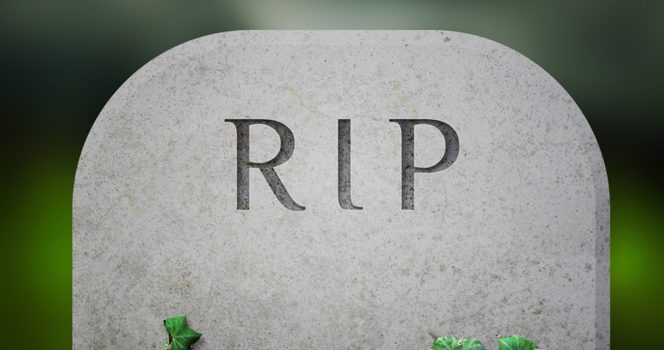
For years, we’ve all seen it on tombstones: RIP. A small, simple trio of letters that seems to say everything—and nothing—at the same time.
Most of us assumed it stood for the comforting phrase “rest in peace.”” But what if everything we thought we knew about RIP was wrong?
That’s exactly what people are discovering now, and it’s leaving the internet shook.
Many are realizing that RIP isn’t originally English at all, and its real meaning goes way deeper than you might expect.
At first glance, RIP seems obvious. No one questions it. But if it truly stood for the English phrase ‘rest in peace,’ then why have other non-English-speaking countries been using it for centuries too?
The answer? Latin.
According to etymologists, including the Merriam-Webster dictionary, RIP comes from requiescat in pace, a Latin phrase used in early Christian burial rites. It literally means, “may he or she rest in peace.”

Other variations include ”Requiescat in pace et in amore” for ”May he/she rest in peace and love” and ”In pace requiescat et in amore”.
RIP became a common feature on headstones in the 19th century and is now widely used whenever referencing someone’s passing.
But the big difference is that the original phrase was a prayer, a heartfelt wish for the soul of the deceased, not just a casual statement. The meaning is essentially the same, but the letters don’t technically match the English words we think of.
This revelation sparked a firestorm online after teacher Laurie Knox (@knoxstudy) shared a video explaining how many everyday abbreviations actually come from Latin.
In the video, he started by breaking down phrases like AM and PM, which stand for ante meridiem and post meridiem — “before noon” and “after noon” — and etc., short for et cetera, meaning “and so on.”
And then he explained RIP.
“RIP didn’t originally stand for ‘rest in peace’,” Knox clarified.
Many people rushed to the comments to guess its origin, with one joking: “Rot in pss?”*
Knox went on: “When RIP first appeared on tombstones in England, it stood for ‘requiescat in pace’, which is Latin for ‘rest in peace’. So just to let you know the initialism was originally Latin rather than English.”
And some users were blown away by learning this.
“RIP was a new one for me,” one said.
Another admitted, “I didn’t know RIP!”
Another user complained: ”So technically it still stood for rest in peace but in Latin.”
So next time you see RIP on a gravestone—or type it in a message—remember: what looks like a simple abbreviation carries centuries of history and a solemn prayer behind it.
READ MORE
- People believe they’ve spotted key detail in the eyes of Nancy Guthries kidnapping suspect
- Bad Bunny reveals emotional meaning behind ’64’ on outfit