A chilling map showing potential nuclear targets across the United States was once broadcast on Russian state television.
Now, as tensions between Moscow and the West continue to draw attention, the footage offers a reminder of how openly Russian media has discussed the possibility of a nuclear confrontation.
Relations between Russia and the West have been strained ever since Moscow launched its full-scale invasion of Ukraine in February 2022.
But recent statements from both sides have brought renewed attention to the risk of a confrontation extending far beyond Ukraine.
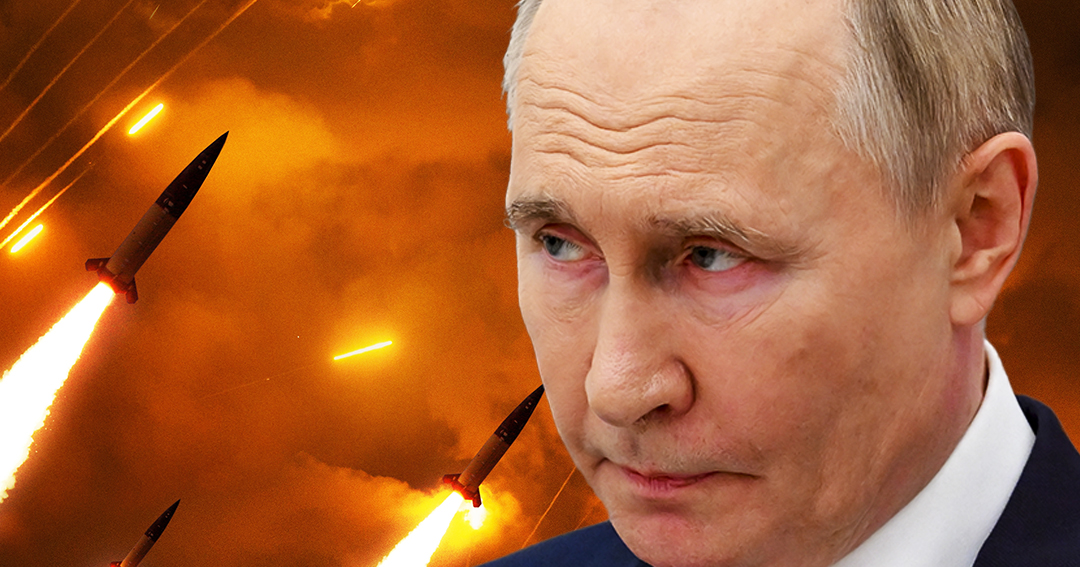
For example, Vladimir Putin delivered his own stark message during the recent Russia-Africa summit, making it clear that Moscow believes it is prepared for a direct conflict with European countries.
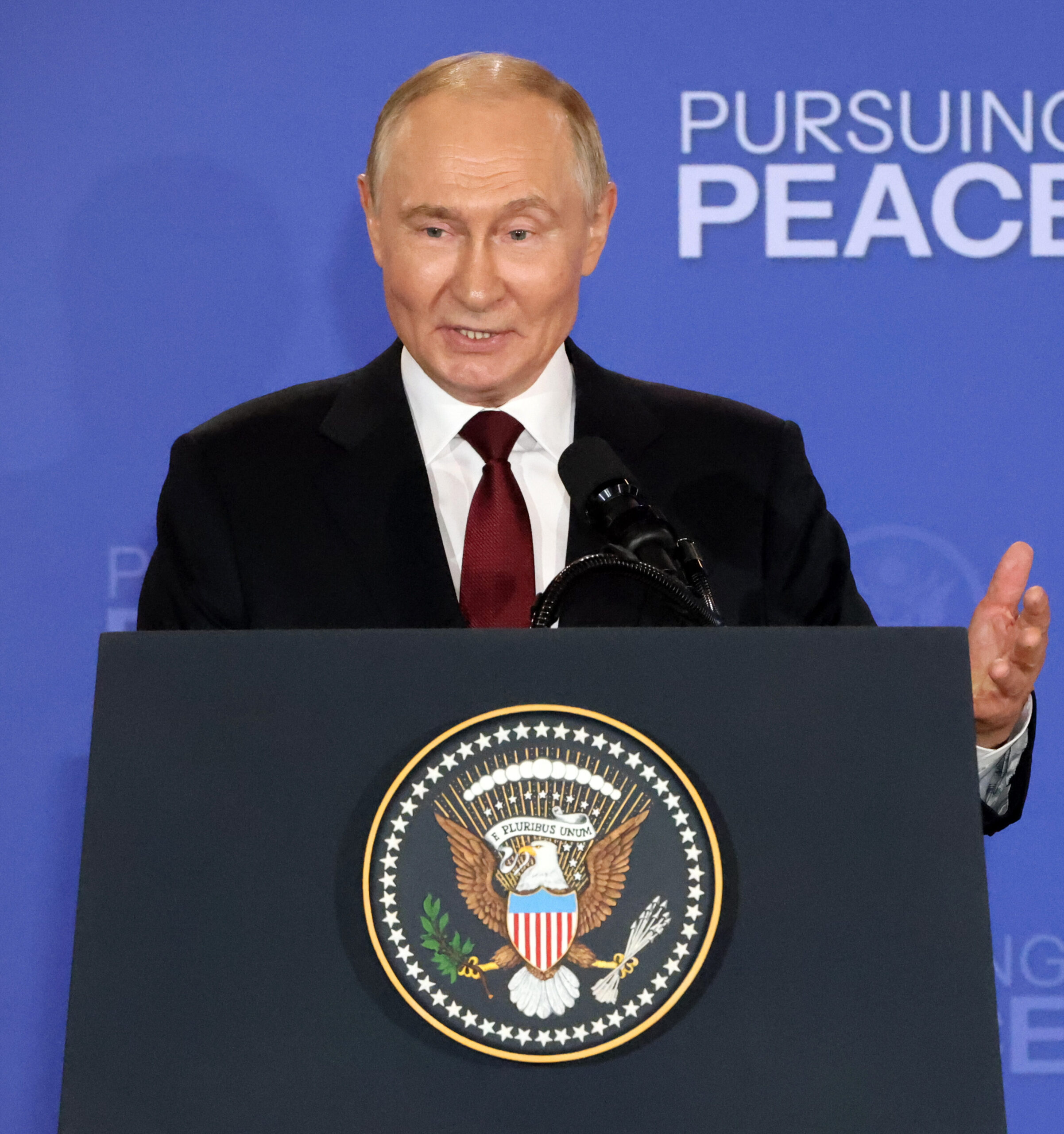
”We are ready for war with Europe, but we don’t want it,” the Russian president told leaders at the summit, before adding a pointed warning to European leaders:
”As for them – if anyone desires such a thing, let them prepare.”
He went on to warn that if the situation escalated too far, ”there will be no winners at all.”
Growing uncertainty
Putin’s latest remarks come at a time of growing uncertainty over the West’s relationship with Moscow.
President Donald Trump’s decision to ease certain US sanctions on Russia, despite the ongoing war in Ukraine, has drawn criticism and fueled questions about whether Washington is changing its long-standing approach to the Kremlin.
Over the past few months, Trump has appeared to move closer to Moscow, while relations between the United States and Ukraine have reached their lowest point in 18 months.
Meanwhile, Russian, Ukrainian and American officials are expected to meet in Abu Dhabi next month for peace discussions. If they go ahead, the talks would mark the first such meeting since February.
Marked by decades of mistrust
Still, even if Trump and Putin appear to be on relatively good terms right now, that doesn’t mean things can’t change quickly. The relationship between the United States and Russia has been marked by decades of mistrust, confrontation and shifting alliances.
This was made clear back in 2019, when Russian state television aired a segment that drew attention to several potential US targets in the event of a nuclear conflict.
The map was shown by Dmitry Kiselyov, a prominent Russian TV presenter with close ties to the Kremlin. During the broadcast in February 2019, he highlighted several locations across the United States that he claimed could be targeted in a confrontation with Russia.
Among the sites highlighted were some of the most recognizable and strategically important locations in the country.

The Pentagon in Washington, D.C., the headquarters of the US Department of Defense, was among the locations shown.
Another was Camp David in Maryland, the presidential retreat used by American presidents for private meetings and diplomatic discussions.
The map also included Fort Ritchie in Maryland, a former military installation, as well as McClellan Air Force Base in California, which had already been closed years before the broadcast.
A fifth location was Jim Creek Naval Radio Station in Washington state, a facility used by the US Navy for communications with submarines.
Another detail that raised eyebrows
Kiselyov claimed that Russia’s advanced hypersonic weapons could reach certain targets in just minutes, making the prospect of a conflict particularly alarming.
But there was another detail that raised eyebrows.
Some of the locations presented during the broadcast were no longer active military installations. Fort Ritchie had closed in 1998, while McClellan Air Force Base shut down in 2001.
The broadcast attracted international attention at the time, with critics questioning both the selection of locations and the way the potential threat was presented.
The Kremlin was also asked about the program, but the televised map was not an official announcement of an approved Russian military strike list.
Dmitry Kiselyov has been one of the most prominent voices behind Russian state television’s strongly anti-American messaging. On one occasion, he even claimed that Moscow could reduce the United States to radioactive ash.
Initially, Kiselyov welcomed Donald Trump’s rise as an ”anti-establishment” candidate, expressing approval of his willingness to work with Vladimir Putin.
But his attitude changed in early 2017, when he turned against the US president and described him as ”more dangerous and unpredictable than North Korean leader Kim Jong Un.”
”Needs to be ready for war within 1,000 days”
Western officials have said that Putin is unlikely to want a direct military confrontation with NATO. However, warnings have grown that Russia could pose a military threat to the alliance before the end of the decade.
Just last week, British Defence Secretary Wes Streeting stressed that the UK must be prepared for the possibility of war within the next 1,000 days.
In an article for The Telegraph, Streeting warned that the threat facing Britain is changing, pointing to the growing military strength and war-focused economy of its adversaries.
He wrote: ”Our adversaries’ willingness to harm us is not new. What has changed is their capacity. By 2030 their force strength and war economy could put them in a position to attack. That gives us a little over 1,000 days to complete our mission: to be ready with our allies to fight and win.”
READ MORE
- Macaulay Culkin faces backlash after wearing ‘inappropriate’ Halloween costume
- Real reason doctor who saved Christa Pike after botched execution still wants her dead