

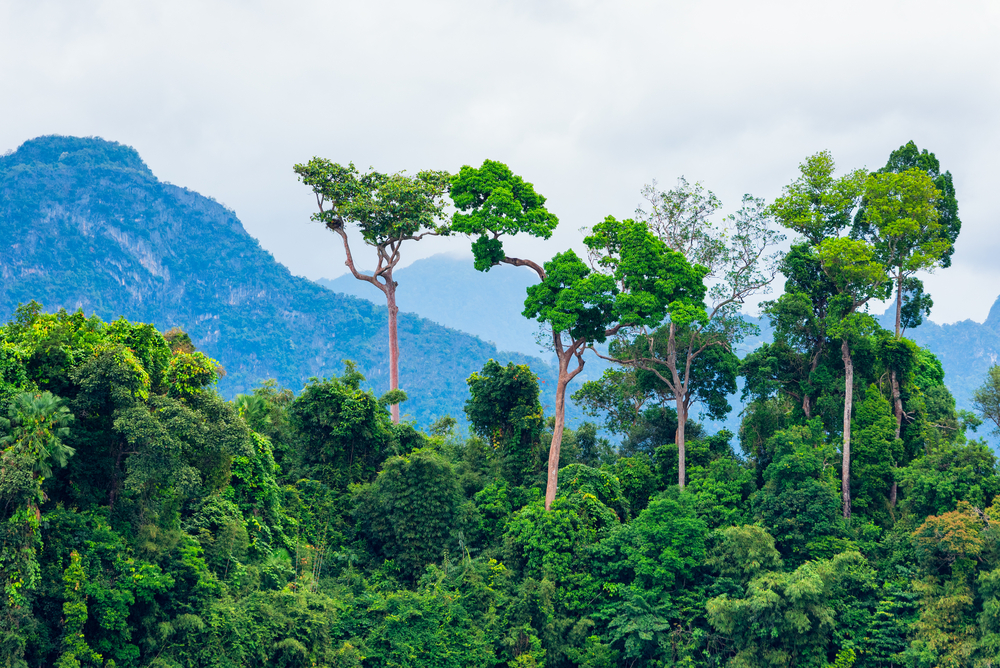
Around 20 members of an uncontacted Indigenous tribe in the Brazilian Amazon have made a rare appearance at a government outpost after reportedly approaching officials in search of food.
The Awá people arrived at a government station in the village of Tawari, in the northeastern state of Maranhão, on Monday, according to human rights organisation Survival International.
The group had reportedly been looking for yams. They accepted food from the team before returning to their territory.
Survival International described the encounter as historic, with images showing members of the tribe standing at the edge of the forest carrying long wooden spears.
Some members of the neighbouring Guajajara (Tenetehar) community, who support the government outpost, also filmed the encounter.
However, while the meeting may appear to be a positive moment of contact, campaigners say it raises serious concerns about the growing threats facing the Awá and their traditional way of life.
Why did the Awá approach the government outpost?
Survival International believes the encounter could be linked to increasing pressure on the tribe’s territory, with illegal activity and deforestation threatening the forest resources they depend on.
The organisation’s director, Caroline Pearce, warned that the incident was a troubling sign of the dangers facing Indigenous communities who have remained isolated from wider society.
“This is a troubling indication of how the continued invasion of uncontacted peoples’ forests put otherwise self-sufficient Indigenous people in real danger,” she said.
Sarah Shenker, head of Survival International’s Brazil team, described the situation as “a crisis moment really and a wake-up call”.
The organisation has warned that the Awá’s territory is being increasingly invaded, potentially making it harder for the community to access the food and resources they traditionally rely on.
Who are the Awá people?
The Awá are among the world’s last uncontacted Indigenous peoples, with some members continuing to live in isolation from modern society.
They are traditionally nomadic hunter-gatherers, relying on the rainforest for survival. Their skills include hunting animals such as armadillos using bows and arrows, as well as gathering wild honey and babassu nuts.
Survival International has campaigned for decades to protect their land and way of life.
Between 2012 and 2014, the organisation ran an unprecedented campaign to defend a neighbouring Awá territory, during which the tribe was described as ‘Earth’s most threatened tribe’.
Campaigners say protecting their land is essential to ensuring the community can continue living independently, without outside interference.
Illegal loggers and cattle ranchers threaten their territory
The Awá’s territory, known as Arariboia, covers approximately 1.2 million acres of rainforest.
However, the land has increasingly come under pressure from illegal loggers, hunters and cattle ranchers, who are accused of encroaching on Indigenous territory.
Pearce warned that the uncontacted Awá are being pushed into an increasingly small area of forest as destruction spreads around them.
“The uncontacted Awá are under extreme pressure as intruders encroach from all sides of their territory, driving them into an ever-smaller island of the Amazon rainforest, surrounded by destruction,” she said.
The neighbouring Guajajara community has also been fighting to protect the area.
A group known as the Forest Guardians has spent years confronting illegal loggers and cattle ranchers operating in Arariboia, amid criticism that government authorities have failed to adequately protect the territory.
Their work has reportedly come at a devastating cost, with several Guardians losing their lives while defending the land.
In a statement, the Forest Guardians described the growing challenges facing the rainforest and the people who depend on it.
“The situation in the forest is challenging: climate change, fires, deforestation and land encroachment are having a direct impact on their lands and the Awá way of life, which depends exclusively on hunting and gathering.”
They said they had continued protecting the Awá “even at the cost of losing warriors in battle” and called for immediate action from the authorities.
The Guardians also asked Survival International to release the images of the encounter to draw attention to the urgent need to protect the territories of uncontacted Indigenous peoples.
Indigenous organisation COAPIMA also stressed the importance of safeguarding the community’s rights, saying, “This highlights the importance of protecting uncontacted Indigenous peoples, respecting their autonomy and safeguarding their territorial rights.”
Pearce has urged the Brazilian government to take stronger action to prevent further destruction of the territory.
“The Brazilian government must commit the resources necessary to protect Arariboia from the loggers and ranchers who are razing it, in flagrant defiance of the law.”
For campaigners, the rare encounter is more than just an unusual moment of contact. It is a warning that the continued destruction of the Amazon could put the survival, independence and traditional way of life of some of the world’s most isolated Indigenous communities at risk.
Share this with others who like to keep themselves up to date with interesting news stories from around the world.
Read more:


