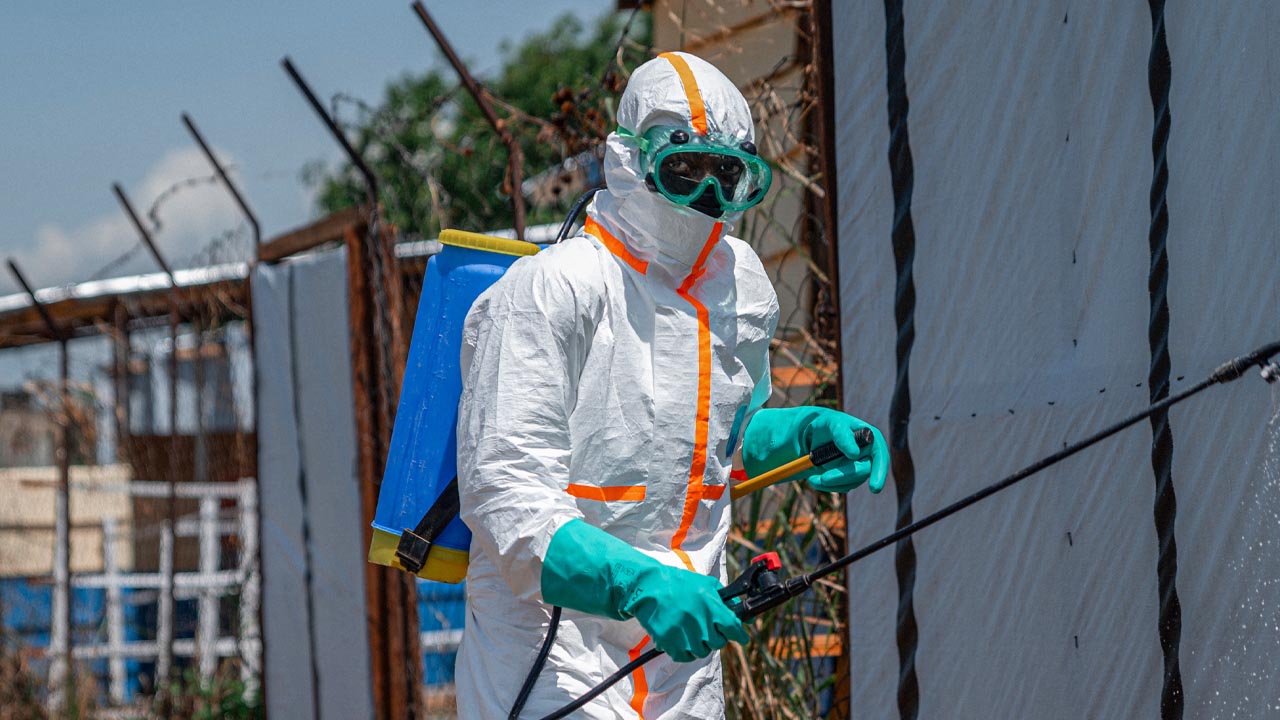
Health officials are raising concerns about the possibility of Ebola spreading beyond Africa as an outbreak in the Democratic Republic of the Congo (DRC) continues to escalate.
More than 5,500 people have reportedly died, while over 11,000 infections have been recorded. The fatality rate is nearly 50 percent.
Dr. Mohamed Janabi, the World Health Organization’s (WHO) Regional Director for Africa, has warned that the situation could develop into a wider international health crisis if efforts to contain the virus fall short.
Speaking to Metro, Janabi pointed to several obstacles making the response increasingly difficult.
“Insecurity, population movement, and transmission in hard-to-reach areas is making it harder to break the chains of transmission,” he said.
“As long as the outbreak continues to spread further, I have to say that spread [internationally] is possible.”
Ebola outbreak in the Democratic Republic of the Congo
The outbreak has already raised concerns beyond the DRC, with cases reported in Nigeria, Uganda, Kenya, and France. The French case involved a doctor who had been treating patients infected with Ebola in the Democratic Republic of the Congo.
The current outbreak has been described as the second-largest Ebola outbreak in history.
According to Janabi, the overall global risk remains low for now, although he acknowledged that the situation could change as the outbreak continues to spread. He has also urged Western countries to provide support.
“What I am asking for is the UK, and other big pharma is to give us priority,” he told Metro.
Travel restrictions have been introduced
Although no Ebola cases have been confirmed in the United States, the Centers for Disease Control and Prevention (CDC) is taking steps to reduce the risk.
Travel restrictions have been introduced for people arriving from countries affected by the outbreak.
According to the CDC: “some travelers coming from affected countries are temporarily not allowed to enter the United States”.
Americans returning from affected countries are also being advised to monitor their health for 21 days. Anyone who develops symptoms during that period should immediately isolate and contact public health authorities.
The CDC explains: “After November 3, 2026, at 11:59 pm Eastern Standard Time, all people boarding an international flight to the United States must attest (sign a statement) that they have not been present in the Democratic Republic of the Congo (DRC) in the 21 days before boarding a flight to the United States.
“An attestation is a statement that confirms that the information provided is true. Willfully providing false or misleading information may lead to criminal fines and imprisonment.”
Read more: