The deaths of five Italian divers inside a cave system in the Maldives has shocked people around the world. Now, a mortician has explained what may have happened to the victims’ bodies after they became trapped underwater.
The tragedy unfolded in a cave located at least 60 feet underwater. The victims were identified as 52-year-old marine biologist Monica Montefalcone, her 22-year-old daughter Giorgia Sommacal, marine biologist Federico Gualtieri, 31, researcher Muriel Oddenino, 31, and diving instructor and boat captain Gianluca Benedetti.
The rescue operation also claimed the life of a member of the Maldives National Defence Force search-and-rescue team.
Bodies of deceased returned to Italy
According to reports, four of the victims’ bodies were flown back to Milan on May 23, where Italian prosecutors are continuing a manslaughter investigation.
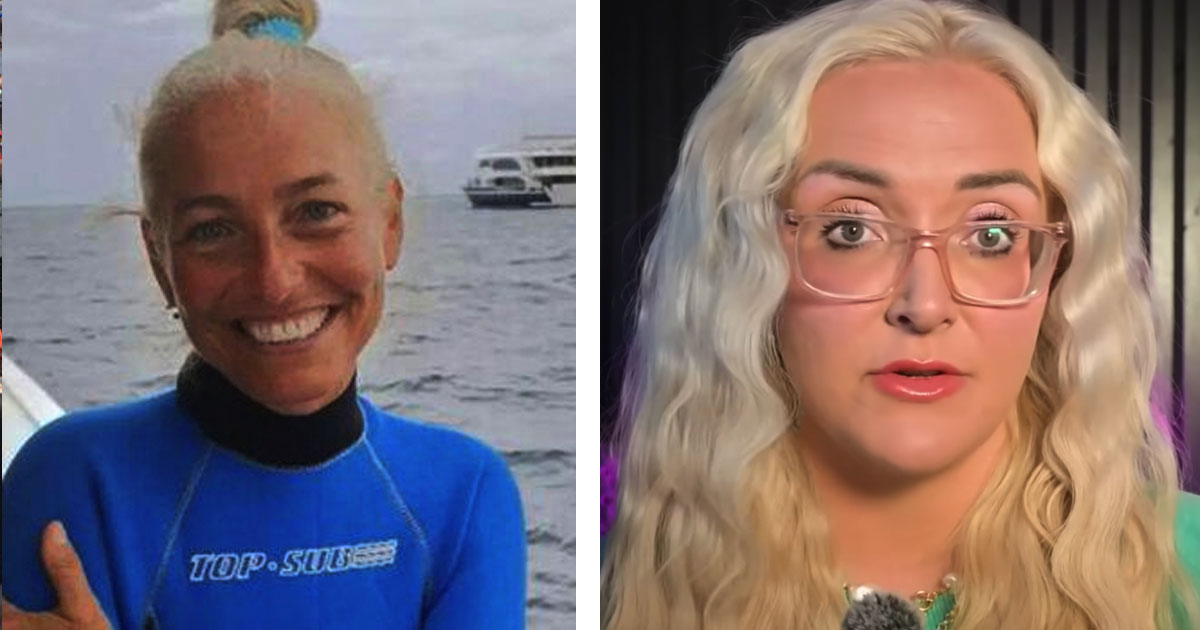
As questions continue surrounding what happened inside the cave, mortician and online creator Lauren, known as ‘Lauren the Mortician,’ has shared insight into how the underwater conditions may have affected the bodies.
In a video discussing the tragedy, she explained that remaining underwater for nearly a week in tropical conditions causes significant physical changes.
“From a mortuary science perspective, a week underwater is a long time, especially in warm tropical salt water, because decomposition does not stop underwater. It just changes,” she said.
Lauren noted that many people imagine bodies immediately floating underwater in dramatic fashion, but reality is usually very different.
“Most bodies actually sink at first, especially divers because they’re wearing heavy tanks, weight systems, wet suits, gear, and equipment specifically designed to help control buoyancy underwater.”
As decomposition progresses, bacteria inside the body naturally produce gases, which can eventually alter buoyancy.
A recovery detail that stood out
According to Lauren, the depth of the cave played a major role.
At roughly 165 feet, the surrounding water pressure is intense enough to compress gases within the body, delaying the bloating and floating many people associate with decomposition.
Lauren pointed to one particular recovery detail she found especially notable.
“One of the divers was found floating against the roof of the cave while the other three were found lower toward the cave floor.”
She said this difference is scientifically plausible.
“Underwater buoyancy after death can dramatically vary depending on your body composition, how much residual trapped air you have inside your equipment, your own bodily decomposition gases, the positioning of the body, currents, weights, and even tiny differences in their gear setup.”
Because of those factors, Lauren said that even though the divers entered the same cave system together, their bodies likely behaved very differently during the six days underwater.
The heartbreaking tragedy continues to raise questions as investigators work to determine exactly what went wrong inside the Maldives cave.
READ MORE:
- Haunting first photos released from deadly Maldives ‘shark cave’ where five died
- Husband who lost wife and daughter in Maldives scuba diving tragedy breaks silence with powerful claim