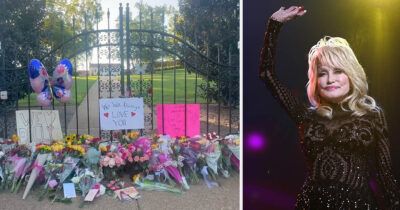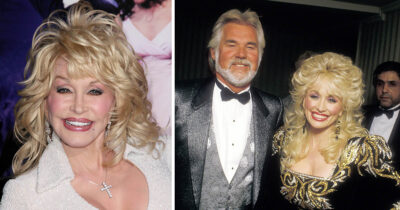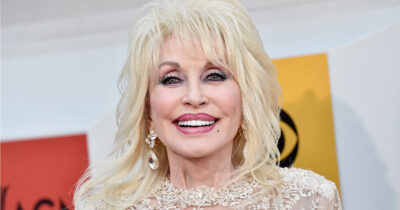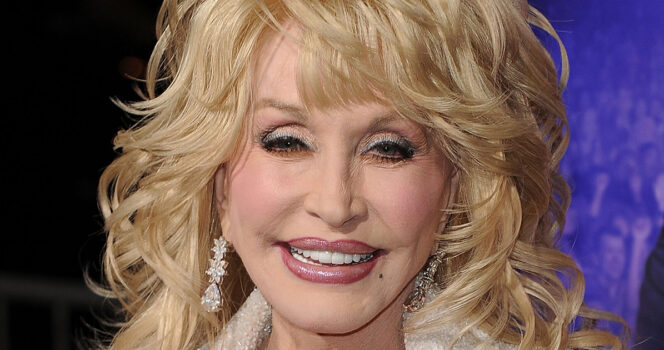
Dolly Parton’s family has confirmed that her funeral will be a small, private gathering reserved for her immediate family.
But there’s one deeply personal detail we already know — the song that will be played at her funeral.
The country legend revealed her choice more than a decade ago.
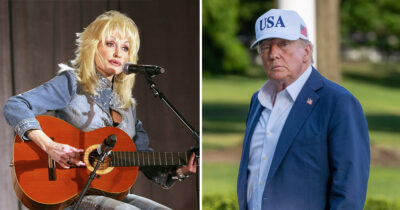
The world was shaken Tuesday by news that Dolly Parton has died at 80. Now, President Donald Trump has ordered US flags to be lowered in honor of the iconic country music star.
While the singer’s voice may have fallen silent, her musical legacy will live on through the countless beloved songs she gave the world.
Long before her death, Dolly Parton had already given thought to the moment her loved ones would have to say goodbye. Despite having a career filled with countless beloved hits, the song she wanted played at her funeral was not one of her own — and the reason behind her choice was deeply personal.
Parton revealed her wishes during a 2014 interview with Entertainment Weekly.

”I’m sure they’ll be playing “I Will Always Love You” when I die, just like they did with Whitney Houston. When they picked her coffin up and started in on that song, I started to cry, and I thought, “Oh my Lord.” That’s when it hit me that she was really gone,” Parton said.
But there was another song — one that was far more personal — that Dolly Parton herself had hoped would be played at her funeral. Back in 2014, she pointed to the old country-gospel hymn “If We Never Meet Again” as the song she hoped would be part of her final farewell.
“There’s a song called ‘If We Never Meet Again’.
“It’s an old country–gospel church song that talks about if we never meet again this side of heaven, I will meet you on that beautiful shore,” she said.
The song was written by Southern Gospel songwriter Albert E. Brumley, and Parton went on to recall some of its lyrics:
“Where the charming roses bloom forever and where separations come no more.”
There was a particularly emotional reason the song meant so much to her. It had also been performed at the funeral of her father, Robert Parton Sr., in 2000.
“That was my daddy’s favorite,” the singer explained. “We did sing it at his funeral, and I would like it to be sung at mine.”
Now, following Parton’s death, those words carry an entirely different weight.
A lifetime spent giving back
While Parton will forever be remembered for songs such as “Jolene” and “9 to 5,” her legacy extends far beyond music.
In a November 2025 People cover story, Dolly Parton looked back on her humble beginnings in rural Tennessee — long before she became a country music legend.
She grew up in a tiny two-room log cabin in the Smoky Mountains with her 11 siblings and parents, Robert Lee and Avie Lee Parton. The family lived without electricity or running water.
But even in those simple surroundings, Parton was already dreaming big. She remembered standing on the front porch of her childhood home on Locust Ridge, using a tobacco stick and her homemade microphone as she sang her heart out.
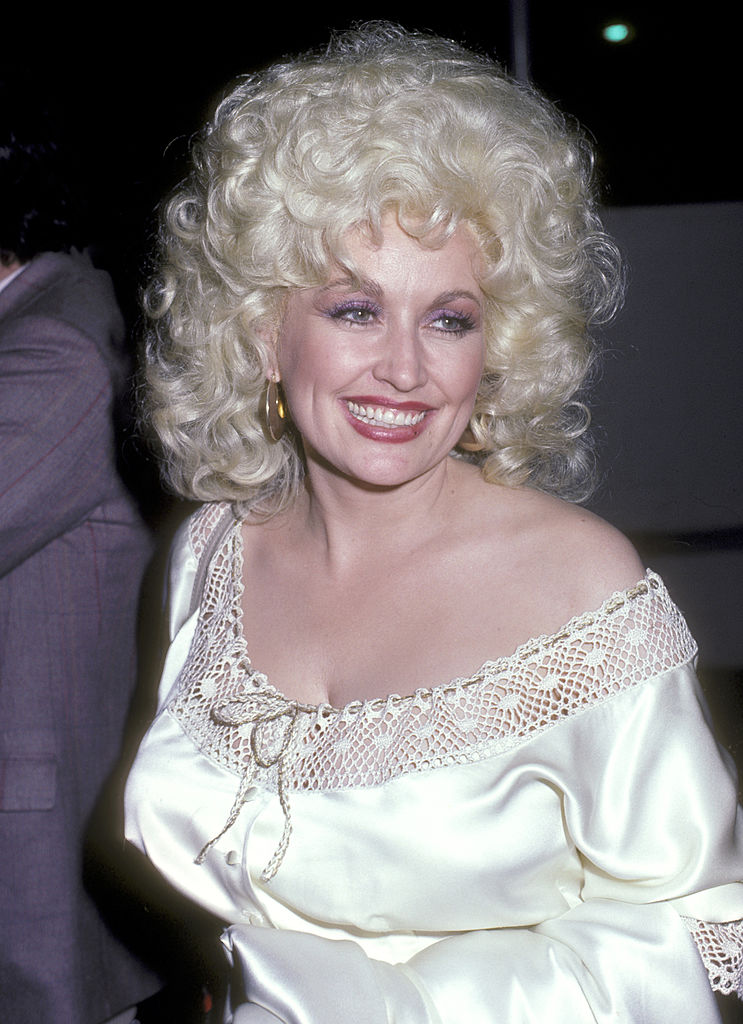
The future country superstar said she “felt like a star” during those childhood performances.
“I was dreaming of being on Grand Ole Opry one day, or getting out to sing in front of people — and that little microphone just brought me all the way to the top of the world from the top of the Smoky Mountains.”
Dolly Parton would go on to conquer the world with her music, but her legacy extended far beyond her incredible career — much of her life was dedicated to helping others. In 1988, she established the Dollywood Foundation in her home county of Sevier County, Tennessee, initially focusing on education and reducing high-school dropout rates. Her efforts included the Buddy Program, which rewarded students who stayed in school.
She later created the Imagination Library in 1995, inspired in part by her father Robert Lee, who had been unable to read. What began as a local program providing books to children eventually grew into a worldwide literacy initiative. By 2025, the program had distributed more than 304 million books.
Her generosity also reached wildlife conservation. Through Dollywood, she partnered with the American Eagle Foundation to create Eagle Mountain Sanctuary, giving visitors an opportunity to learn about bald eagles and other birds of prey.

When wildfires devastated parts of Tennessee in 2016, Parton launched the My People Fund, providing monthly financial assistance to families who had lost their homes. The effort ultimately distributed millions of dollars.
Her philanthropy also included major contributions to Vanderbilt University Medical Center. She donated $1 million to its children’s hospital in honor of her niece, who had been treated for leukemia there, and later made another $1 million gift toward pediatric infectious disease research. Her earlier $1 million donation to coronavirus research at Vanderbilt also helped support work connected to the Moderna COVID-19 vaccine.
Parton continued helping communities affected by disasters, including raising hundreds of thousands of dollars for Tennessee flood victims and contributing millions toward relief following Hurricane Helene. She also donated $1 million to the Salvation Army and supported countless other charitable causes over the years.
In many ways, her final choice of funeral song feels fitting. Parton spent decades singing about love, faith, family and hope — and when she imagined her own goodbye, she chose a song that had already carried her family through one of its most painful moments.
READ MORE
- New details emerge about Dolly Parton’s secret hospital visit just days before her death
- Real reason Dolly Parton never had any children