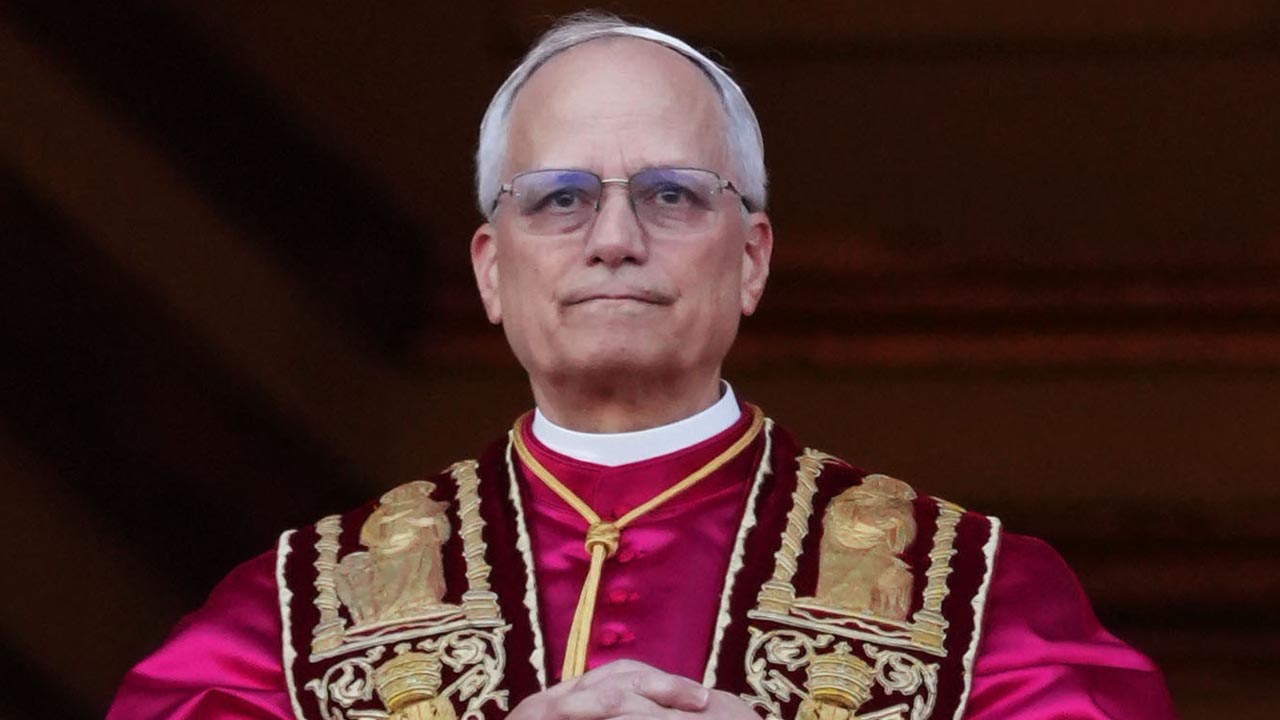
Before becoming Pope Leo XIV, Robert Prevost lived a life filled with personal struggles, unexpected decisions and close relationships that helped shape the man who would eventually lead the Catholic Church.
Keep reading to know more.
One particularly moving chapter came after his mother died of cancer. At the time, Pope Leo XIV, who was serving as a missionary in Peru at the time, grew closer to his father, Louis, who was visiting him often.
After his father’s death, Prevost decided to use his inheritance to help fund a church for a community he had come to care deeply about. The book American Pope: Leo XIV’s Road from the South Side of Chicago to Vatican City, a biography by NPR journalists Daniel Burke and Scott Detrow has revealed this and several other key moments in the Pope’s life.
The book explores the 71-year-old pontiff’s early life, including his childhood fascination with trucks, his doubts about religious life and his surprising reaction to the possibility of becoming pope.
He Repeatedly Traveled Home As His Mother Battled Cancer
Serving as a missionary in Peru meant Prevost was thousands of miles away from his family in Illinois. Keeping in touch was difficult, too, with international phone calls expensive and letters taking weeks to arrive.
In February 1984, his mother was diagnosed with cancer and began chemotherapy. Doctors initially believed she might have only six months left to live, but an experimental treatment gave her additional time with her family.
As her condition worsened in 1989 and 1990, Prevost repeatedly traveled between Peru and Illinois, never knowing whether each visit would be his last.
His brother, John, recalled the uncertainty to the authors.
“Toward the end we would say, ‘Uh-oh, it’s over.’ So he’d come up,” John explained. “And then, boom, she’d make a recovery and he’d go back.”
In June 1990, however, the family understood that their mother was nearing the end of her life. Prevost made one final trip home, staying beside her day and night so she would not have to face her final moments alone, according to Burke and Detrow.
She died on June 18, 1990, in Chicago Heights, aged 77.
Years earlier, she had driven her son to Mass and taught him to pray the Rosary. Now, the same son she had helped guide in his faith led her funeral Mass at St. Mary’s.
The moment carried an especially personal connection: it was the same altar where, a decade earlier, she had knelt to receive Communion from him after his ordination.
He Used His Inheritance To Help Build A Church In Peru
Following his mother’s death, Prevost began bringing his father to Peru for extended visits, offering him a change of scenery and an opportunity to spend time with the people his son had come to know.
The seminarians grew fond of Louis, whom they called “Luigi,” the Italian version of his name. Although the reason for the nickname was never entirely clear, he became a familiar presence among the friars.
Louis spoke limited Spanish, but he found ways to connect with the young men through sports, music and their shared Catholic faith. He joined them for morning and evening prayers and even sent birthday cards each year containing $20.
According to the biography, his photograph still hangs in the chapel of the formation house.
When Louis died in November 1997, Prevost made a decision that would have a lasting impact on the local community: he donated his inheritance to help pay for the concrete foundation of a church in Peru.
The project had grown out of a long-standing request from women in the Santa Maria neighborhood, who had land for a church but lacked the resources to build one.
Until then, parishioners had gathered in makeshift places of worship constructed from thatched leaves and sticks. Children sat on benches near the front while adults stood behind them.
Prevost helped with paperwork and equipment as plans for a permanent building moved forward. However, he left major responsibilities, including securing donations from overseas, to the local community.
He wanted parishioners to have a sense of ownership over the project rather than simply receive a church built for them.
By donating his inheritance, he helped turn their long-held hopes into a more tangible reality.
He Once Imagined Having A Family
Prevost left home to enter seminary at just 13 years old, but that did not mean he never wondered what his life might have looked like had he chosen another path.
According to Burke and Detrow, the future pope sometimes thought about having a wife and children and living what he considered a “normal life,” similar to the one his parents had built in Dolton, Illinois.
It was his father who helped him work through those doubts. Conversations with Louis offered a perspective that Prevost had not found as easily in discussions with priests and friars.
His father reassured him that intimate and meaningful relationships did not have to be romantic. A priest’s relationship with God, he explained, could be just as close and profound.
But becoming a priest was not the only future Prevost had imagined as a child.
He was also fascinated by trucks and once considered becoming a truck driver. A neighbor who parked rigs and trailers on their street helped fuel his interest, and Prevost became obsessed with vehicles, learning to identify them by small details such as their wheels and bumpers.
During family road trips, he would call out the cars and trucks he spotted along the way.
His personality also had a playful side. While studying at Villanova University, Prevost did not date, unlike many of his fellow seminarians, but he still attended parties.
Friends even remembered him dressing up as Groucho Marx for Halloween, complete with an oversized mustache and cigar.
He Thought Being American Would Prevent Him From Becoming Pope
When the time came for the cardinals to choose a new pope, Prevost reportedly believed he was unlikely to be selected.
According to American Pope, he had begun thinking about retirement and reassured himself that the cardinals would not elect an American, given the United States’ enormous political, economic and military influence.
He had read an interview with Chicago Archbishop Cardinal Blase Cupich, who described the prospect of an American pope as “a stretch.”
Prevost later shared his reaction with his friend, Father John Merkelis.
“Cupich said they aren’t going to elect an American,” Prevost reportedly told him. “I’m sleeping well at night.”
Merkelis eventually passed the remark along to Sister Thérèse DelGenio, a former mentor who had worked with both men as they learned to minister to people struggling with addiction.
Her response was brief but memorable.
“Oops,” she replied. “He forgot about the Holy Spirit.”
Prevost’s family also had complicated feelings about the possibility of his election.
His brother, John, initially prayed that his brother would not be chosen. He understood that becoming pope would mean fewer visits home and a dramatic change to the familiar relationship they had shared for years.
But as he continued praying, his perspective changed.
“Not my will,” John said, according to the book, “but, what’s good for the Church.”
Prevost’s election would ultimately turn the assumption that an American could not become pope on its head.
Pope Leo Still Keeps In Touch With Old Friends – With One Difference
Becoming pope has brought enormous changes to Prevost’s daily life, but one habit has reportedly remained remarkably consistent: he still makes time to respond to people he has known for years.
According to the biography, longtime acquaintances have been surprised by how quickly he replies to personal emails, WhatsApp messages and texts, sometimes within hours of receiving them.
His contacts include former teachers, childhood classmates and priests he knew while serving in Peru.
There is, however, one noticeable difference in his messages.
Before becoming pope, Prevost would often sign off with “Peace and love, Bob.” His correspondence now carries a more formal ending: “Leone PP. XIV.”
Even his sense of humor appears to have survived the transition to the Vatican.
When a former mentor asked how he managed to eat pasta while wearing white every day, Leo reportedly offered a simple answer, “Very carefully.”
The small exchange provides a glimpse of the personality behind the papal title, suggesting that while his responsibilities have changed dramatically, his connections with old friends remain important to him.
Share this with others who would like to know more about Pope Leo XIV’s life before and after papacy.
Read more: