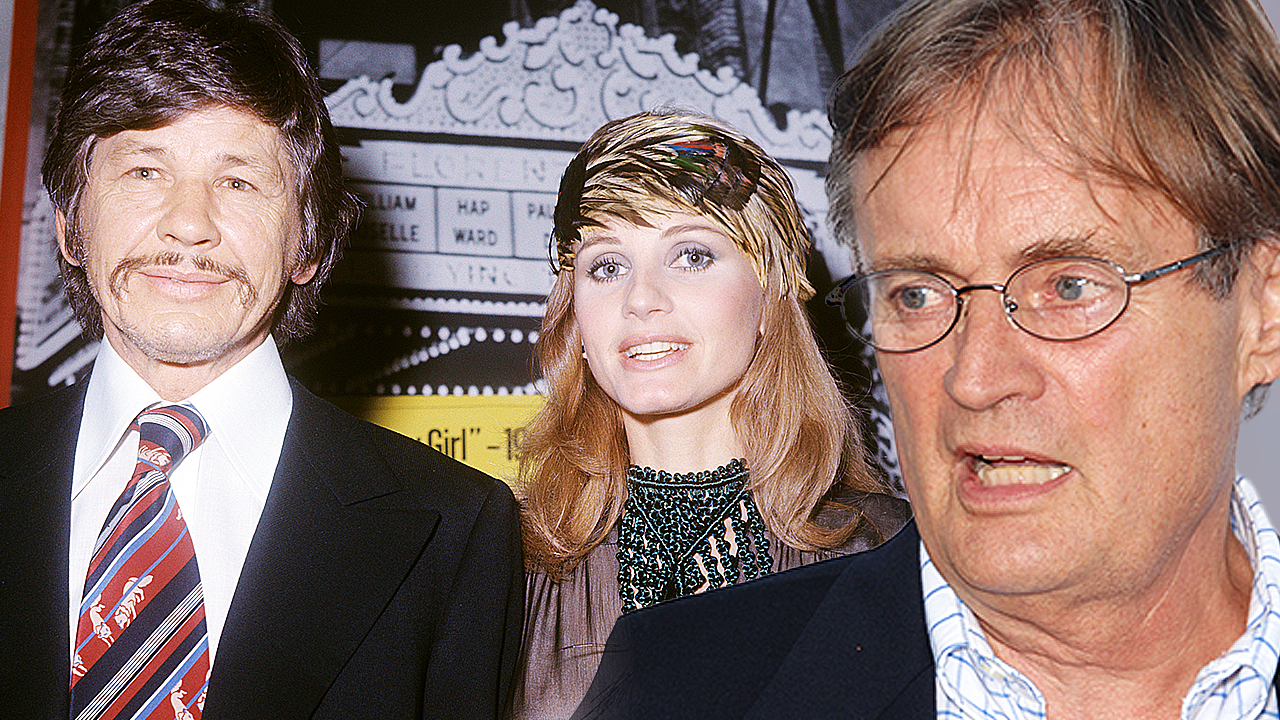
When David McCallum introduced his wife, Jill Ireland, to Charles Bronson on the set of the 1963 film The Great Escape, Bronson looked at him and allegedly said “I’m going to marry your wife.”
McCallum initially laughed, assuming it was simply another piece of dry humor from the famously stoic actor. But Bronson wasn’t joking. His unexpected declaration would set in motion one of Hollywood’s most unusual — and surprisingly amicable — love triangles.
Years later, McCallum’s final words to his former friend and ex-wife would put the entire story in a very different light.
Hollywood has never been short on complicated romances, secret affairs and love triangles that made headlines. But every once in a while, a story comes along that somehow refuses to fade away.
This is one of those stories.
It had everything you’d expect from old Hollywood drama — a famous actor, his beautiful wife, a close friend, an affair and a marriage that suddenly found itself caught in the middle.
Charles Bronson and Jill Ireland stayed married for 22 years, until her death brought their long love story to an end.
But their high-profile relationship began under circumstances that could easily have destroyed a friendship forever.
Ireland was married to actor David McCallum when she met Bronson on the set of The Great Escape. And the man who introduced them was McCallum himself.
What happened afterward became one of Hollywood’s strangest love triangles.
From coal mines to Hollywood
Long before Charles Bronson became famous for playing tough, intimidating characters, his childhood was marked by poverty.
Born Charles Buchinsky in Pennsylvania in 1921, he grew up as one of 15 children. His father was a Lithuanian immigrant who worked in the coal mines, and when he died, Bronson was only 10.
The family lived in a small, company-built shack just a few yards from the coal car tracks. The house was completely inadequate to house such a large family: it was so small, they had to take turns sleeping.
“There was no love in my house,” he once said.
“The only physical contact I had with my mother was when she took me between her knees to pull the lice out of my hair.”
Served during World War II
By the age of 16, Bronson was working underground himself, earning just $1 for every ton of coal he mined.
“During my years as a miner, I was just a kid, but I was convinced that I was the lowliest of all forms of man,” he said.
His path to Hollywood was anything but straightforward.
After serving in the Army during World War II, he worked a string of jobs, including bricklayer, cook and onion picker. Eventually, a chance encounter with actors vacationing in Atlantic City gave him an opportunity to demonstrate his skills as a scenery painter.
That small break led to acting work, and Bronson eventually headed to California, enrolling at the Pasadena Playhouse in 1949.

His first film roles were small, but he kept working. He even landed a part in You’re in the Navy Now partly because he was reportedly the only actor at the audition who could belch on cue.
During the 1950s, he changed his surname from Buchinsky to Bronson, believing his original, Russian-sounding name could hurt his career during the country’s anti-communist climate.
By the early 1970s, Bronson had become a familiar face in crime films and Westerns. His career would soon explode with Death Wish, but another role had already changed his personal life in a much more unexpected way.
Connected two Hollywood stars
Jill Ireland had been performing since childhood.
Born in London in 1936, she trained as a ballet dancer before moving into singing and acting. She met David McCallum while working in British productions, and the two married in 1957 — just seven days after meeting, according to McCallum’s later account.
The couple eventually moved to Hollywood, where Ireland continued building her own career.
Then came The Great Escape.
McCallum and Bronson were both part of the cast, and McCallum was the one who introduced Bronson to his wife.
For Jill Ireland, the attraction to Charles Bronson was immediate.
“It was love at first sight.”
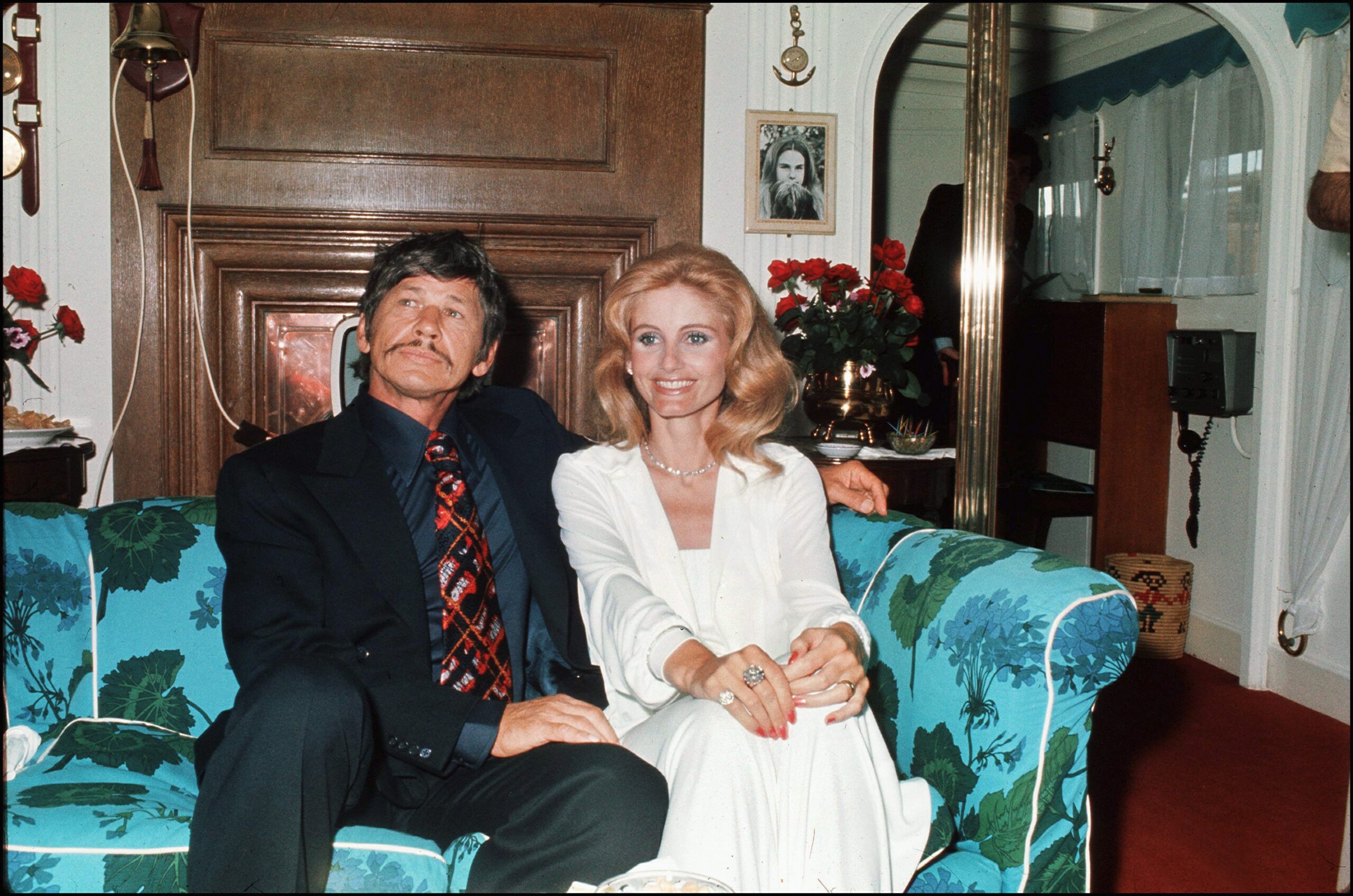
Years later, Ireland opened up about what drew her to him, telling The Bulletin in 1987:
“We had great physical attraction,”
She also admitted there was something about Bronson that made him stand out from everyone else.
“I found him quite unique. His presence. Englishmen don’t walk like that. And he doesn’t talk very much. He’s so quiet, he could be in there right now,” Ireland said during the interview, pointing toward the bedroom.
“He’s a loner.”
While filming The Great Escape in Germany, McCallum had to leave temporarily to test for another movie. Ireland had recently suffered a miscarriage, and McCallum was understandably worried about leaving her behind.
Bronson reassured him.
Years later, McCallum recalled exactly what happened:
”Jill had just had a miscarriage so I was concerned about leaving her, but Charles Bronson said: ‘Don’t worry, I’ll take care of her.’ I didn’t realize they’d already begun an affair.”

Ireland and McCallum’s marriage eventually ended in 1967.
McCallum later said: ”It was an extremely difficult time, not least because we had three children.”
There were also stories that Bronson had told McCallum from the beginning that he intended to marry Ireland. But McCallum later said he didn’t remember Bronson ever making that comment.
And remarkably, McCallum didn’t seem interested in carrying a grudge.
”I never hated him, Charlie was always a good friend.”
One year after Ireland’s divorce, Bronson and Ireland married.
A marriage that lasted 22 years
Bronson and Ireland wed in 1968, beginning a marriage that would last until her death.
The two also became frequent co-stars, appearing together in movies including Villa Rides, Breakout and Death Wish II. Ireland even joked about how often they worked together:
”I’m in so many Charles Bronson films because no other actress will work with him,” she said in 1990.
But Ireland was much more than Bronson’s leading lady.
She eventually moved into producing, recorded an album and helped build a large blended family with Bronson. They raised children from their previous marriages and also adopted children together.
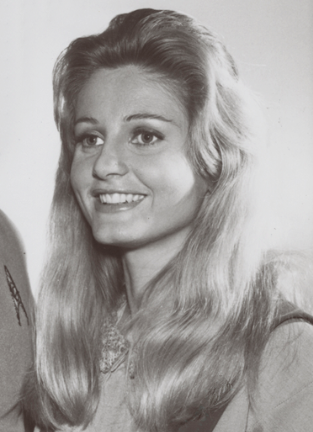
Then, in 1984, their lives changed dramatically when Ireland was diagnosed with breast cancer. The actress underwent a mastectomy and later wrote openly about what she had experienced.
Rather than keeping her diagnosis private, she used her platform to speak to other women and families dealing with cancer. She raised money for research and chose to describe herself as a cancer ”survivor,” rather than a victim.
Her message to women who had undergone mastectomies was direct:
”Think of yourself and be happy. Make the most of your life and put yourself first,”
She also wanted women to remember:
”A breast does not make me who I am.”
Bronson helped her through radiation
Throughout the difficult treatment, Ireland credited Bronson with helping her through radiation and chemotherapy.
But in 1989, the family received devastating news. The cancer had returned and spread to her lungs, before moving to other parts of her body. Doctors told Ireland she had two to three years to live.
Her response showed the determination she had become known for:
”I don’t want to die,” she said. “It’s not an OK thing. Not right now. We all die one day, but I am not in the mood to do it yet.”
Then another tragedy struck.
In November 1989, Ireland’s son Jason McCallum died after ingesting and injecting drugs. He was only 27 and due to get married just a few days later.
Jason had been adopted by Ireland and David McCallum when he was an infant. His death came while Ireland was still undergoing cancer treatment, interrupting her chemotherapy and forcing her to travel across the country.
Ireland had already spoken publicly about Jason’s struggle with addiction, and afterward she continued using her experiences to try to help others.
Even as her own health deteriorated, Ireland continued working.
In April 1990, she received a star on the Hollywood Walk of Fame. Though visibly frail, she still managed to tell the crowd:
”This is really quite a thrill.”
Slipped into a coma
Ireland’s six-year battle with cancer ended in May 1990.
She slipped into a coma at her Malibu home and died on May 18 at the age of 54. Bronson was beside her, just as he had remained involved throughout her treatment.
Ireland had never wanted her death to be remembered simply as something tragic.
She had written that she wanted a celebration of her life rather than a gloomy farewell — with balloons, champagne, bright colors, food and music.
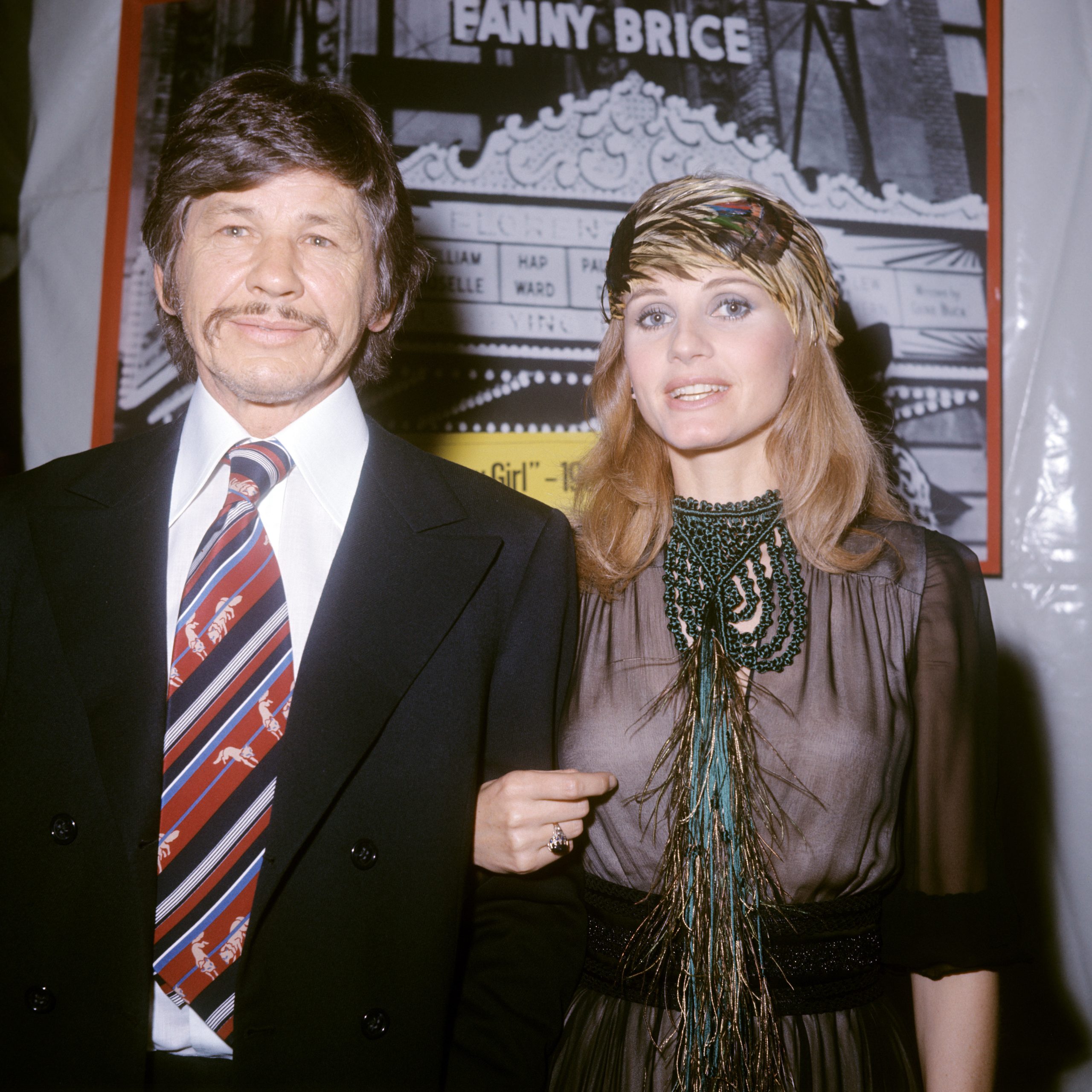
And when she died, the complicated Hollywood story that had begun decades earlier came to an end.
The woman McCallum had once introduced to Bronson had ultimately spent 22 years married to him.
Yet McCallum, remarkably, had moved forward too.
How he found a new life
After his divorce from Ireland, McCallum married former model Katherine Carpenter.
In 1965, while participating in a photo shoot for the show, McCallum and Carpenter met for the first time, and – despite their 11-year age difference – the two instantly fell for one another.
Back at the start of their relationship in 1965, the pair did not have full support from the general public. McCallum was not yet fully divorced from his first wife and many were concerned for Ireland and McCallum’s three children.
But McCallum and Carpenter managed to put the past behind them. They built a life together, raised two children, and remained married for decades.
Meanwhile, McCallum’s career continued.

After becoming famous as Illya Kuryakin in The Man from U.N.C.L.E., McCallum found an entire new generation of fans as Dr. Donald “Ducky” Mallard on NCIS, a role he played for roughly two decades.
He died in 2023 at the age of 90, surrounded by his family.
Bronson’s life eventually came to an end as well. After Ireland’s death, he married actress Kim Weeks. He was later diagnosed with Alzheimer’s disease and died of pneumonia in 2003, aged 81.
Looking back, the story is difficult to reduce to a simple tale of betrayal.
McCallum introduced his friend to his wife. Bronson and Ireland fell in love while she was still married. The marriage ended, and Bronson eventually married Ireland.
Yet decades later, McCallum still refused to describe Bronson with hatred.
“I never hated him, Charlie was always a good friend,” he said.
And perhaps that’s what makes this Hollywood love triangle so unusual.
What began with a broken marriage ultimately became a 22-year marriage between Bronson and Ireland — one that survived Hollywood, illness and unimaginable heartbreak, lasting until the very end of her life.
READ MORE
- ‘NCIS’ creators finally reveal why fan favorite Cote de Pablo abruptly left the show
- Kirk Douglas was ‘forever changed’ after surviving event that killed two people