
Just minutes before a private jet plunged into the ground in Florida, the young co-pilot sent her boyfriend a short message.
The words were brief, but in the wake of the disaster, they have taken on a heartbreaking significance.
More heartbreaking details are emerging about the deadly plane crash that rocked Florida on Sunday.
One of the two people in the cockpit has now been identified as Nathalia Gadelha Filgueiras, a 20-year-old co-pilot who earned her pilot’s license while she was still in high school.
Her final moments were captured in harrowing air traffic control audio, in which the crew can be heard pleading for help as the doomed Learjet 60 plunged toward the ground.
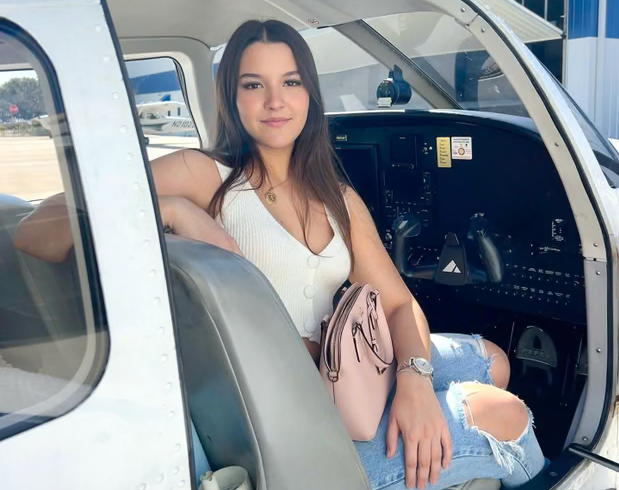
Filgueiras’ mother, Camila Corteleti, and stepfather confirmed to The New York Post that she was serving as co-pilot on the flight from Austin, Texas, to the Bahamas when the aircraft suddenly entered a steep nosedive.
The jet reportedly descended at more than 20,000 feet per minute before crashing in Palm Beach County on Sunday afternoon. All nine people aboard were killed.
Among those killed were technology entrepreneur Adam Robinson, his wife, Helen Sharp, their two young children, and Anita Maria Cetina, who helped care for the children. Rachael Reed and Charmi Fehr were also among the victims.
The pilot at the controls of the Learjet was identified by TMZ and other media outlets as 55-year-old Jeff Gregory, an experienced aviator from Pennsylvania.
A young pilot with years of ambition
Nathalia Gadelha Filgueiras had been passionate about flying from an early age. According to the Times she worked for Upper Jets, a private charter company based in Fort Lauderdale.
Nathalia earned her pilot’s license at just 17, before she was even old enough to get her driver’s license.
Her mother, Camilla, told the New York Post that her daughter had been working as a commercial pilot for around nine months before the crash.
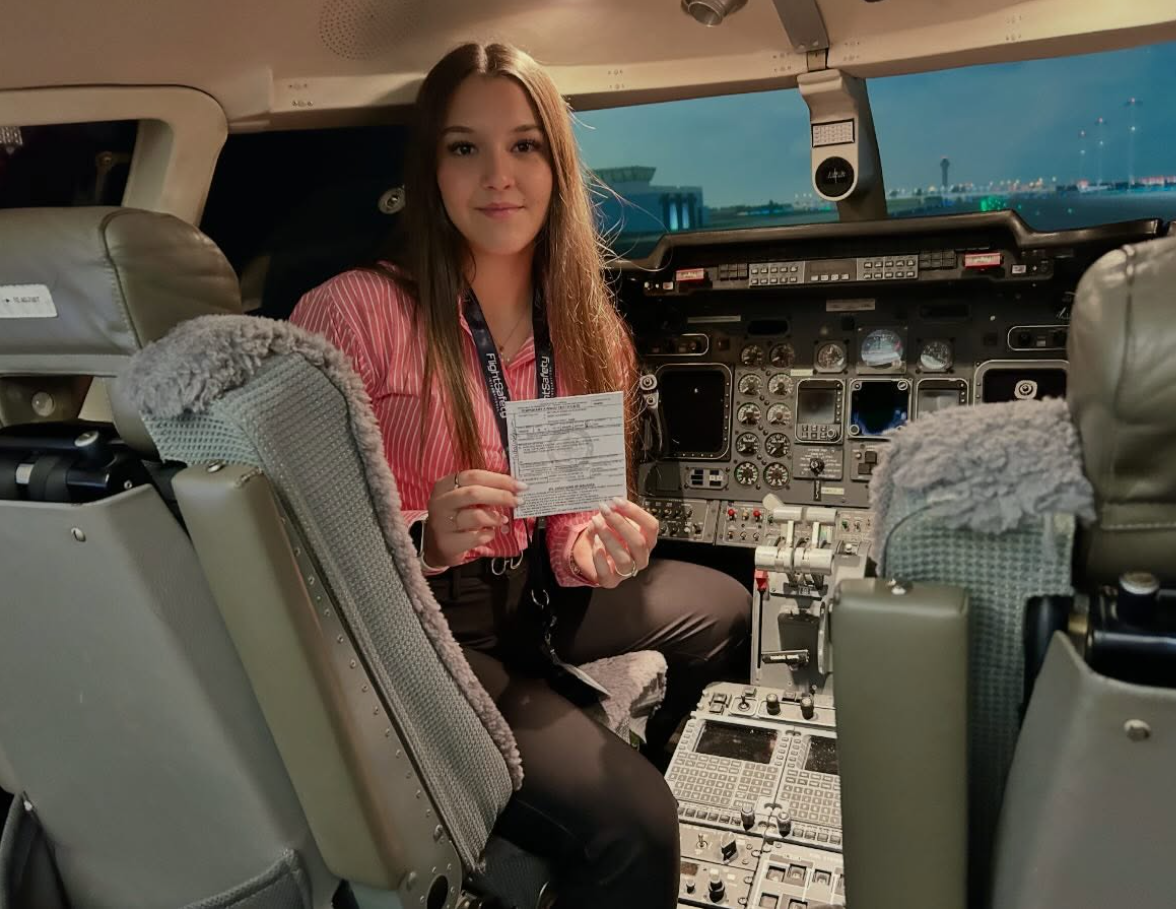
Despite her young age, Filgueiras had already accumulated approximately 1,300 flight hours, according to her stepfather.
Sadly, that Sunday afternoon flight would be her last.
”I wanted her to live her dream, but I knew that her dream was going to be the thing that would take her away from me,” Camila said.
”I knew that a plane was gonna take her away from me. I always knew it but I was so proud of her. I know she was living her dream,” she said.
Her final message
According to her stepfather, Nathalia sent a text to her boyfriend, Justin, just 10 minutes before the aircraft went down.
Her message was brief, but chilling in hindsight.
“She just said, ‘I’ve got turbulence, I’ve got ice,’” Thiago Corteleti told the New York Post.
The text to her boyfriend was not the only indication that the crew was encountering difficult conditions.
Air traffic control recordings released separately show the crew speaking with Miami controllers about ice and turbulence in the minutes before the crash.
They reported that they were ”managing the ice” and experiencing ”moderate” turbulence. The pilots also requested clearance to move to an altitude with ”better rides” — a phrase commonly used to describe smoother air.
But the situation soon appeared to deteriorate.
Less than 10 minutes later, the crew issued a mayday call. The pilot reported an “overspeed condition” as the aircraft descended at approximately 20,000 feet per minute.
The final transmissions were harrowing.
”Holy f***, we’re out of time.”
Then came another message:
”We’re going to crash into the ground, 722 Bravo Delta.”
Just 35 seconds passed between the first mayday call and the final silence.
Could ice have played a role?
Investigators have not established what caused the crash, and the investigation is still in its early stages. However, the reports of ice and turbulence have raised questions about whether icing may have contributed to the disaster.
Icing can occur when supercooled water droplets freeze as they come into contact with an aircraft. Ice accumulating on the wings or other critical surfaces can affect lift, increase drag and interfere with the aircraft’s ability to remain under control.
In severe cases, the effects can become dangerous very quickly.
The crew’s reports about ice, followed by the sudden emergency and rapid descent, are among the details investigators will need to examine. But the available information does not yet establish that icing caused the crash.
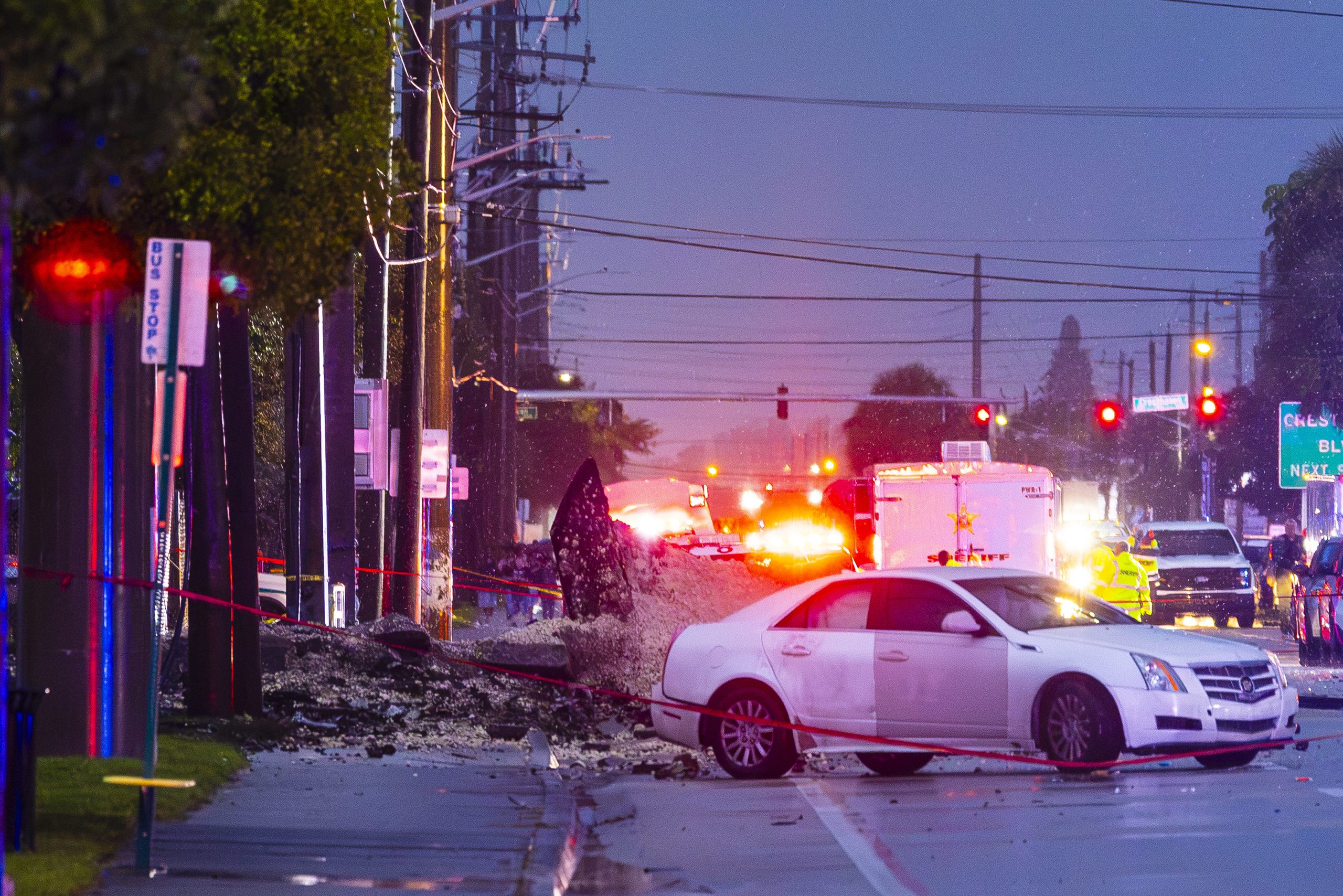
Dashcam footage recorded along Military Trail captured the moment the Learjet struck the ground. The aircraft hit nose-first, triggering an enormous fireball that briefly filled the camera’s view and leaving a crater in the road.
At least one mobile home was destroyed, while a burst water pipe flooded part of the impact area. Around 600 residents were evacuated as a precaution.
US Transportation Secretary Sean Duffy confirmed that all nine people aboard had died. No fatalities were reported on the ground. The FAA and the NTSB are investigating.
A life and career cut tragically short
Filgueiras was only 20. She had earned her pilot’s license as a teenager and was beginning her professional career, with around 1,300 hours in the air already behind her.
On that Sunday afternoon, she was in the co-pilot’s seat of a chartered business jet travelling from Austin, Texas, to the Bahamas.
Her message to her boyfriend was just a few words about turbulence and ice — a brief glimpse into what she was experiencing during the flight.
Now, those words have become part of the heartbreaking account of the Learjet’s final minutes.
What exactly happened in the cockpit, and whether the conditions described in her message contributed to the crash, remain questions for investigators to answer.
READ MORE
- Father, wife and two toddlers identified among Florida Learjet crash victims – what we know
- Armed teens try to rob man working on his pickup truck, have no idea he’s a Marine Corps veteran