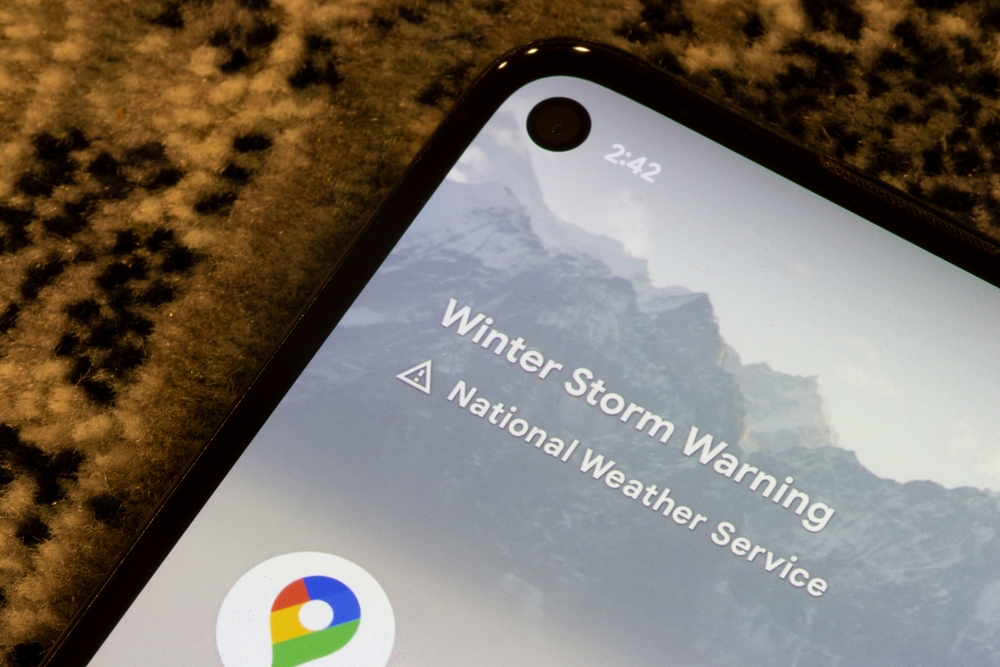
Experts have warned that younger generations could be particularly vulnerable if a major cyberattack knocked out digital navigation systems, leaving people unable to rely on apps such as Google Maps to find their way around.
Most of us have become accustomed to using our phones or sat navs whenever we need directions. But specialists say that depending too heavily on technology could leave people struggling if those systems suddenly stopped working.
With cyberattacks becoming an increasing concern around the world, experts are now urging people to brush up on an old-fashioned but essential skill: reading a map.
The warning comes as the UK prepares for the possibility of further cyber disruptions.
National Cyber Security Centre chief Richard Horne has previously stressed the need for the country to be prepared for cyberattacks, following incidents that have affected everyday services, including supermarket refrigeration systems.
The government has also encouraged people to consider keeping emergency supplies at home, while former Prime Minister Rishi Sunak has suggested a revamped version of national service could help strengthen the country’s resilience.
But according to navigation experts, there is another simple step people can take to prepare for a potential disruption: learn how to navigate without relying on a screen and internet.
Experts Say Younger People May Be Less Familiar With Traditional Map Reading
Speaking to the Daily Mail, Andy Gardiner, head of research at Ordnance Survey, acknowledged that the way younger generations use maps has changed considerably.
“The way younger people interact with mapping has undoubtedly changed, with digital maps and navigation apps now part of everyday life,” he said.
However, Gardiner emphasized that traditional map-reading remains an important skill, regardless of how people choose to navigate.
“We still believe map-reading skills remain an important life skill, whether you’re using a paper map, a digital map or a smartphone,” he explained.
“Understanding how to read and interpret a map helps people navigate confidently, stay safe outdoors and discover new places.”
He also pointed out that knowing how to recognize directions, interpret a map and identify landmarks could make a significant difference if digital navigation services were suddenly unavailable.
In other words, knowing how to get from one place to another without asking your phone for directions could prove far more useful than many people realize.
Human Behaviour Expert Says It Is Not Just Young People Who Could Struggle
While younger people may be less familiar with paper maps, human behaviour expert Michael Bond warned that the problem could affect almost anyone who regularly relies on sat nav.
Bond, who wrote Wayfinding: The Art and Science of How We Find and Lose Our Way, explained that following directions on a screen means people do not necessarily have to remember their surroundings or build an understanding of the route themselves.
“The spatial part of the brain – the hippocampus and surrounding areas – is completely inactive when we follow navigation instructions on a screen,” he said.
According to Bond, many people might not notice how dependent they have become on digital navigation until they are forced to travel somewhere unfamiliar.
He suggested that people would likely begin to struggle when they moved beyond their usual neighbourhood or had to take routes they did not regularly travel.
That could become a problem if a cyberattack or technical failure left navigation apps unavailable across a wider area.
Experts Say Map-Reading Skills Can Be Learned Again
There is, however, some reassuring news for anyone who feels they would be completely lost without Google Maps.
Bond explained that navigation skills can be revived, and people can strengthen their ability to remember routes and understand their surroundings.
He stressed that our brains have not fundamentally changed since GPS navigation became widely available, meaning people can still develop the skills needed to find their way without technology.
One way to do this is by building what he described as a mental map.
Rather than simply following turn-by-turn instructions, people can make a conscious effort to remember landmarks, understand which direction they are travelling in and picture how different streets and locations connect.
The idea is to become familiar enough with your surroundings that you can work out where you are without constantly checking your phone.
So while digital maps are unlikely to disappear from everyday life anytime soon, experts believe it may be worth learning how to navigate the old-fashioned way.
After all, if your phone suddenly stops telling you where to go, knowing how to read a map could make all the difference.
Do you have any thoughts about this news story? Let us know in the comments section on Facebook.
Read more: