More than 60 years ago, three scientists made a startling prediction about the future of humanity. They even named an exact date: Friday, November 13, 2026.
Now that the date has arrived, their research has resurfaced, raising an obvious question: did they really believe the world would come to an end today?
The story goes back to November 4, 1960, when physicist Heinz von Foerster and his colleagues Patricia M. Mora and Lawrence W. Amiot published a paper in the prestigious journal Science.
Its title was hard to ignore: Doomsday: Friday, 13 November, A.D. 2026.
But the researchers weren’t predicting an asteroid strike, a nuclear apocalypse or the physical destruction of Earth. Their warning was about something much closer to home: the rapid growth of the human population.
Alarming calculation behind the prediction
The scientists studied population figures stretching back to around 400 BC and compared them with estimates from 1958. What caught their attention was that the time it took for the world’s population to double appeared to be getting shorter.
They believed this acceleration could continue, eventually pushing the numbers towards infinity in a mathematical sense.
According to their model, the global population would exceed 25 billion by 2020. If the same pattern continued, humanity would reach a mathematical singularity on November 13, 2026 – the point at which their equation could no longer meaningfully describe the growth.
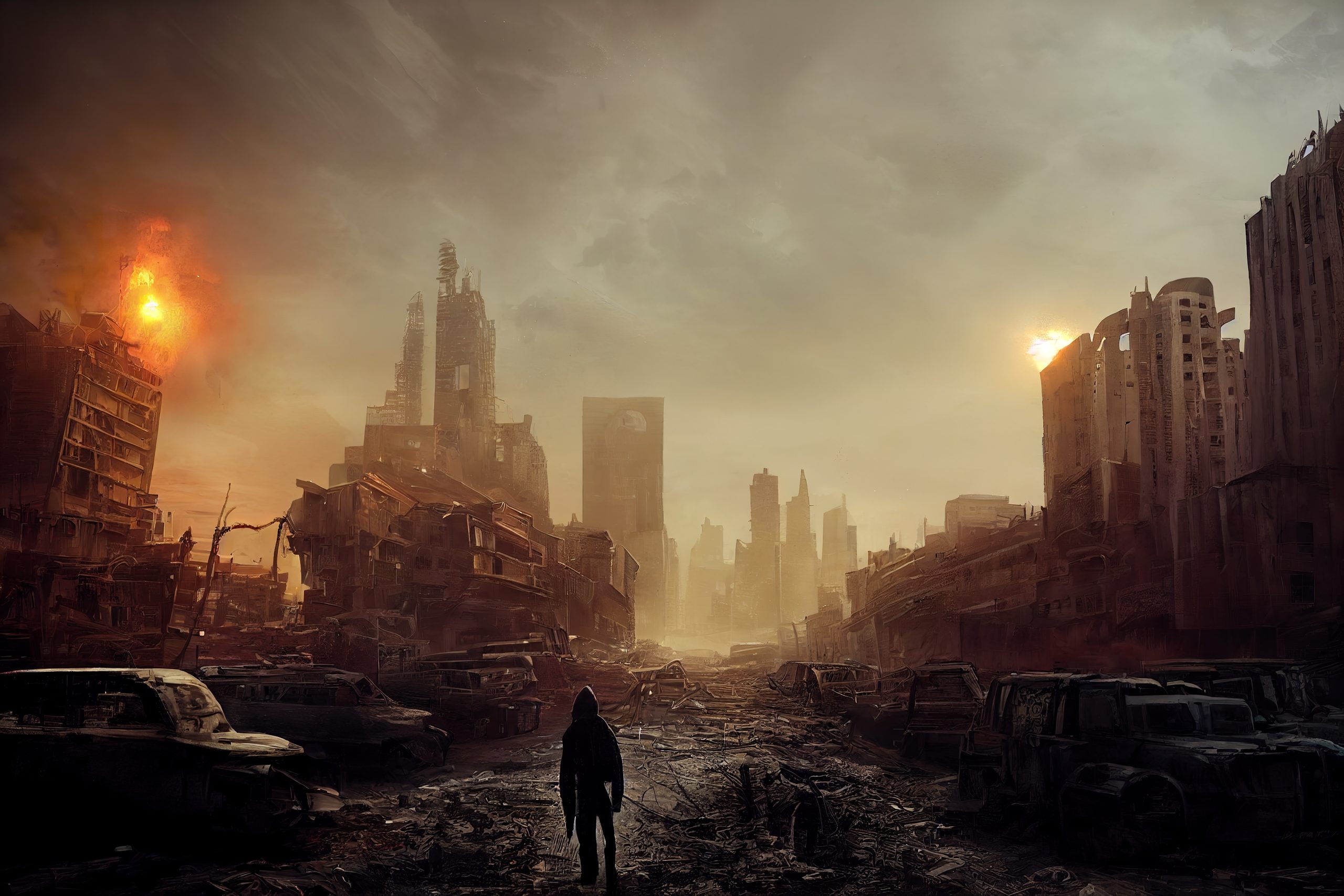
The researchers used some particularly stark language to explain what they feared could happen.
“Our great-great-grandchildren will not starve. They will be squeezed to death.”
In other words, their concern was that an ever-growing population would place unbearable pressure on the planet and the resources needed to sustain human life.
Still, the authors acknowledged that the trend might not continue forever. They expressed hope that “at some time, somehow, something will happen that will stop this ever-faster race to self-destruction”.
The prediction caused a political stir
The paper attracted considerable attention after publication, according to historian Alan MacEachern, who revisited the research in an article for The Conversation.
Its claims soon found their way into political debates. In 1963, a representative from the chemical industry cited the study before a Canadian parliamentary committee while making the case that pesticides would be necessary to help feed a growing population.
A decade later, the paper was also brought up in a 1971 US Supreme Court abortion case, in arguments against government efforts to encourage population growth.
But not everyone was convinced by the scientists’ calculations.
Just two years after the original paper appeared, Harold F. Dorn challenged its assumptions in Science, arguing that its predictions would soon prove unreliable.
Demographers also questioned whether the time between population doublings could realistically keep shrinking without limit.
Why the world didn’t follow their prediction
As the decades passed, the numbers began to tell a very different story.
According to MacEachern, the population trend started moving away from the scientists’ projected path around 1993. One major problem with their model was the assumption that population growth could keep accelerating indefinitely.
In reality, birth rates change. Economic development, education, access to contraception and changing family choices all influence how many children people have.
There is also a fairly obvious biological limit: human pregnancies take around nine months, making endlessly faster population doubling impossible.
Today, the global birth rate is less than half what it was in 1960, and the world’s population has not come close to the 25 billion figure projected for 2020.
The prediction of humanity approaching infinity has therefore not come to pass.
So, despite the rather ominous date in the title, the scientists were not announcing that the world would literally end on Friday, November 13, 2026.
Their paper was a warning based on a mathematical model – one that ultimately failed to account for how dramatically human population growth could change.
READ MORE
- Lisa Maxwell’s daughter Beau Jessup dies unexpectedly at 27
- Russell Brand warned of “hell on earth” in Wandsworth prison