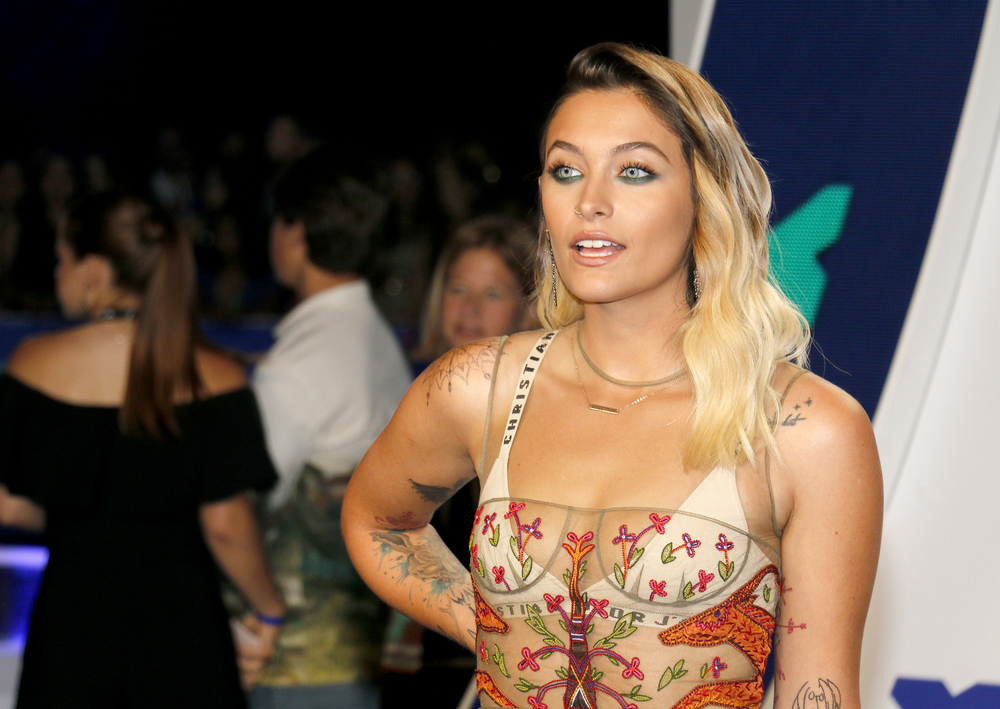
Paris Jackson is revealing what her intensely private childhood with Michael Jackson was really like – and why her famous father went to extraordinary lengths to keep his children hidden from the world.
As Michael Jackson’s only daughter, Paris grew up under intense public curiosity, while her father worked to give her and her brothers a very different experience behind closed doors.
Now 28, the singer is sharing rare details about those early years and the carefully controlled life the pop icon created for his three children.
Neverland ‘did not belong to us’
During a recent appearance on the “Call Her Daddy” podcast, the model offered a rare glimpse behind that curtain, describing everything from school and chores to the unusual precautions that allowed the Jackson children to experience something resembling an ordinary childhood.
“I’d wake up and I’d go to…the room that was our classroom, and we would go to school,” Paris recalled.
“If you’re good and you do your chores and you do your homework and you do the things that you’re supposed to do, then on the weekends you can go see some animals and you can go ride some rides and you can go to the movies,” Paris told the host, Alex Cooper, clarifying that the amusement park in the backyard – Neverland – was not theirs to use whenever they pleased.
“It was made very, very clear that all of the attractions there were not for us … that did not belong to us. That was for underprivileged children and children that were terminally ill that couldn’t go to like Disneyland,” Paris said.
“I didn’t grow up there. It was only the first few years of my life that I was there,” she said, adding that she and her brothers, Prince, 29, and Bigi, 24, “hotel hopped a lot” with their dad.
‘Weren’t allowed to watch television’
Constantly moving didn’t mean the rules disappeared. Paris said the family “wouldn’t stay in one place for more than a year,” and even on the road, entertainment was largely restricted.
“[It was] the same thing with television,” she explained. “We weren’t allowed to watch television or movies unless we were studying it for film with the sound off, or on the weekends if we’d done everything we were supposed to.”
Going out for some fun came with another unusual condition. If Paris and her brothers wanted to visit places like Chuck E. Cheese without attracting attention, they covered their faces in public.
“[We were told], ‘If you do this now, you can go to Chuck E. Cheese and be normal because no one will know who you are,’” Paris recalled her father telling her.
Rather than finding it odd, she said the arrangement “made sense” because it allowed them to go out without being recognized.
‘Daddy’s little princess’
For Paris, however, the man enforcing all those rules wasn’t the superstar the rest of the world saw. He was simply her dad.
Asked to describe Michael, she called him a “really funny guy” that was her “best friend.”
“I definitely was daddy’s little princess,” Paris said. “I think that just happens with sons and mothers, and fathers and daughters. There’s just this special bond that you can’t put into words.”
That closely protected childhood changed dramatically when Michael died in 2009 at age 50. Paris was only 11, and suddenly she was trying to navigate life without the father she described as her best friend.
That closely protected childhood changed dramatically when Michael died in 2009 at age 50. Paris was only 11, and suddenly she was trying to navigate life without the father who had shaped her world.
The adjustment, she said, was “rough.”
‘I wanted to grow up fast’
Paris described the period after Michael’s death as a “crash course in gaining social skills,” after spending her younger years largely shielded from the outside world.
“That was rough. That was like I didn’t have social skills,” she said.
As she tried to find her place without the structure that had surrounded her as a child, Paris said she developed an intense desire to experience as much as she could.
“I think I was very uh live fast and hard. I was I wanted to grow up fast,” she explained. “There was something in me that wanted to live as much life as possible.”
Looking back, she believes that drive also played a role in decisions she would later regret.
“And I think maybe that contributed to some poor choices in my young adulthood life and whatever, but I just wanted to experience everything,” she shared, referring to her relationship with drugs and alcohol.
‘Rock bottom’
During her conversation with Cooper, Paris traced that behavior back to childhood, saying she started to “reach for things outside of [her]self” at around 7 or 8 years old.
“Whether it was a person or food or, you know, just survival skills, I would say like self-harm, for example, is probably not a living skill. It’s a survival skill. It’s kind of always been present – this idea of…I think I need something to help me manage,” she told the host, explaining that she kept her growing addictions hidden from loved ones. “I think people that navigate through life managing that way tend to learn secrecy.”
Eventually, the singer reached what she has described as her “breaking point, rock bottom.”
She has been sober from drugs and alcohol since the first week of 2020, but recovery has also forced her to learn “how to be in right relationship with myself.”
“It’s very uncomfortable, but it’s very like hand on heart, gentle, gentle, like move
through it. This is medicine. This discomfort is medicine. And sometimes we don’t want to take our medicine because it tastes like sh**, but it does what it needs to do,” she added.
What do you think about the way Paris Jackson has navigated growing up as Michael Jackson’s daughter and losing her famous father at such a young age? Please let us know your thoughts and then pass this story along so we can hear from others!
READ MORE
- Paris Jackson celebrates Michael Jackson’s 65th birthday with emotional tribute
- Michael Jackson’s tragic final words before lethal overdose were revealed by doctor