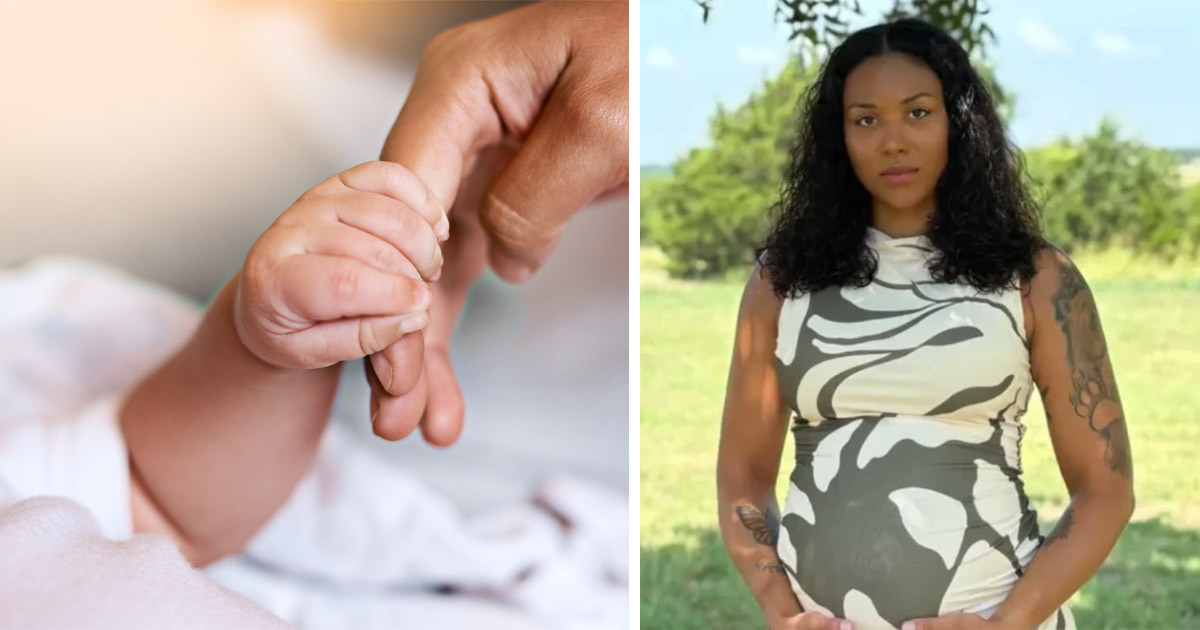
A newborn at the center of a bitter surrogacy custody battle is now fighting for his life after undergoing the first of three surgeries for a serious heart defect.
The baby, named Rumi by California’s Nausheen Gilkar and Omar Ahmed, was born in Texas on Aug. 12 after months of legal battles that stretched across several states and ultimately drew the intervention of Texas Attorney General Ken Paxton.
At the center of the dispute is McKenna West, the Alaska woman who carried the child under a surrogacy agreement with Gilkar and Ahmed, the biological parents.
According to People, the relationship between the two sides deteriorated dramatically during West’s pregnancy after doctors discovered at around 20 weeks that the baby had hypoplastic left heart syndrome, or HLHS, a rare and serious congenital heart defect.
The diagnosis meant the child would likely require intensive medical care almost immediately after birth.
It also forced everyone involved to confront a decision that would eventually land them in court.
Surrogate refused abortion
After learning about the baby’s condition, Gilkar and Ahmed asked West to terminate the pregnancy, according to court filings and the Texas Attorney General’s office.
West refused and later moved to Texas, where she arranged to receive prenatal care and give birth, while Gilkar and Ahmed pursued legal action to establish their parental rights.
The dispute ultimately involved courts in Alaska, California and Texas, turning an already complicated surrogacy arrangement into a multi-state legal fight as the baby’s birth drew closer.
There was even disagreement over his name.
After delivering the baby on Aug. 12, West called him Gabriel, while Gilkar and Ahmed, who traveled to Texas for the birth, named their son Rumi.
But amid the fight over who had legal authority over the newborn, the tiny tots’ heart condition created a much more urgent concern.
West fights for custody
Hypoplastic left heart syndrome occurs when the left side of a baby’s heart is severely underdeveloped and cannot properly pump oxygen-rich blood around the body.
Without intervention, the condition can quickly become life-threatening after birth, according to the Centers for Disease Control (CDC).
As Rumi’s delivery approached, the Texas Attorney General’s office intervened amid concerns over whether he would receive the medical treatment doctors believed he needed.
A Texas court subsequently issued an emergency order requiring necessary lifesaving care and preventing the baby from being removed, discharged or transferred while the case remained before the court. Gilkar and Ahmed were also given authority over medical decisions within the terms of that order.
Following the birth, West’s attorney, Lincoln Davis Wilson, said she was prohibited from having contact with the newborn under the court orders and intended to continue fighting for custody.
In a statement provided to People, Lee Budner, the attorney for Gilkar and Ahmed, said that West “continues to assert baseless claims for custody of Rumi, in violation of multiple courts orders out of both Alaska and California.
“We look forward to quickly defeating those claims as Rumi’s parents continue to focus on his health and safety above all else,” Budner said.
And while that legal fight continues, the little boy at the center of it has now reached a critical point in his medical journey.
Rumi undergoes first heart surgery
After extensive examinations and imaging, doctors determined that Rumi was eligible to undergo the Norwood procedure, the first of three operations used to treat babies born with HLHS.
The complex surgery was performed Aug. 17, just five days after his birth, CBS News reports.
“Rumi is now recuperating under the loving care of his parents and his heroic team of doctors, nurses, and medical staff,” Budner said.
The operation is only the first stage of a lengthy treatment process.
Children with HLHS generally require a second operation, known as the bidirectional Glenn shunt procedure, about four to six months after birth, followed by the Fontan procedure, which happens when the child is between 18 months and four years, the Cleveland Clinic reports.
For now, however, Rumi’s family is concentrating on his recovery from that crucial first operation.
“This is the last update on Rumi’s health that his family intends to share,” Budner said.
“His condition remains critical and complex, and his family seeks privacy in caring for their son on his long road to recovery.”
What do you think about this ongoing battle between the surrogate and the biological parents, Nausheen Gilkar and Omar Ahmed? Please let us know your thoughts and then share this story so we can hear from others!
READ MORE
- Surrogate who refused to abort baby after parents’ request scores major court victory
- Trump administration gets involved as surrogate refuses parents’ request for abortion and births baby boy