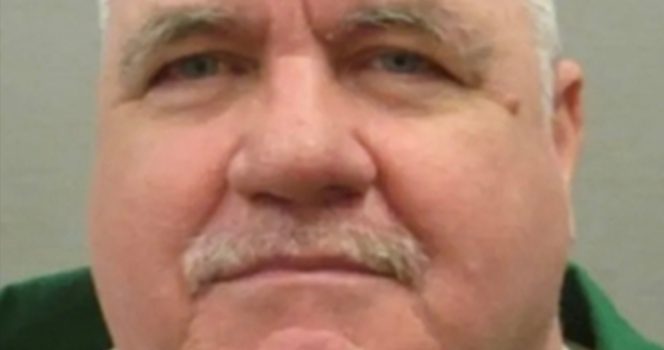
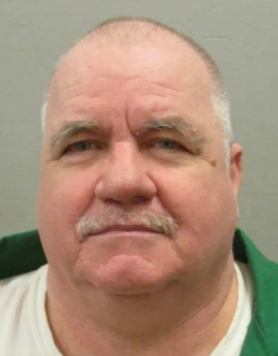
In 2001, Brad Sigmon was convicted of murdering his ex-girlfriend’s parents.
Two decades later, his death sentence was carried out — and he chose an execution method considered one of the most controversial in the United States.
When 67-year-old Brad Sigmon entered South Carolina’s execution chamber on March 7, 2025, he made a chilling, almost unimaginable choice: he voluntarily picked one of the most violent execution methods still technically legal in the U.S.
It’s a decision nearly unheard of in modern times — not just for its brutality, but because almost every state has banned it.
Sigmon’s choice and the stark reality of his death have reignited one of America’s most heated debates: the morality and methods of capital punishment.
Divided over the death penalty
Across the country, the death penalty remains a flashpoint. Supporters argue executions bring justice and closure to victims’ families. Opponents call it barbaric, arbitrary, and prone to error — especially as states struggle to obtain drugs for lethal injections, sometimes turning to older, more graphic methods.
Critics warn any execution method risks “state-sponsored violence,” while proponents counter that those guilty of heinous murders deserve the harshest penalties the law allows.
Why lethal injection isn’t always an option
For decades, lethal injection has been the default in the U.S., considered more “humane” than older practices.
But pharmaceutical companies have increasingly refused to supply the drugs, citing ethical concerns. That shortage has forced states like South Carolina to revive alternative methods, not out of preference, but necessity.
Even among supporters of the death penalty, the sight of methods like firing squads or the electric chair makes many recoil. That shock factor is part of what made Sigmon’s choice so stunning.
The man behind the crime
Brad Keith Sigmon spent more than 20 years on death row.
Born in 1957, his life was marked by violence. In 2001, he brutally murdered David and Gladys Larke, the parents of his ex-girlfriend, in their Greenville County home with a baseball bat. He then kidnapped the woman, forcing her into his car at gunpoint — though she miraculously escaped.
Sigmon was convicted of two counts of murder, first-degree burglary, and related charges, and sentenced to death. Appeals citing mental health and mitigating circumstances ultimately failed.
Rare choice
South Carolina law allowed Sigmon to choose between lethal injection, the electric chair, or a firing squad. Fearing a slow, agonizing death by lethal injection, and calling the electric chair “like being burned alive”, he opted for a firing squad.
“So, Mr. Sigmon was in the position of having to choose between the firing squad, which has never been used in South Carolina, hasn’t been used in the United States in 15 years, or the prospect of dying for over 20 minutes while strapped to a gurney, while (his) lungs fill up with fluid and blood,” King said. “And having seen this happen with three men that he knew very well — men considered brothers — that was not a choice that he could bring himself to make,” his attorney, Gerald “Bo” King, told NewsNation.
Sigmon’s execution was the first in the U.S. in 15 years and only the fourth since the death penalty’s reinstatement in 1976.
Three corrections officers stood about 15 feet away with rifles. Sigmon was strapped to a chair, hooded, and fitted with a target over his chest.
At 6:05 p.m., the rifles fired, and he was pronounced dead three minutes later.
“I want my closing statement to be one of love and a calling to my fellow Christians to end the death penalty,” Sigmon’s final words read, according to the South Carolina Department of Corrections.
Why it is so rare
Execution by firing squad is legal in only a handful of states: South Carolina, Idaho, Mississippi, Oklahoma, and Utah. Traditionally, it has served as a punishment for mutiny in colonial times, a method to deter desertion during the Civil War, and a harsh form of frontier justice in the Old West.
Today, it’s almost always a backup, used only if lethal injection drugs aren’t available or the inmate chooses it.
The last firing squad execution in Utah was in 2010. Many states have banned the practice entirely, calling it too violent and outdated.
Family reacts
Some family members of the victims were present for the execution, including the Larkes’ grandson, Ricky Sims.
“He’s going to pay for what he’s done,” Sims told the Greenville News.
“He took away two people who would have done anything for their family. They were the rock of our family … They didn’t deserve it.”
For his final meal, Sigmon asked for fried chicken from KFC, along with green beans, mashed potatoes with gravy, biscuits, cheesecake, and a glass of sweet tea.
Eyewitnesses at the execution reported that three volunteer shooters fired simultaneously at Sigmon, who was hooded and secured to a chair with a red target placed over his chest.
He was said to be dressed in a black jumpsuit and black Crocs.
Sigmon’s story is a stark reminder of the rare, extreme choices still facing those on death row—and the moral and legal debates they ignite across the country.
READ MORE
- Death row inmate’s chilling last words as his dog watched his execution
- Jennifer Lawrence’s ‘naked dress’ turns heads at the Golden Globes