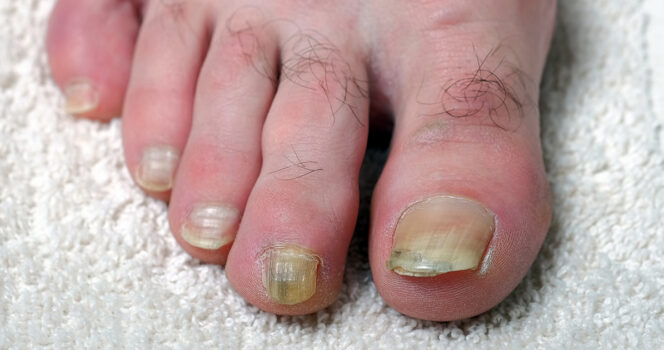
Many people dismiss nail discoloration as harmless, but experts warn that a dark streak on a toenail could be a sign of a rare but aggressive form of cancer that can turn fatal without early diagnosis.
Podiatrists at Belmont Anderson & Associates are urging people to take nail changes seriously, explaining that the body often reveals important health clues in subtle ways.
“If you notice dark discolouration that is often painful, you should be alarmed,” the Las Vegas-based clinic warns. “This is a sign of melanoma, which is a very serious form of skin cancer. You should schedule an appointment with your physician right away.”
One of the reasons experts urge caution is that the early signs of subungual melanoma can appear subtle and easy to dismiss.
Subtle symptom often overlooked
Subungual melanoma develops in the nail bed when pigment-producing cells create excess melanin, leading to visible darkening of the nail.
Although the condition is rare – it accounts for 0.7% to 3.5% of all melanomas worldwide – specialists emphasize that its seriousness lies in how easily it can be mistaken for bruising or nail damage, which may cause delays in diagnosis.
According to the Cleveland Clinic, this type of melanoma most often appears as a dark vertical streak extending from the cuticle to the tip of the nail. Because the mark can begin as a faint line and gradually become darker or wider, many people may not immediately recognize the potential danger.
“Subungual melanoma usually has a distinct shape. Some may describe it as looking like you drew a line on your nail with a black or brown marker. It appears as a dark line on your nail and runs from bottom to top,” experts at the clinic explain.
“This streak or stripe may start small but grow to cover the entire nail and extend to the cuticle (skin part of your nail). The discoloration can be irregular and be varying shades of blackish brown.”
Unlike other forms of skin cancer, subungual melanoma is not typically linked to sun exposure, making it harder for people to identify risk factors. Specialists note that the condition most commonly affects the big toe, thumb, or index finger, though it can occur on any nail.
Warning signs
While a dark streak is often the most recognizable symptom, medical experts say additional nail changes may appear as the condition progresses. Recognizing these signs early can help prompt timely medical care.
Warning signs include:
- A dark vertical line on the nail
- Nail splitting, cracking, or deforming
- Uneven or irregular pigmentation
- Swelling or inflammation around the nail
- Nail lifting from the nail bed
- Bleeding, nodules, or ulcer-like growths
- Darkened skin surrounding the nail
Because subungual melanoma can resemble common nail problems, experts stress that it is always safer to have unusual symptoms examined rather than dismissed.
When to seek medical attention
Doctors advise contacting a healthcare provider if a nail begins to change in appearance without an obvious cause. Even small differences in color, thickness, or shape may signal an underlying issue that requires evaluation.
Seek medical attention if your nail:
- Develops a dark streak or unexplained discoloration
- Changes shape or thickness
- Begins lifting away from the nail bed
- Shows persistent damage without healing
- Appears different from your other nails
Early diagnosis plays an important role in improving treatment outcomes, which is why specialists emphasize the importance of acting quickly when symptoms appear.
Why early attention matters
Although subungual melanoma accounts for a small percentage of melanoma cases worldwide, it is considered an aggressive form of cancer that requires prompt medical care. Experts emphasize that paying attention to visible changes in nails can help detect potential problems sooner, allowing for earlier treatment and better outcomes.
“Subungual melanoma can spread, especially to the skin around your nail. Therefore, it’s important to note any unusual changes in your nail or surrounding skin. Early detection is the best way to stop subungual melanoma from spreading,” the Cleveland Clinic writes, adding that survival rates “are about 95% when it’s caught at an early stage and treated quickly.”
However, if “subungual melanoma is diagnosed later and cancer has spread, the survival rate can be as low as 15%.”
Do you pay attention to warning signs on your toes? Share this story to help others recognize the symptoms early – it could make a life-saving difference.
READ MORE
- Clubbed fingers could be sign of deadly cancer disease
- ‘Frank’s Sign’ on Trump’s ear could be huge indicator of potentially fatal health condition