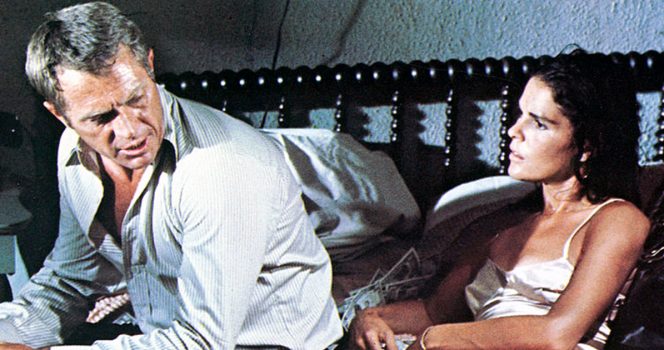
In 1972, Ali MacGraw and Steve McQueen were Hollywood’s ultimate power couple — and no image captured their allure more perfectly than a photo of them together on the set of Papillon in Jamaica.
At first glance, it seemed like just another glamorous snapshot, but knowing what we do today, the picture takes on a very different meaning…
For those who don’t know, Ali MacGraw wasn’t actually in the film at all.
She had just met McQueen, and their connection was instant. At that point, she was fresh off the colossal success of Love Story (1970), which had cemented her as one of the most recognizable actresses in the world. McQueen, already known as the “King of Cool,” was at the height of his fame. His tough, rebellious on-screen persona paired with a rare, understated charisma that drew everyone in.
Their romance began in earnest during the filming of The Getaway (1972), where they played lovers on-screen. McQueen had visited their home to ask her to star alongside him in The Getaway, and the two Hollywood stars clicked right away.
“I looked in those blue eyes, and my knees started knocking,” MacGraw recalled. “I became obsessed.”
Within months, the ‘it’ girl of the early 70’s made a life-changing decision. She left her husband, Paramount executive Robert Evans, and followed her heart straight into the arms of McQueen.
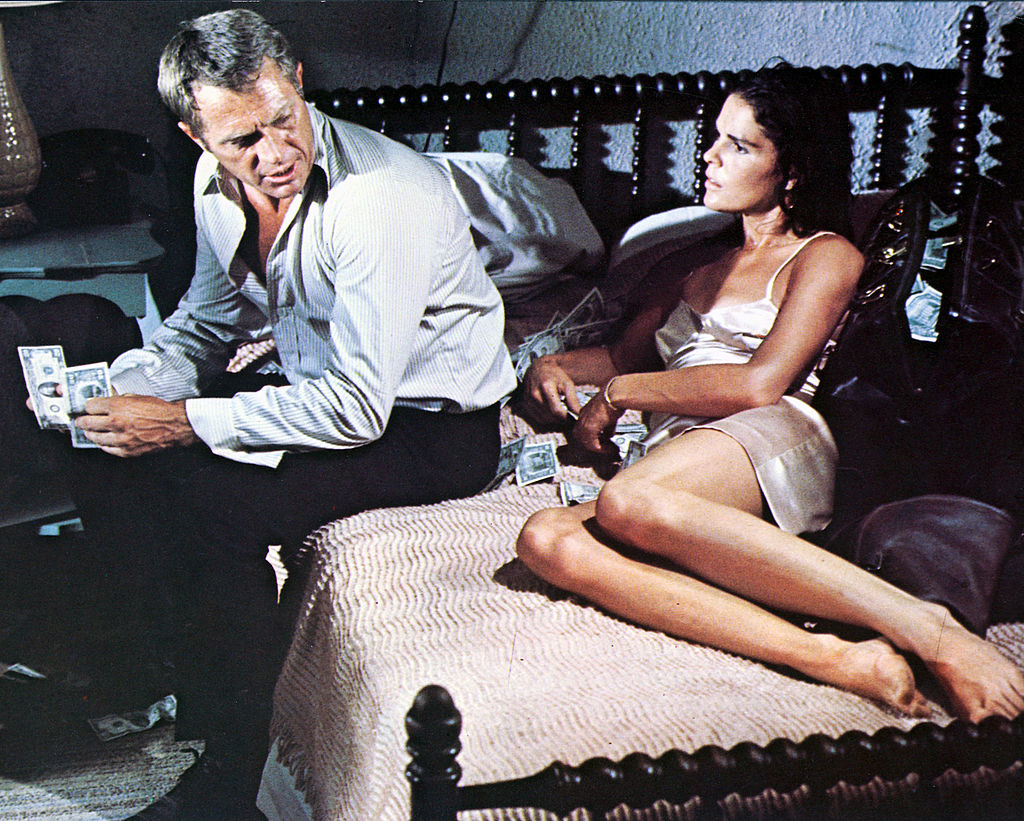
It’s worth noting that MacGraw and Evans were navigating a very public marriage at the time, so her affair with McQueen sparked a major scandal in a Hollywood that was far more conservative than it is today.
In hindsight, the actress said, “These things happen. It wasn’t something I sought out. I’m very sad that fate and I put Bob through some really difficult times.”
By 1973, MacGraw and McQueen were married, and Hollywood couldn’t stop talking about the union of two of its brightest stars.
”Steve was this very original, principled guy who didn’t seem to be part of the system, and I loved that,” MacGraw once said.
The wedding was classic McQueen. After months of speculation, the couple tied the knot under a cottonwood tree in a city park in Cheyenne, Wyoming.

They were married by Judge Art Garfield, who had to put down his golf clubs and pick up his Bible in the middle of a round. During his game, Garfield’s secretary informed him of an urgent call:
“I couldn’t believe it at first, and I thought someone was playing a joke, so I continued to play. A couple of holes later I got a message from the pro shop and went back — and it was Steve on the phone,” Garfield told Greeley Daily Tribune in 1973.
On the phone, the judge recognized McQueen’s voice from his movies. When the actor asked if Garfield could officiate the wedding for him and Ali, the judge immediately drove to the park.
Attendance was kept small and intimate: only McQueen’s two sons, Terry, 14, and Chadwick, 12, and MacGraw’s 2-year-old son, Joshua, were present.
After the wedding, the fairy-tale romance between the two actors continued to capture attention
Together, they embodied the rugged-meets-refined aesthetic of 1970s Hollywood. Leather jackets, denim, sleek sunglasses, every outfit seemed effortless, every glance loaded with style and attitude.
Their love story became the envy of the world, a symbol of glamour, freedom, and passion. Fans devoured every photo, every magazine spread, every rare glimpse into their private lives.
But as the photos from Jamaica hint, their story wasn’t all sun and smiles.

McQueen’s notoriously controlling nature clashed with MacGraw’s desire to maintain her own career and independence. Though the chemistry between them was electric, tension simmered beneath the surface. Following his father abandoning his mother, a then-14-year-old Steve was sent to a school for delinquent children.
MacGraw said he never trusted women after that. He didn’t like that she worked and had her own career. For a while, Ali stayed home to raise their sons. But her husband’s demands were something Ali simply couldn’t accept in the long run.
By 1978, the couple separated.
“I couldn’t even go to art class because Steve expected his ‘old lady’ to be there every night with dinner on the table,” she recalled.
“Steve’s idea of hot was not me. He liked blond bimbos, and they were always around.”
And that iconic Jamaican set photo from Papillon? Don’t just scroll past it. At first, it looks like a perfect moment frozen in time: two stars laughing in the sun, effortlessly stylish and magnetic. But look closer, notice the way their hands almost meet, the subtle intensity in McQueen’s gaze, MacGraw’s barely-there smile.
There’s a story in that image, one of unspoken desire, fragile beginnings, and the kind of Hollywood magic that doesn’t always last.
But there’s an even more intriguing story hidden behind the Papillon set photos, if you ask med. While many hailed it as Steve McQueen’s finest performance to date, he was surprisingly overlooked by the Academy in 1974. Neither Steve nor his co-star Dustin Hoffman won a nomination at the 46th Annual Academy Awards
Some speculate it was because McQueen had “stolen” Ali MacGraw from Robert Evans, the powerful studio executive at the time.
Rumors also swirled that McQueen had relationships with several other Hollywood wives, adding fuel to the gossip. Others argue that McQueen’s Oscar snub stemmed from his famously blunt attitude.
On top of all that, there were widespread complaints that McQueen was simply too old to portray Henri Charrière, who was only supposed to be 25 in the film’s early scenes. Between the scandal, the rumors, and the casting debates, McQueen’s performance remains one of Hollywood’s most talked-about Oscar “snubs.”
READ MORE
- Robert De Niro breaks down in tears after making bold claim about Donald Trump
- Why the 1972 Oscars remains one of the the best ever