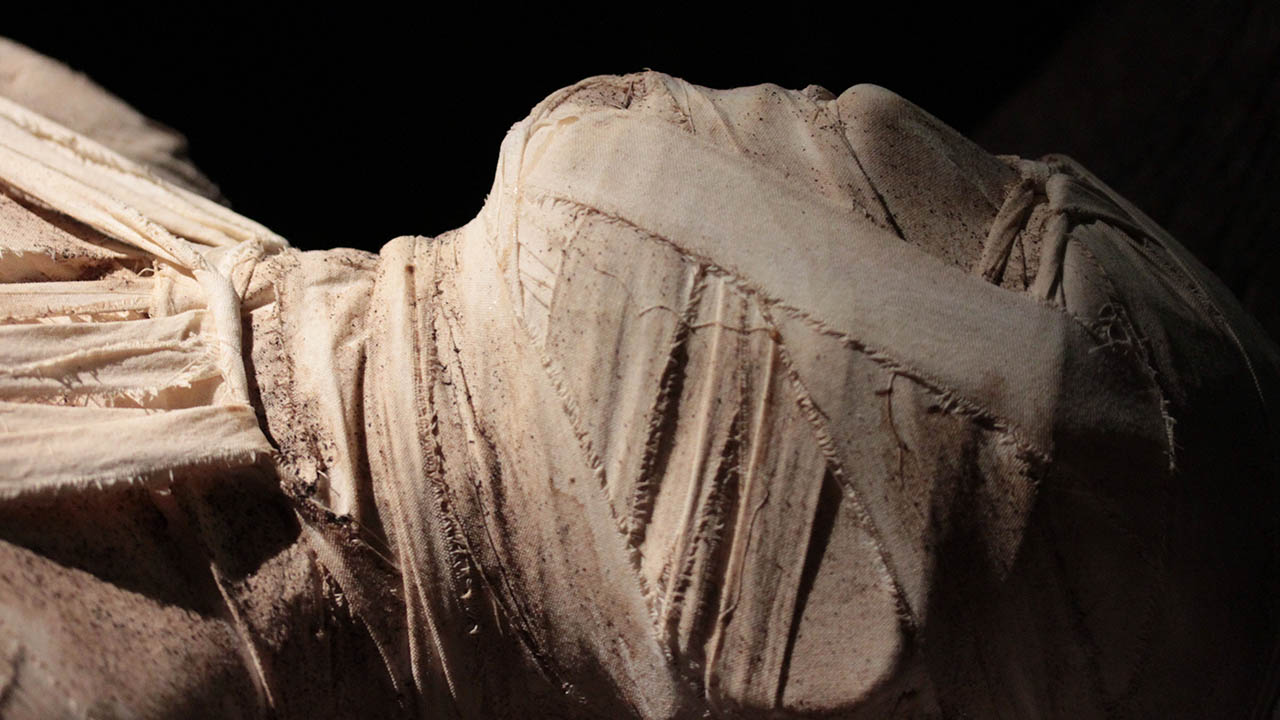
For about 3,500 years, an ancient Egyptian woman has been trapped in a silent scream – and scientists now believe they know what preserved her haunting final expression.
In 1935, an excavation near the historic city of Luxor in Egypt brought archaeologists face-to-face with a woman who had been dead for thousands of years, yet the expression on her mummified face was anything but peaceful.
Her jaw was still wide open, creating the disturbing appearance that she had died screaming in terror.
The unnamed mummy, known as the “Screaming Woman,” was found in a wooden coffin, buried in a chamber beneath the family tomb of Senmut, a powerful architect and overseer of royal works during the reign of Queen Hatshepsut.
Over the past 3,500 years, her name, her life and the circumstances of her death have all been lost, while the expression left behind on her face seemed to defy the way ancient Egyptians prepared their dead for eternity.
“In ancient Egypt, the embalmers took care of the dead body so it would look beautiful for the afterlife,” Cairo University radiology professor Sahar Saleem told Reuters.
“That’s why they were keen to close the mouth of the dead by tying the jaw to the head to prevent the normal postmortem jaw drop,” added Saleem, the study co-author who performed a “virtual dissection” of the mummy using CT scans.
Screaming mummies
According to the investigation on the “time capsule” published in Frontiers, she wasn’t the only mummy discovered with an apparent scream. Other ancient remains have been found with similarly unsettling expressions, including Prince Pentawere, a son of Pharaoh Ramesses III who, after becoming involved in a plot to kill his father, was condemned to death about 3,200 years ago.
In his case, researchers noted that “Pentawere’s body was barely embalmed, which may indicate that the embalmers neglected to keep his mouth closed.”
His case raised an obvious question about the “Screaming Woman”: had her embalmers simply failed to shut her mouth?
Closer look at the ‘Screaming Woman’
Thousands of years after her burial, Saleem and fellow researcher Samia El-Merghani put that possibility to the test, using CT imaging to examine the mummy without disturbing her remains, along with sophisticated techniques to analyze samples from her skin, hair – “probably white or gray at time of death” – and wig, that researchers say was “braided to the woman’s own sparse hair.”
Their findings offered a remarkably detailed glimpse of the woman beneath the haunting expression.
According to reports, the woman was about 48 years old when she died, with signs of wear on her teeth – some were lost in life – and degeneration in some joints, while her brain and internal organs were still inside her body.
Yet the materials used to preserve her “ruled out that the mummification process had been careless and that the embalmers had simply neglected to close her mouth.”
“In fact, they mummified her well and gave her expensive funerary apparels – two expensive rings made of gold and silver and a long haired-wig made from fibers from the date palm,” Saleem told Reuters, clarifying, “she was likely a close family member to be buried and share the family’s eternal resting place.”
Scream frozen at death
With careless embalming becoming less convincing, researchers were left with a far more disturbing possibility: perhaps the woman’s mouth was already locked open when her body reached the embalmers.
One explanation explored by Saleem and El-Merghani is cadaveric spasm, a rare and poorly understood phenomenon in which a particular group of muscles contracts around the moment of death and becomes rigid immediately afterward.
“Unlike postmortem rigor mortis, cadaveric spasm affects only one group of muscles, not the entire body,” Saleem explained.
“This opened the way to other explanations of the widely opened mouth – that the woman died screaming from agony or pain and that the muscles of the face contracted to preserve this appearance at the time of death due to cadaveric spasm,” Saleem said, adding in the study that her “facial expression” indicates she might have been “suffering before death.”
Exact cause of death unknown
Researchers were unable to determine what killed the Screaming Woman, with the scans revealing only mild arthritis of the spine rather than any clear evidence of her cause of death.
“We frequently cannot determine the cause of death in a mummy unless there is CT evidence of fatal trauma,” Saleem said.
“The true history or circumstances of the death of this woman are unknown, hence the cause of her screaming facial appearance cannot be established with certainty,” she added.
What do you think happened to the “Screaming Woman” in her final moments, and what do you find most fascinating about the mysteries still hidden inside ancient mummies? Share your thoughts with us, then pass this story along to someone fascinated by the mysteries of ancient Egypt!
READ MORE
- 1,000-year-old remains of Finnish warrior reveals shocking secret
- Forensic experts use ancient skull to recreate Jesus’ face