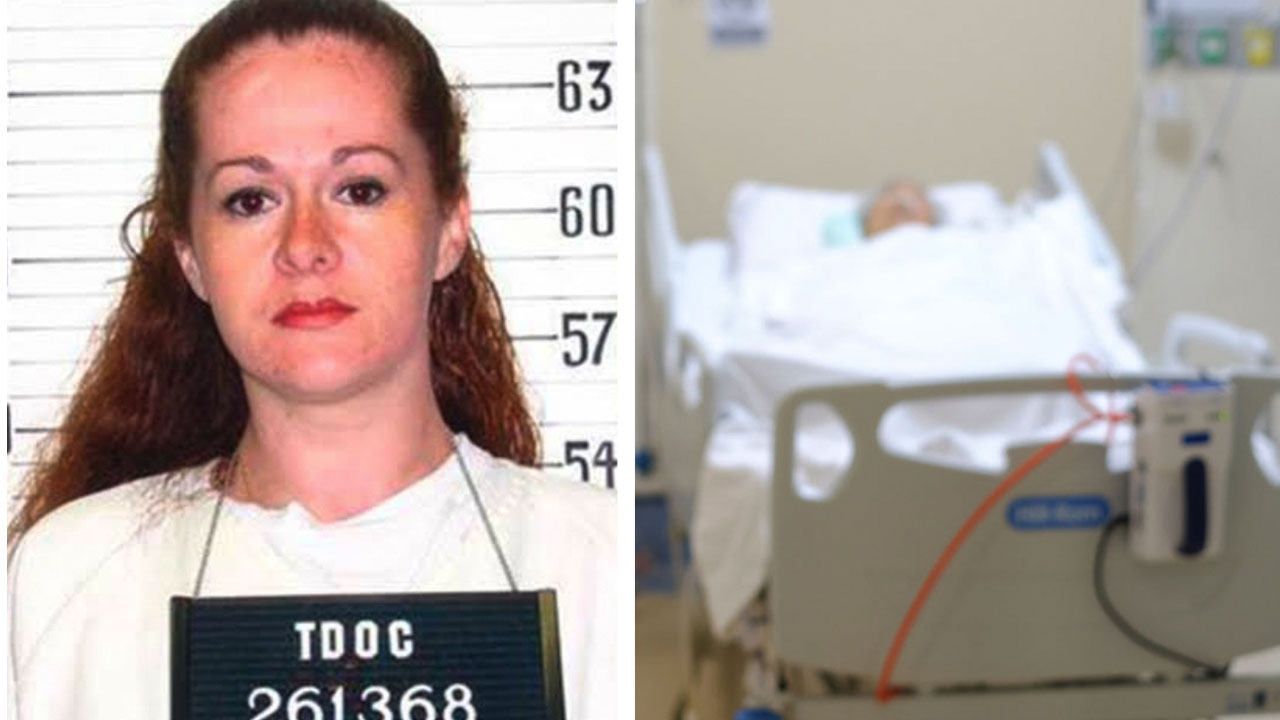
Christa Pike remains in critical condition in a Tennessee hospital after a failed execution attempt, sparking confusion online over why her life support isn’t simply turned off to finish the sentence.
Christa Pike is currently receiving intensive care at a Tennessee hospital after her execution at Riverbend Maximum Security Institution went wrong.
The state tried to carry out her death sentence by lethal injection, but the procedure ran into serious complications, forcing staff to stop and rush her to emergency care.
She’s critically ill, unconscious, intubated, and on a ventilator after receiving two full doses of pentobarbital. According to her defense attorneys, the execution team spent an hour trying to administer the drugs, placing at least seven needles into her arms.
Why people online think this should be simple
News of her hospitalization set off confusion and debate on social media, with a lot of people asking why not just turn off life support and let the sentence finish?
One person on X wrote, “The fact a death row inmate had a botched execution and is on LIFE SUPPORT is crazy. Just pull the plug and the job is done, no?”
Others pushed back, pointing out that doing so would put hospital staff, not the court or the state, in the position of actually ending her life.
“If the hospital pull the plug they then become the executioner rather than the court and jail carrying out the execution,” one reply read.
“I think this along with the doctors oath of supporting life is the reason it won’t happen.”
“I think they can only legally end her life in the actual execution process, once that’s over they can’t just unplug her afterwards. I’m sure there’s laws about it.”
Why doctors can’t just ‘pull the plug’
That last commenter was right. Hospital staff operate under medical and legal obligations that bar them from ending a patient’s life or acting as an arm of the penal system. Doctors are bound by ethical oaths to provide care, regardless of who the patient is or what they’ve done.
Ending life support without a proper legal basis, a medical reason, or direction from legal representatives would expose medical staff to serious legal and criminal liability.
Executions also have to follow a specific legal process. Tennessee law doesn’t allow hospital clinicians to carry out a death warrant on behalf of the Department of Correction.
Once an execution attempt fails or is halted, the person becomes a regular hospital patient, and standard medical rules apply from that point on.
What Pike’s legal team says went wrong
In a court filing, Pike’s attorneys argued the failure came down to the IV placement itself. They believe the lethal drugs ended up in her tissue rather than her bloodstream.
“Apparently at no point did any member of the execution team realize that the IV lines were not correctly placed or that the veins had blown and that the pentobarbital was, in whole or in part, entering Ms. Pike’s body,” they wrote.
Rather than fixing the original line, staff reportedly gave a second, backup dose instead.
Defense attorney Randy Spivey said he counted at least seven needle marks in her arm during the hour-long attempt. He said Pike was snoring loudly at one point, right before officials cut the audio feed from the execution chamber.
Her attorney, Luke Ihnen, asked for privacy going forward.
“We are working closely with those closest to Christa to respect her wishes, safeguard her privacy and protect her rights as a patient during this extraordinarily difficult time. We ask that the public and media respect that privacy as well.”
Governor Bill Lee has ordered an independent review of the state’s execution procedures after Pike becomes the second botched execution attempt just this year.
Read more: