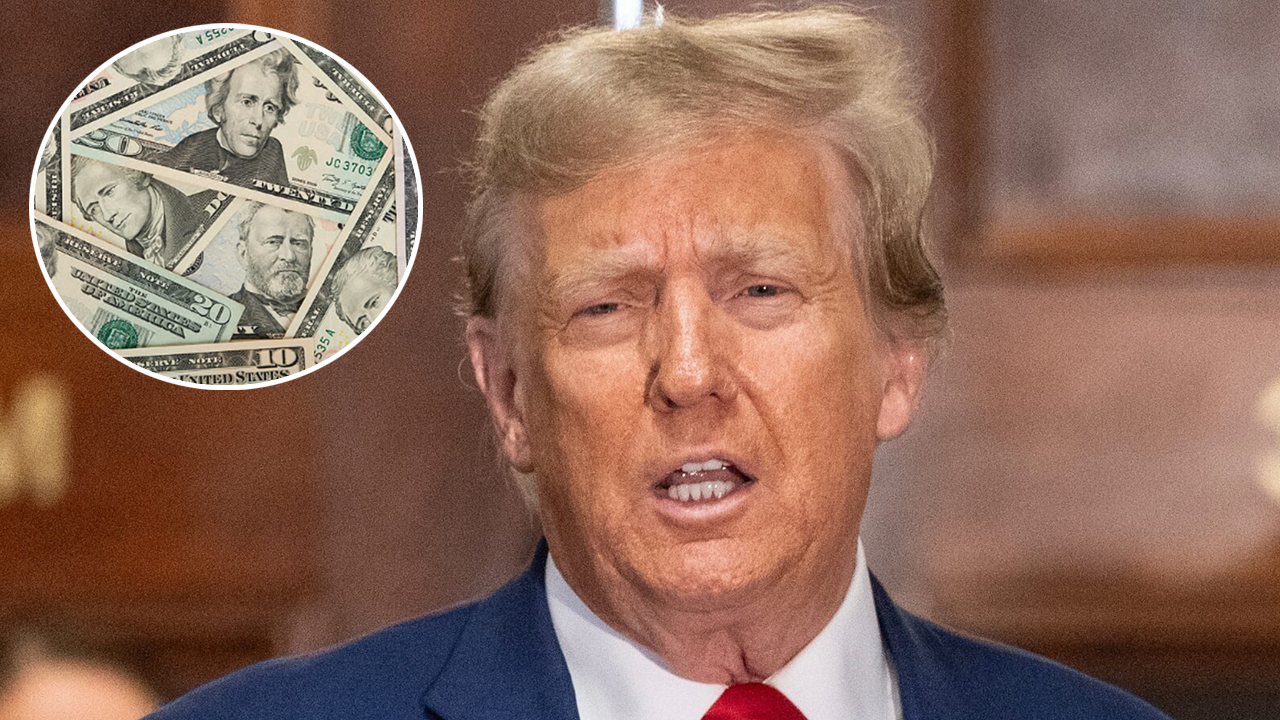
Donald Trump has shifted the terms of his promise to send Americans $5,000 checks, potentially changing who would qualify and leaving around 73 million people out of the picture.
Trump’s ‘Trump Dividend’ promises
Donald Trump’s proposed payment, dubbed the “Trump Dividend,” remains far from certain.
While the president has promoted the idea as a benefit of his tariff policies, questions remain over who would receive the money, how much the plan would cost, and whether it will ever happen.
Trump has floated several plans to send money directly to Americans, but previous proposals have yet to materialize as promised.
At one point, he suggested that tariff revenue could fund $2,000 payments to Americans. Since then, the proposal has faced questions about eligibility, whether the government could afford it, and whether sending out checks would be a sensible use of the money.
Raised the prospect of $5,000 payments
More recently, Trump raised the prospect of $5,000 payments, once again linking the idea to the revenue generated by tariffs.
However, the latest comments have created fresh uncertainty about exactly who would qualify.
According to the statements cited in reports, Trump has tied the proposal to the outcome of the midterm elections, suggesting that Republicans would need to win for Americans to receive the money.
On September 9, he said: ”If the Republicans win, you win with us and you get $5,000”.
He also wrote on Truth Social: “The highly popular $5,000 Trump Dividend will be distributed to every U.S. Citizen if, and when, the Republicans win the Midterm Elections!”
But during an appearance in Alabama that same day, Trump reportedly described the intended recipients as ‘all adult citizens’. That distinction could make a substantial difference to the number of people eligible for the proposed payment.
The numbers behind Trump’s dividend plan
The United States has approximately 343 million citizens. If every citizen received $5,000, the total cost would come to roughly $1.7 trillion.
Restricting the payments to adult citizens would reduce the number of recipients by around 73 million, bringing the estimated total to approximately 270 million people.
Even under that narrower definition, the cost would still be about $1.35 trillion.
The difference between the two groups is significant: children would be excluded if eligibility were limited to adults. However, the proposal’s final eligibility rules and funding mechanism have not been established.
The figures also highlight the scale of the challenge facing any administration seeking to distribute such large payments.
Trump has acknowledged that the proposed payments would come with a hefty price tag, but argues that the country can afford them.
“The Trump Dividend is approximately $1 trillion, but we have a record-setting $21 trillion that’s being invested in our country in just the last 15 months,” he said in October.
Asked to clarify the official eligibility criteria
Despite the attention surrounding the proposal, polling cited by The Economist and YouGov suggests that many Americans doubt the payments will happen.
According to the reported results, 61% of respondents said Trump would not follow through on the promise, while 21% believed he would.
Opinion on the proposal itself was also divided. Some 45% opposed the plan, compared with 43% who supported it.
The skepticism comes amid memories of earlier proposals, including the previously discussed $2,000 payments funded by tariff revenue and the idea of a so-called “DOGE Dividend” linked to government cost-cutting.
Neither proposal has resulted in the broad payments originally discussed.
When asked about the administration’s position, White House spokesperson Davis Ingle defended the president’s record, saying that he ‘has consistently proven his doubters wrong’ and adding that ‘with the continued support of the American people, President Trump will keep delivering real results.’
READ MORE
- People can’t believe what ‘woman in red dress’ behind Donald Trump used to look like as old photo resurfaces
- The truth about the grey fuzz in your hairbrush is more disgusting than you think