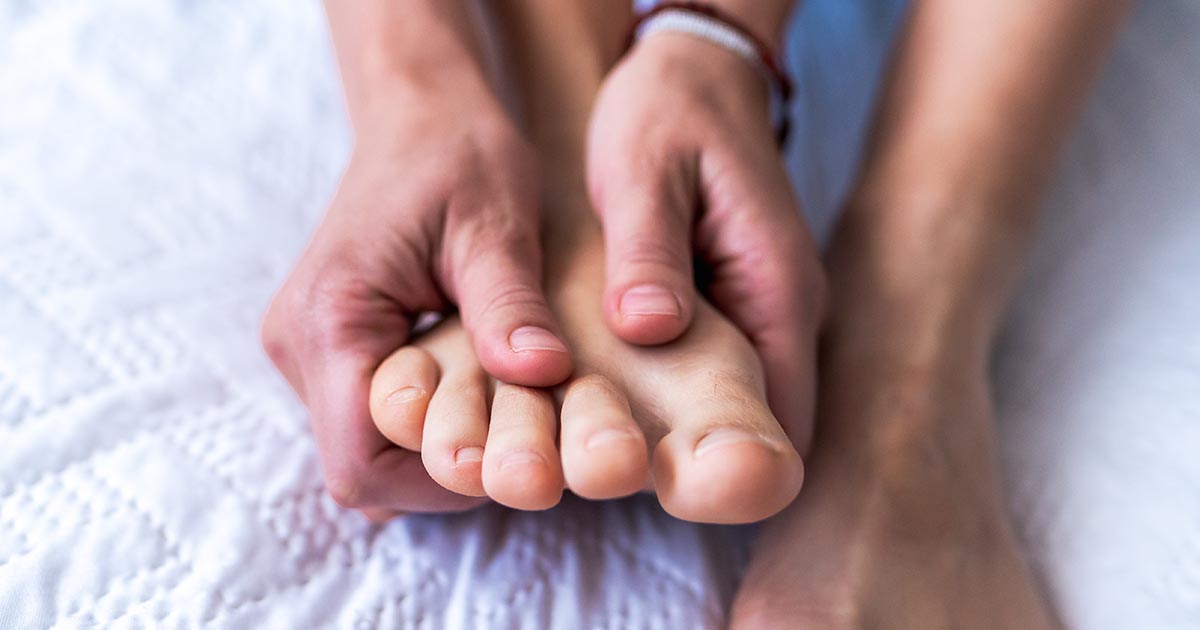
Hair is a part of the human body, whether you like it or not. Some chose to “let it loose,” while others decided to permanently remove it in unwanted places. However, have you ever thought about your toes and the hair on them? Now, an expert has claimed that if you’re hairless on your toes, it could be alarming.
With the internet in your phone, it’s easy to read up about symptoms and signs you should look for when it comes to being ill. Perhaps it’s just a regular cold or the flu, or what to look for in really serious conditions, such as early signs of dementia.
But one thing you probaböy have never thought of is hair on your toes. Sure, everyone has a different amount of hair on their toes, but that goes for the entire body.
But one thing that is certainly true is that most people out there have never thought that it actually can tell you about the body’s health – and show alarming signs that some things could be wrong. It’s all got to do with insulin resistance.
“As my patients age, most of my 55-year-olds that have had high insulin, I will tell them, ‘Look at your toes. They’re supposed to have hair on them,’ but when your body has had that high insulin state for a couple of decades now, it will start to say, ‘We don’t send resources to a couple parts of the body anymore,'” she explained.
Symptoms of having hairless toes
“The follicles in their toe are one of them. You will just stop growing hair on your toes, and then it’s an ascending problem with this, where the toe starts, then it’s the ankles, then it’s up to the knees, and they don’t have hair anywhere on their lower extremities,” she continued. “It is a process that started with high insulin.”
Dr Boz continued by explaining that another sign of insulin resistance is skin tags.
“Skin tags are not moles. Moles, you can feel this bump on your on your skin, right? But a skin tag has a neck and like a little mushroom,” she continued.
“It’s the most annoying thing when patients come and say, ‘Well, I just tried to cut them all off, but they kept bleeding,’ I’m like, ‘Do not cut them off,’ they’ll fall off when your insulin’s lower. They’ll be found in armpits or places where their skin rubs,” added the doctor.
Boz added, “Once insulin starts to grow them, it’s like a crop. A crop of little baby cauliflowers hanging out in their armpits!”
Please share this article to spread the word.
READ MORE
- Man diagnosed with dementia in his 40s reveals symptoms he noticed at work
- Photos shows shrivelled black lung of teen who vaped everyday