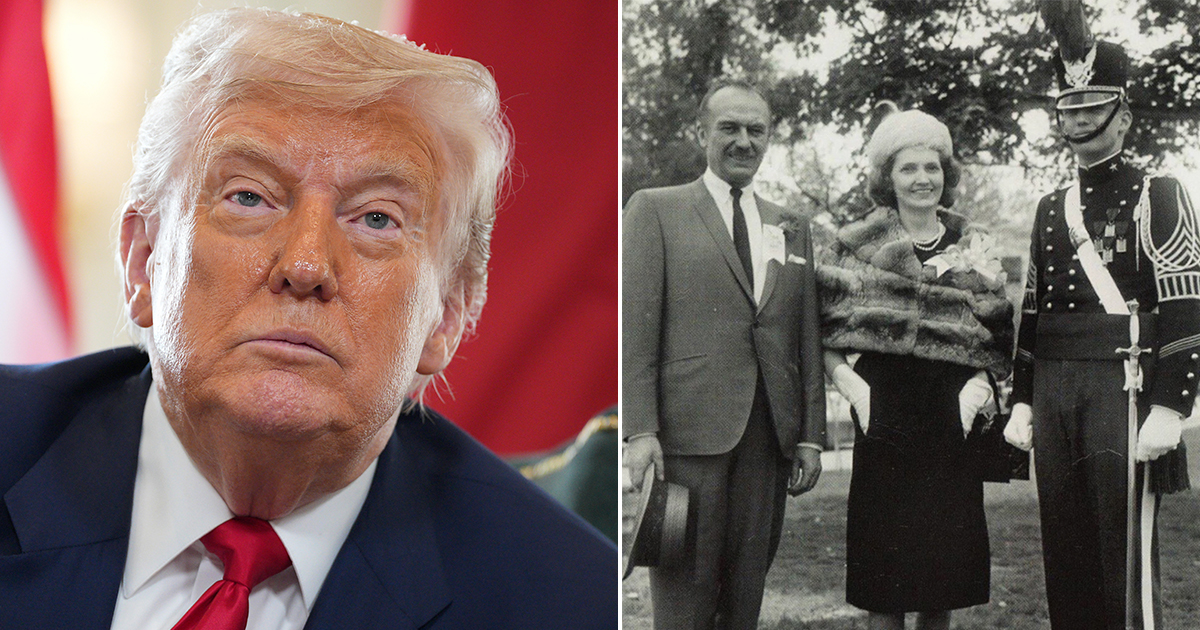
President Donald Trump sparked a wave of online reactions after sharing a throwback photo from his teenage years at military academy — a post that quickly reignited debate about his own history with the military draft.
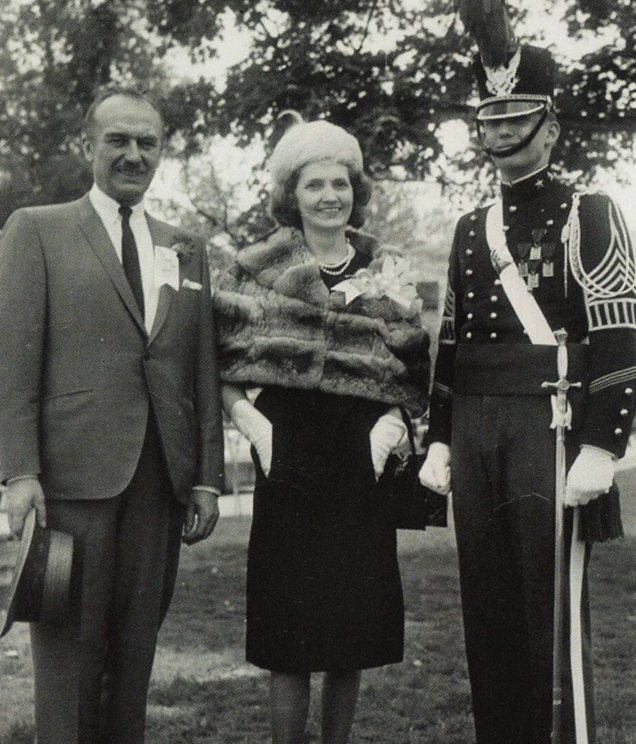
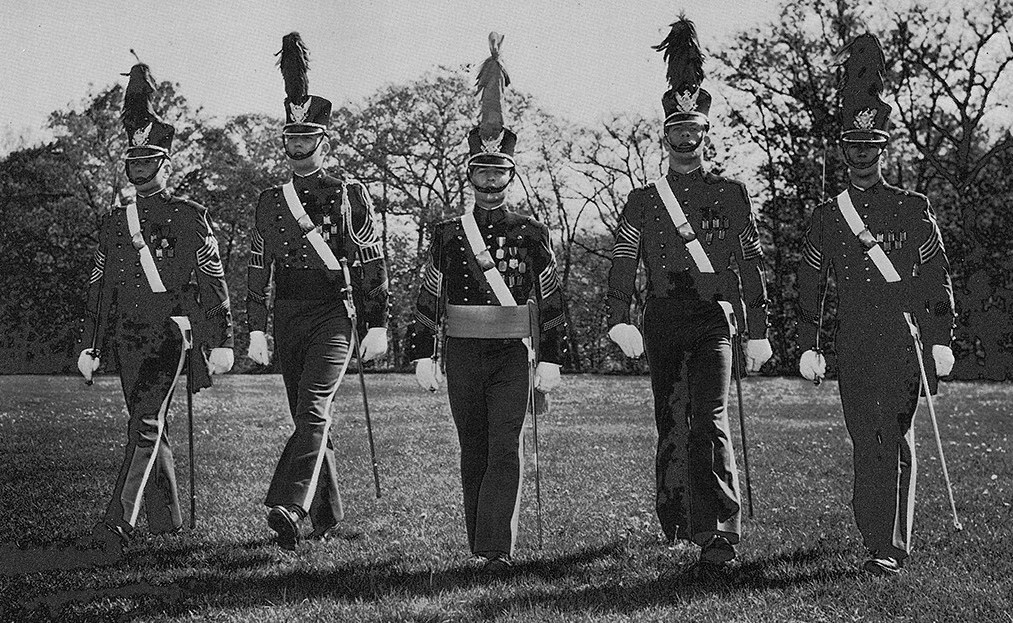
The image, posted on Truth Social last week, shows a young Trump in uniform standing beside his parents, Fred and Mary Trump, at the New York Military Academy in Cornwall-on-Hudson. Trump was sent to the academy at age 13 in 1959 and remained there until he was 18.
“At Military Academy with my parents, Fred and Mary!” the president wrote on Thursday evening.
The post appeared just hours after U.S. Central Command announced that an American military refueling aircraft had gone down in western Iraq, as tensions in the Middle East continue to escalate following U.S. and Israeli strikes on Iran.
While some supporters praised the nostalgic photo, critics on social media were quick to highlight another part of Trump’s past: the fact that he avoided serving in the military during the Vietnam War.
Five draft deferments during Vietnam
During the Vietnam War era, which lasted from 1955 to 1975, American men over the age of 18 could be drafted into military service.
Trump, who was of draft age during that time, received a total of five deferments.
Four of those were student deferments while he was attending college.
During his time at Fordham University, Trump briefly participated in the Reserve Officers’ Training Corps (ROTC) while studying there. However, he left the program in his second year as the Vietnam War was becoming more intense. Students enrolled in ROTC were expected to become commissioned officers after graduating, which meant they would probably be sent to fight in Vietnam.
At that time, some professors were uncomfortable with the idea of their students being drafted into the war. Because of this, they occasionally gave higher grades to help students remain in school and avoid being drafted.
Trump was reportedly advised to improve his academic performance for this reason, although he did not make the dean’s list during his first year.
Later, Trump was also given a medical exemption after a diagnosis of bone spurs in both heels, which classified him as unfit for military service.
Bone spurs — medically known as osteophytes — are bony growths that can develop around joints or along the spine, according to the Mayo Clinic.
Dr. Larry Braunstein, a podiatrist from Queens who passed away about 20 years ago, reportedly diagnosed Trump with the condition as a favor to his father, Fred.
That diagnosis ultimately allowed Trump to avoid being drafted for the war.
The issue has been a recurring topic of criticism for years. After Trump posted the academy photo, journalist Aaron Rupar described the post as “unspeakably pathetic”.
Political group The Lincoln Project also weighed in, calling the image “stolen valor,” a term used for falsely claiming military service.
Another outlet, MeidasTouch, mocked the situation by referring to the president as “Cadet Bone Spurs”.
Trump previously addressed the controversy
Trump has spoken about the issue in past interviews, saying he could not remember which heel had the bone spur but describing the condition as temporary.
He previously said the issue was “temporary”, “minor” and that “over a period of time, it healed up”.
In a 2019 interview, he also explained that he opposed the Vietnam War at the time.
“I was never a fan of that war. I thought it was a terrible war, it was very far away,” Trump said.
“Nobody had heard of Vietnam… this wasn’t like fighting against Nazi Germany or Hitler. I wasn’t out on the streets marching or saying I would move to Canada, but I wasn’t a fan.”
Although Trump opposed the war personally, he did not take part in any protests.
He has also said that he would have been “honoured” to serve.
Around 2.7 to 2.8 million Americans served during the Vietnam War.
In total, 58,220 U.S. service members lost their lives, more than 300,000 were injured, and over 1,500 were listed as missing in action for years after the war ended.
Barron Trump dragged into online debate
The controversy has resurfaced amid rising fears of a wider global conflict following the U.S. and Israel’s military operation in Iran.
The U.S. and Israeli strikes have been linked to the death of Iran’s Supreme Leader, Ayatollah Ali Khamenei, and his son Mojtaba Khamenei has since been appointed the country’s new leader by Iran’s Assembly of Experts.
As tensions grow, discussions about military conscription in the United States have intensified online.
Under current law, all male U.S. citizens and male immigrants between the ages of 18 and 25 must register with the Selective Service System.
If a draft were activated, men turning 20 during the lottery year would be called first, followed by those aged 21 through 25.
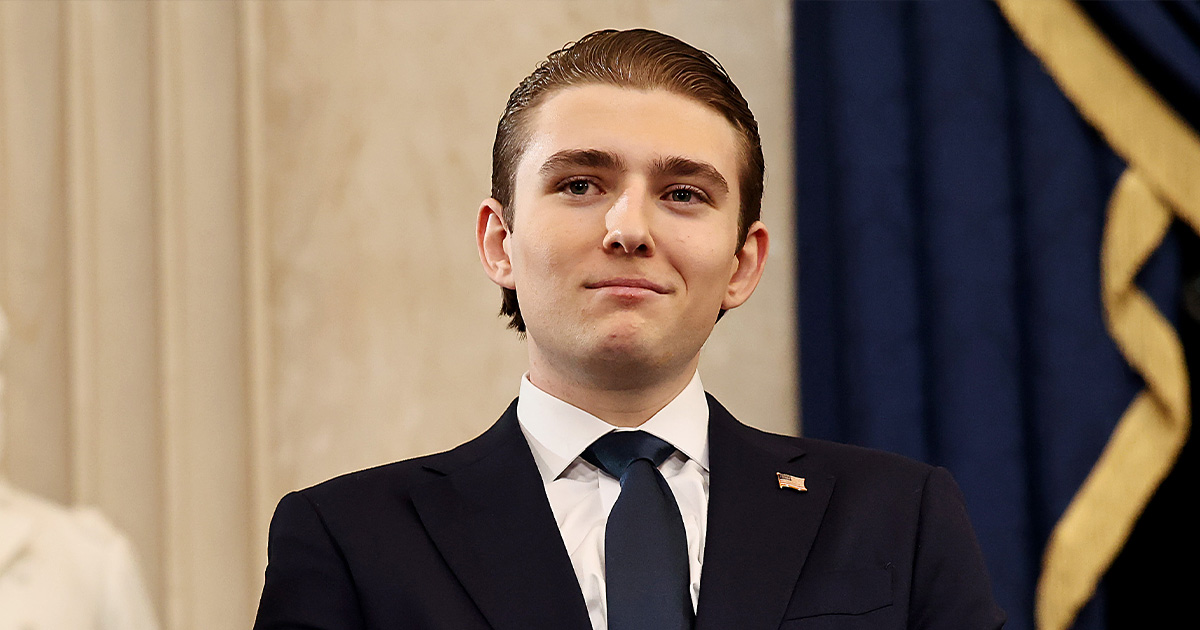
Trump’s youngest son, Barron — now 19 — has unexpectedly become part of that debate, with some social media users saying he should serve if a draft were introduced.
“I am not joking about drafting Barron, send him in first,” one user wrote online.
Another added: “Baron should be the first one to be drafted.”
A third said: “Baron’s name should be at the tippy-top of the list.”
However, the president’s youngest son could potentially be exempt from military service — but not for the reasons most people assume.
At 6’7″, Barron may be too tall for certain military roles, particularly those that require fitting into confined spaces like tanks, armored vehicles, or aircraft, according to the Mirror.
The U.S. Army sets a height limit of 6’8″ for several positions, which could effectively disqualify him from serving in those roles.
While there is currently no active draft in the United States, the discussion highlights how quickly the topic of military service can become politically charged — especially when world tensions are rising.
READ MORE
- Mom says she’s changing daughter’s ‘racist’ name after she’s bullied for it
- Jimmy Kimmel makes brutal dig at Melania Trump at the Oscars