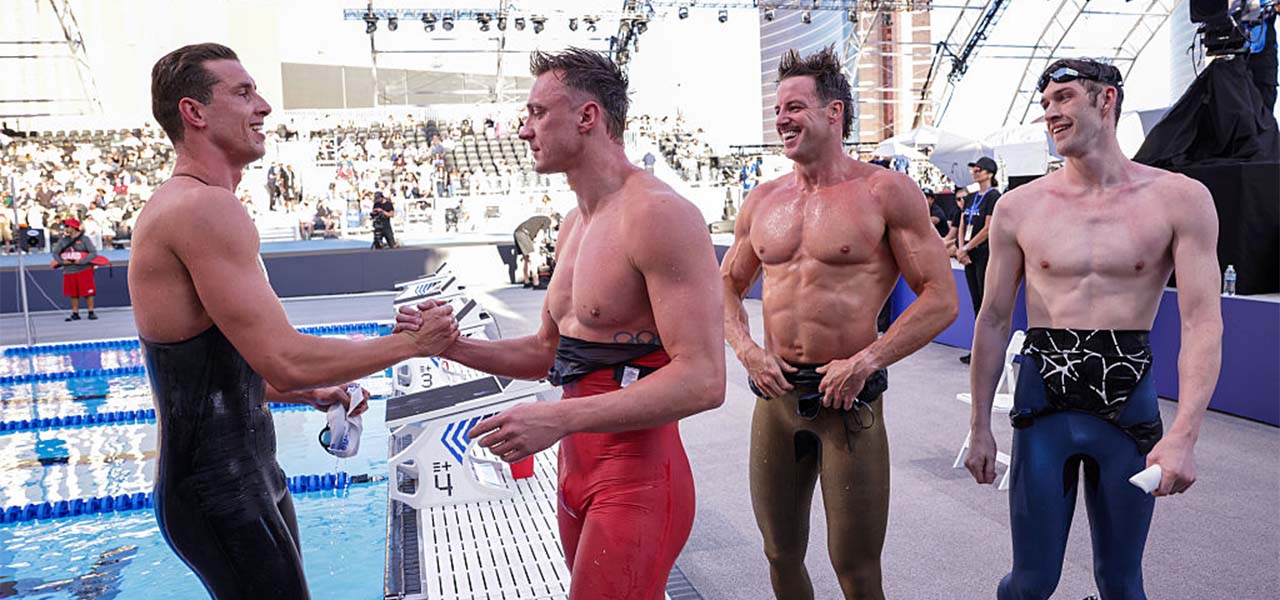
The world’s first so-called “Steroid Olympics” promised to completely change the future of professional sports. However, it seems not everyone is convinced.
Keep reading to learn more.
The event which is officially known as the Enhanced Games, is a controversial event founded by Australian entrepreneur Aron D’Souza and backed by wealthy investors who argued that modern athletics should openly embrace performance-enhancing substances under medical supervision instead of banning them.
Held in Las Vegas on May 24, 2026, the inaugural competition marketed itself as a futuristic experiment designed to push athletes beyond natural human limits and unlock what organizers described as “superhuman” performance.
Event leaders repeatedly defended the concept by claiming enhancement is already normalized in other industries.
“If you look at Hollywood, every actor is enhanced,” Enhanced Games CEO Maximilian Martin said during an interview with Front Office Sports. “If you look at some of the top executives in the world, many of them are openly enhanced.”
According to Martin, elite athletes are actually the people who “need it the most” because of how physically demanding professional sports can be.
“Science is the biggest asset we have as a society. So let’s make use of it,” he added.
The games attracted attention partly because of the enormous financial incentives being offered.
Organizers reportedly promised massive prize money, including a $1 million bonus for any athlete capable of breaking a world record.
That was enough to lure former Olympians, professional swimmers, sprinters, and strength athletes willing to participate in the highly controversial experiment.
But instead of delivering a historic sporting revolution, the event quickly turned into one of the internet’s most awkward viral spectacles of the year.
Online critics mocked everything from the sparse audience and low-budget production to the heavily promoted athletes who failed to deliver the record-breaking performances fans had been promised.
One of the most talked-about disappointments involved retired Australian swimmer James Magnussen, who reportedly came out of retirement hoping to chase multimillion-dollar rewards through enhancement protocols.
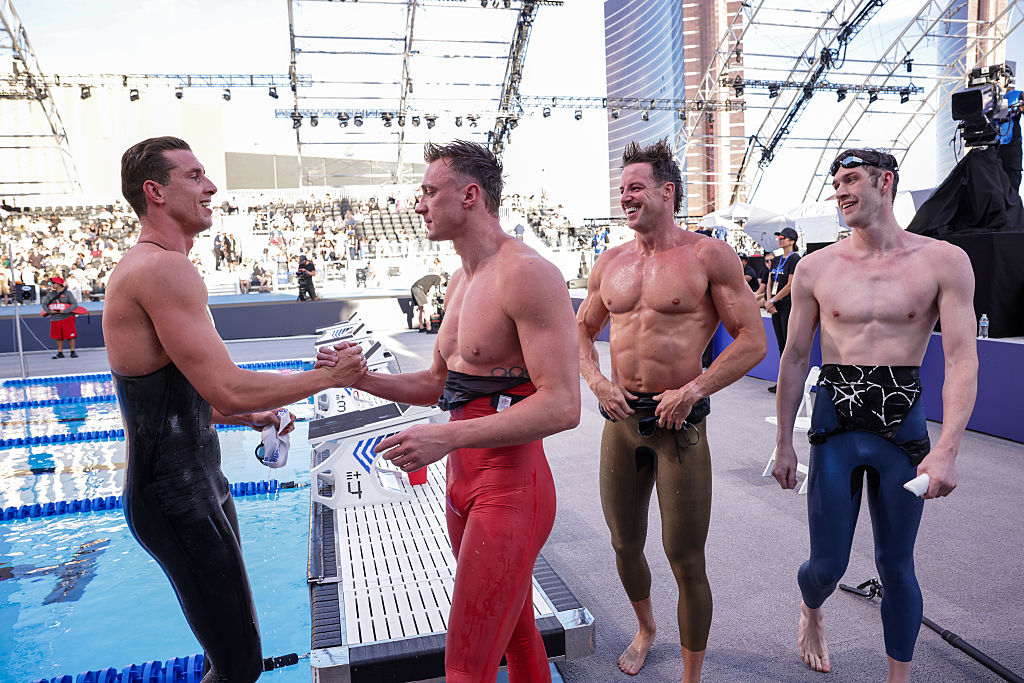
Despite openly embracing performance-enhancing substances, Magnussen failed to dominate the competition the way many expected.
In fact, one of the biggest ironies of the entire event came when several athletes competing completely “clean” ended up outperforming enhanced rivals.
That instantly fueled widespread online ridicule.
Before the games even began, organizations including the International Olympic Committee and the World Anti-Doping Agency had already condemned the competition as unethical and dangerous.
But after the underwhelming performances and chaotic moments during the event, critics began describing it less as the future of sports and more as a bizarre public embarrassment for many of the athletes involved.
One competitor who unexpectedly became a breakout star was American swimmer Hunter Armstrong.
The two-time Olympic gold medalist entered the competition while openly refusing to use performance-enhancing substances despite competing in an event built entirely around them.
“I will be competing as an unenhanced athlete,” Armstrong said before the competition. “I’m here to compete, I’m here to win, and most importantly, I’m here to swim fast.”
Armstrong, who already had an elite reputation after winning Olympic relay gold medals at both the Tokyo 2020 and Paris 2024 Games, competed under standard anti-doping rules and reportedly continued passing drug tests throughout the event.
Even without enhancement drugs, he still managed to outperform several competitors who had reportedly spent months using medically supervised human growth hormones and other substances.
His biggest moment came during the 50-meter backstroke, where he dominated the field with a 24.21-second finish and secured the event’s $250,000 first-place prize.
He also finished second in the 100-meter freestyle, beating Enhanced Games poster athlete James Magnussen.
The result immediately became one of the most viral talking points surrounding the event.
Although Armstrong remained substance-free, he still benefited from the competition’s relaxed equipment rules by wearing a banned polyurethane “super suit” — a type of high-tech swimwear prohibited in Olympic competition because it provides additional buoyancy and speed advantages.
Still, Armstrong said part of his motivation for joining the games involved testing his physical limits under conditions unavailable in traditional sports.
“For me, this is about innovation and opportunity, learning more about my body… and getting to experience speeds that we’ve never seen since the supersuit ban,” he explained.
His success also sparked fresh debate because organizations like World Aquatics have warned that any athlete participating in the Enhanced Games — even clean competitors — could face lifetime Olympic bans.
Armstrong has argued he should still remain eligible for the 2028 Los Angeles Olympics because he continues to pass standard anti-doping tests.
Online, many viewers couldn’t get over the irony of a clean athlete defeating competitors openly using enhancement protocols.
“Imagine beating a field full of enhanced athletes naturally, that’s the kind of result people will debate for YEARS,” one person wrote.
Another wrote, “Imagine blasting every compound known to mankind just to lose to the guy who probably just drank water and went to bed on time” and one more person added, “I guess now we know what I have always known, you can juice up to look bigger and stronger but reality is your not.”
What did you think of the Enhanced Games? Let us know in the comments section on Facebook. Share this with others to see what they think.
READ MORE